
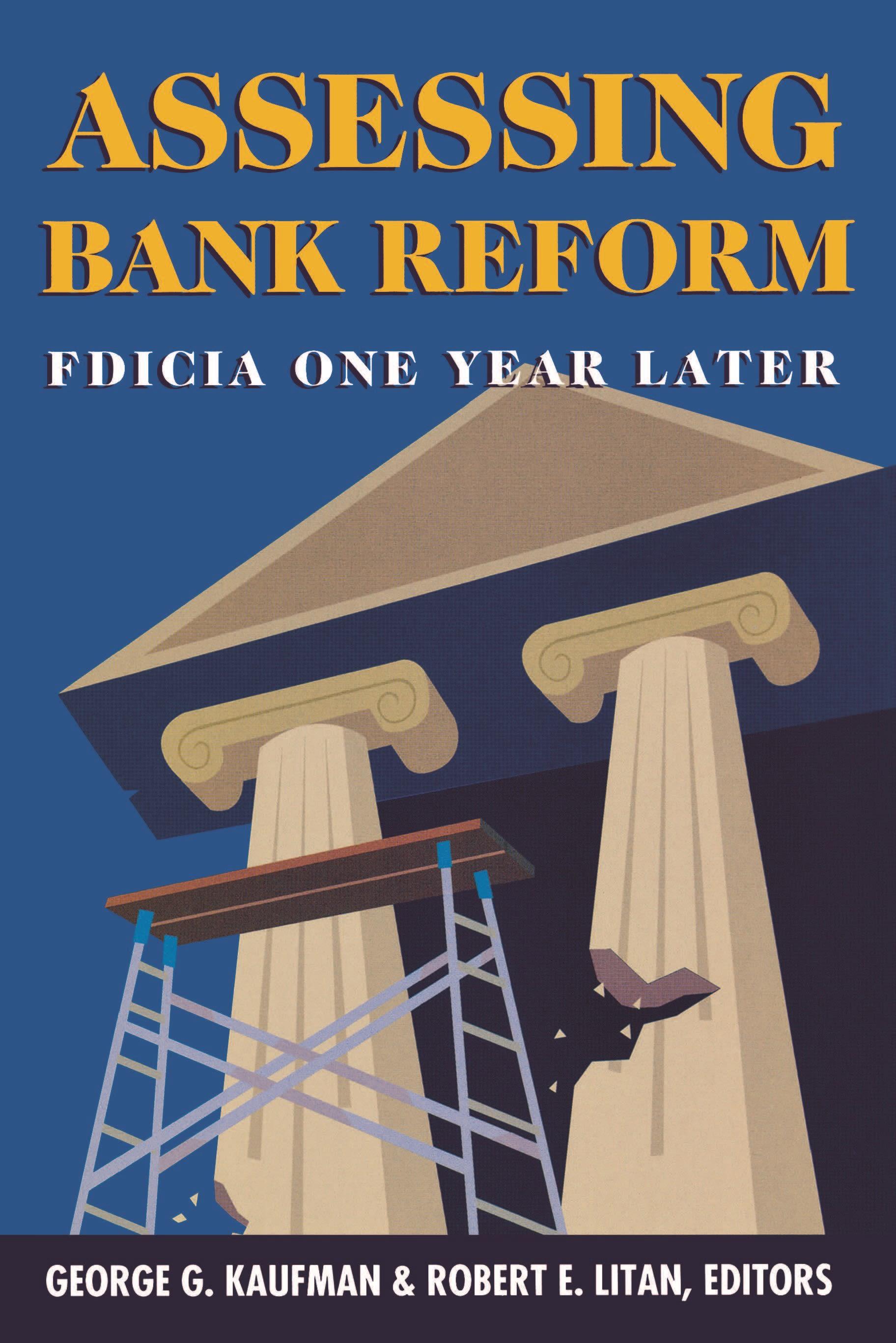
The last decade has been both traumatic and revolutionary for the U.S. banking industry. In late 1990 and early 1991, the outlook for the banking industry and even the federal insurance fund that backs most of its deposits looked especially bleak. Several independent analysts, congressional watchdog agencies, and the federal government itself warned that the large number and size of bank failures would exhaust the resources of the Federal Deposit Insurance Corporation for resolving bank failures and paying off their depositors.
Amid extensive proposals for deposit insurance reform, Congress enacted the Federal Deposit Insurance Corporation Improvement Act (FDICIA), one of the most important and controversial pieces of banking legislation of the last fifty years.
In December 1992, Brookings sponsored a conference, in conjunction with the Chicago Clearing House Association, to mark the first anniversary of FDICIA and to assess its impact.
This book features the papers presented at the conference and a summary of the discussion of the more than 150 participants. Representatives with diverse viewpoints met to consider and debate the wisdom of FDICIA and of future banking policy. The authors include leading academic scholars, current and former policymakers, and experts from the private sector. Their papers cover the intellectual and political history of the Act, how the Act was being implemented, responses of regulators and banks to the Act, and how banking regulatory and legislative policy should proceed. The book concludes with recommendations for future banking regulatory and legislative policy.
In addition to editors Kaufman and Litan, the contributors are James E. Annable, First National Bank of Chicago; Richard C. Aspinwill, Chase Manhattan Bank; Richard Scott Carnell, Senate Banking Committee; Anthony Downs, Brookings; Robert E. Glauber, Harvard University; William S. Haraf, Citicorp; W. Lee Hoskins, Huntington National Bank; Edward J. Kane, Boston College; Congressman Jim Leach, ranking minority member of the House Banking Committee; David W. Mullins, Jr., vice-chairman of the Federal Reserve Board; Kenneth E. Scott, Stanford Law School; Karen D. Shaw, Institute for Strategy Development; Barbara Timmer, former General Counsel, House Banking Committee, and Jay M. Weintraub, Merrill Lynch.
Amid extensive proposals for deposit insurance reform, Congress enacted the Federal Deposit Insurance Corporation Improvement Act (FDICIA), one of the most important and controversial pieces of banking legislation of the last fifty years.
In December 1992, Brookings sponsored a conference, in conjunction with the Chicago Clearing House Association, to mark the first anniversary of FDICIA and to assess its impact.
This book features the papers presented at the conference and a summary of the discussion of the more than 150 participants. Representatives with diverse viewpoints met to consider and debate the wisdom of FDICIA and of future banking policy. The authors include leading academic scholars, current and former policymakers, and experts from the private sector. Their papers cover the intellectual and political history of the Act, how the Act was being implemented, responses of regulators and banks to the Act, and how banking regulatory and legislative policy should proceed. The book concludes with recommendations for future banking regulatory and legislative policy.
In addition to editors Kaufman and Litan, the contributors are James E. Annable, First National Bank of Chicago; Richard C. Aspinwill, Chase Manhattan Bank; Richard Scott Carnell, Senate Banking Committee; Anthony Downs, Brookings; Robert E. Glauber, Harvard University; William S. Haraf, Citicorp; W. Lee Hoskins, Huntington National Bank; Edward J. Kane, Boston College; Congressman Jim Leach, ranking minority member of the House Banking Committee; David W. Mullins, Jr., vice-chairman of the Federal Reserve Board; Kenneth E. Scott, Stanford Law School; Karen D. Shaw, Institute for Strategy Development; Barbara Timmer, former General Counsel, House Banking Committee, and Jay M. Weintraub, Merrill Lynch.
Pagine: 168
Categoria: Redovisning, Finans & Investering
e-ISBN: 9780815705505
Peso di spedizione: 1.2 kg
Spedito in: 1-2 giorni
Paga facilmente con carta, Klarna, Apple Pay o Google Pay. Non sei soddisfatto? Hai sempre 14 giorni per il rimborso. Leggi di più nei nostri termini. Per qualsiasi domanda, scrivici a hello@memmo.org.
Memmo rende lo studio più facile, ovunque tu sia nel mondo. Qui trovi i tuoi libri di testo e strumenti di studio intelligenti, tutto in un unico posto: riassunti, quiz, podcast e flashcard. E poi c'è Ted, il tuo compagno di studio che risponde a ogni tua domanda. Oltre 50.000 studenti studiano già qui: è stato creato per aiutarti a imparare più velocemente e a stressarti meno.