
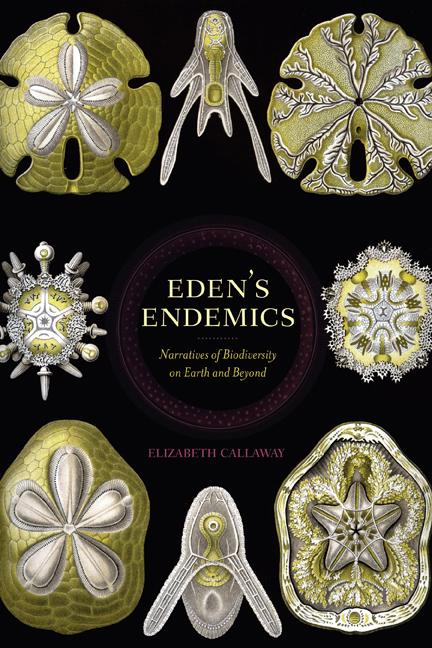
In the past thirty years biodiversity has become one of the central organizing principles through which we understand the nonhuman environment. Its deceptively simple definition as the variation among living organisms masks its status as a hotly contested term both within the sciences and more broadly. In Eden’s Endemics, Elizabeth Callaway looks to cultural objects—novels, memoirs, databases, visualizations, and poetry— that depict many species at once to consider the question of how we narrate organisms in their multiplicity.
Touching on topics ranging from seed banks to science fiction to bird-watching, Callaway argues that there is no set, generally accepted way to measure biodiversity. Westerners tend to conceptualize it according to one or more of an array of tropes rooted in colonial history such as the Lost Eden, Noah’s Ark, and Tree-of-Life imagery. These conceptualizations affect what kinds of biodiversities are prioritized for protection. While using biodiversity as a way to talk about the world aims to highlight what is most valued in nature, it can produce narratives that reinforce certain power differentials—with real-life consequences for conservation projects. Thus the choices made when portraying biodiversity impact what is visible, what is visceral, and what is unquestioned common sense about the patterns of life on Earth.
Paga facilmente con carta, Klarna, Apple Pay o Google Pay. Non sei soddisfatto? Hai sempre 14 giorni per il rimborso. Leggi di più nei nostri termini. Per qualsiasi domanda, scrivici a hello@memmo.org.
Memmo rende lo studio più facile, ovunque tu sia nel mondo. Qui trovi i tuoi libri di testo e strumenti di studio intelligenti, tutto in un unico posto: riassunti, quiz, podcast e flashcard. E poi c'è Ted, il tuo compagno di studio che risponde a ogni tua domanda. Oltre 50.000 studenti studiano già qui: è stato creato per aiutarti a imparare più velocemente e a stressarti meno.