
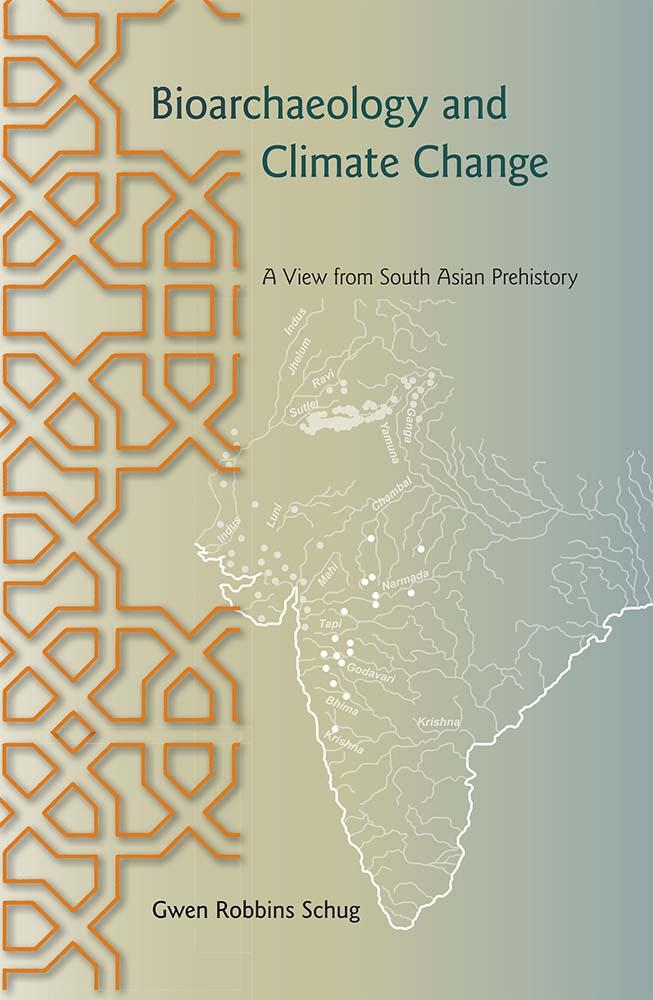
In the context of current debates about global warming, archaeology contributes important insights for understanding environmental changes in prehistory, and the consequences and responses of past populations to them.
In Indian archaeology, climate change and monsoon variability are often invoked to explain major demographic transitions, cultural changes, and migrations of prehistoric populations. During the late Holocene (1400-700 B.C.), agricultural communities flourished in a semiarid region of the Indian subcontinent, until they precipitously collapsed. Gwen Robbins Schug integrates the most recent paleoclimate reconstructions with an innovative analysis of skeletal remains from one of the last abandoned villages to provide a new interpretation of the archaeological record of this period.
Robbins Schug’s biocultural synthesis provides us with a new way of looking at the adaptive, social, and cultural transformations that took place in this region during the first and second millennia B.C. Her work clearly and compellingly usurps the climate change paradigm, demonstrating the complexity of human-environmental transformations. This original and significant contribution to bioarchaeological research and methodology enriches our understanding of both global climate change and South Asian prehistory.
Paga facilmente con carta, Klarna, Apple Pay o Google Pay. Non sei soddisfatto? Hai sempre 14 giorni per il rimborso. Leggi di più nei nostri termini. Per qualsiasi domanda, scrivici a hello@memmo.org.
Memmo rende lo studio più facile, ovunque tu sia nel mondo. Qui trovi i tuoi libri di testo e strumenti di studio intelligenti, tutto in un unico posto: riassunti, quiz, podcast e flashcard. E poi c'è Ted, il tuo compagno di studio che risponde a ogni tua domanda. Oltre 50.000 studenti studiano già qui: è stato creato per aiutarti a imparare più velocemente e a stressarti meno.