
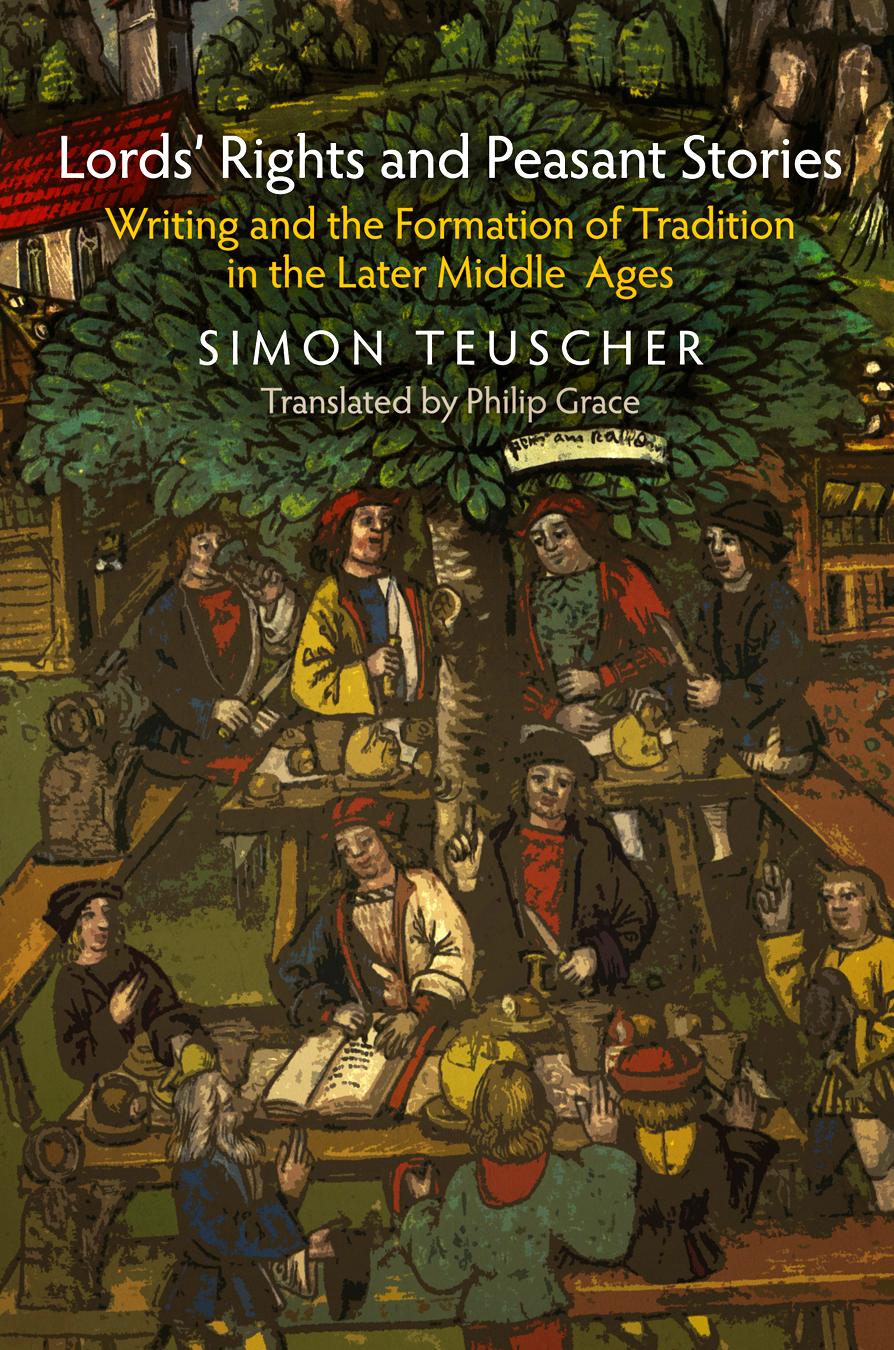
In the mid-nineteenth century, Jacob Grimm published a collection of late medieval records of local law—called Weistümer—that was scarcely less comprehensive than his famous collection of fairy tales. As with the fairy tales, Grimm assumed that before their transcription, people had handed these down orally from time immemorial. His interest in these customary laws arose from their seemingly folkloristic notions of custom and from their poetic narratives about ritualized encounters between lords and peasants, capturing an oral tradition from an unsophisticated time.
Grimm's readings are still used today as a basis for theories about oral societies in the premodern West and contemporary non-Western societies and the modernizing effects of writing. As Simon Teuscher contends, however, those aspects of legal texts that have been considered since Grimm to be vestiges of a traditional preliterate popular culture were eventually rooted in relatively advanced and learned techniques of writing, jurisprudence, and administration. Lords' Rights and Peasant Stories uses examples from German- and French-speaking Switzerland to investigate what legal order meant to individuals and to a society at the eve of the early modern period. Teuscher deals with legal documents not only as texts, but also as objects. The book takes the materiality of documents seriously and reconstructs cultural techniques of their production and social practices of their use.
Lords' Rights and Peasant Stories suggests the need to rethink master narratives about transitions from oral to literate societies. It explores the local dimensions of processes of state-formation and the emergence of modern notions of law in western Europe. Students of rural society and village organization will find here a discussion of local power distribution that is inspired by social anthropology, that looks beyond simple antagonisms between lords and peasants, and that insists on the role of state servants and the unconscious effects of their writing practices.
Paga facilmente con carta, Klarna, Apple Pay o Google Pay. Non sei soddisfatto? Hai sempre 14 giorni per il rimborso. Leggi di più nei nostri termini. Per qualsiasi domanda, scrivici a hello@memmo.org.
Memmo rende lo studio più facile, ovunque tu sia nel mondo. Qui trovi i tuoi libri di testo e strumenti di studio intelligenti, tutto in un unico posto: riassunti, quiz, podcast e flashcard. E poi c'è Ted, il tuo compagno di studio che risponde a ogni tua domanda. Oltre 50.000 studenti studiano già qui: è stato creato per aiutarti a imparare più velocemente e a stressarti meno.