
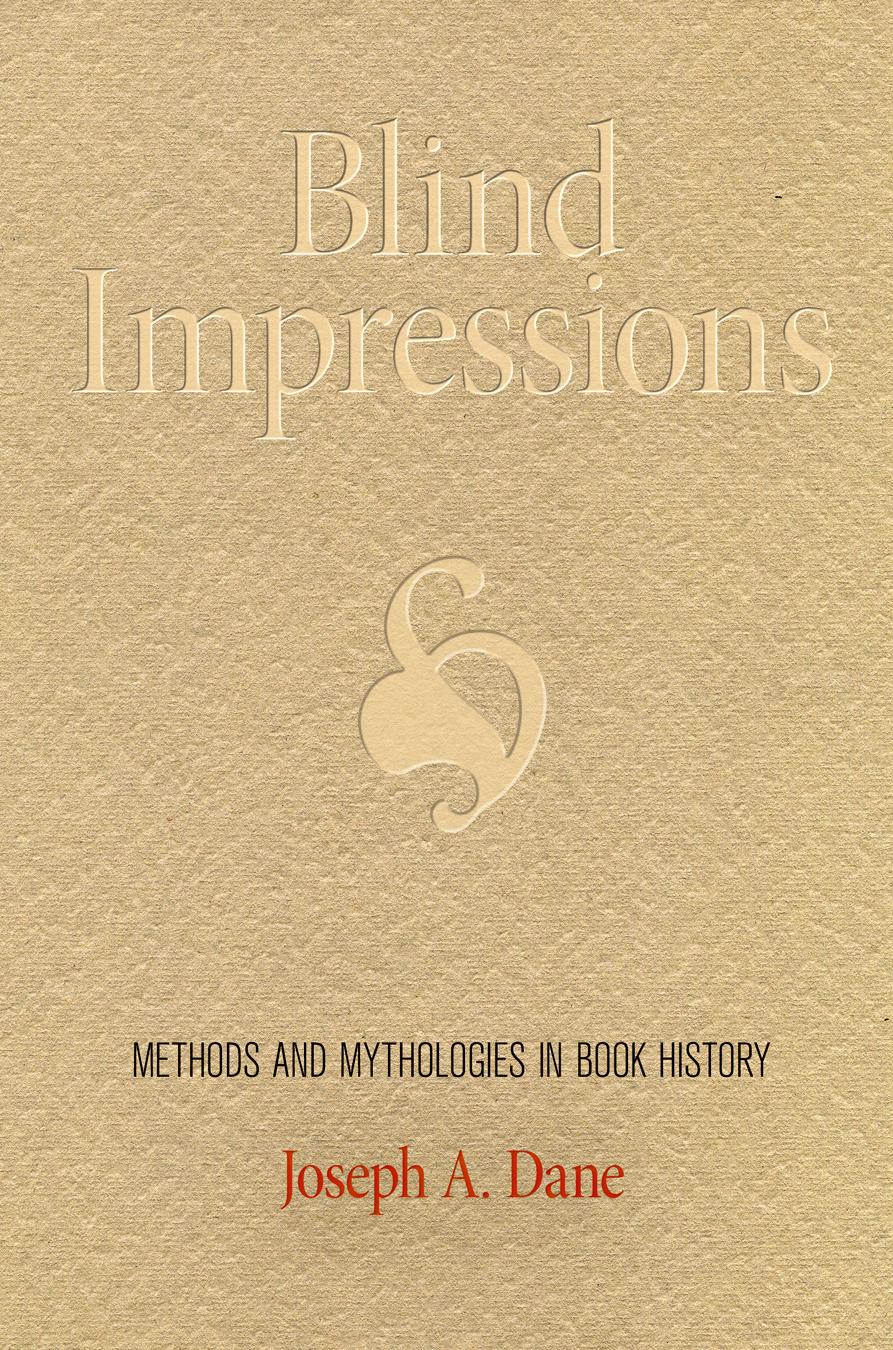
"As bibliographers or book historians, we perform our work by changing the function of the objects we study. We rarely pick up an Aldine edition to read one of the classical texts it contains. . . . Print culture, under this notion, is not a medium for writing or thought but a historical object of study; our bibliographical field, our own concoction, becomes the true referent of the objects we define as its foundation."—From the Introduction
What is a book in the study of print culture? For the scholar of material texts, it is not only a singular copy carrying the unique traces of printing and preservation efforts, or an edition, repeated and repeatable, or a vehicle for ideas to be abstracted from the physical copy. But when the bibliographer situates a book copy within the methods of book history, Joseph A. Dane contends, it is the known set of assumptions which govern the discipline that bibliographic arguments privilege, repeat, or challenge. "Book history," he writes, "is us."
In Blind Impressions, Dane reexamines the field of material book history by questioning its most basic assumptions and definitions. How is print defined? What are the limits of printing history? What constitutes evidence? His concluding section takes form as a series of short studies in theme and variation, considering such matters as two-color printing, the composing stick used by hand-press printers, the bibliographical status of book fragments, and the function of scholarly illustration in the Digital Age. Meticulously detailed, deeply learned, and often contrarian, Blind Impressions is a bracing critique of the way scholars define and solve problems.
Paga facilmente con carta, Klarna, Apple Pay o Google Pay. Non sei soddisfatto? Hai sempre 14 giorni per il rimborso. Leggi di più nei nostri termini. Per qualsiasi domanda, scrivici a hello@memmo.org.
Memmo rende lo studio più facile, ovunque tu sia nel mondo. Qui trovi i tuoi libri di testo e strumenti di studio intelligenti, tutto in un unico posto: riassunti, quiz, podcast e flashcard. E poi c'è Ted, il tuo compagno di studio che risponde a ogni tua domanda. Oltre 50.000 studenti studiano già qui: è stato creato per aiutarti a imparare più velocemente e a stressarti meno.