
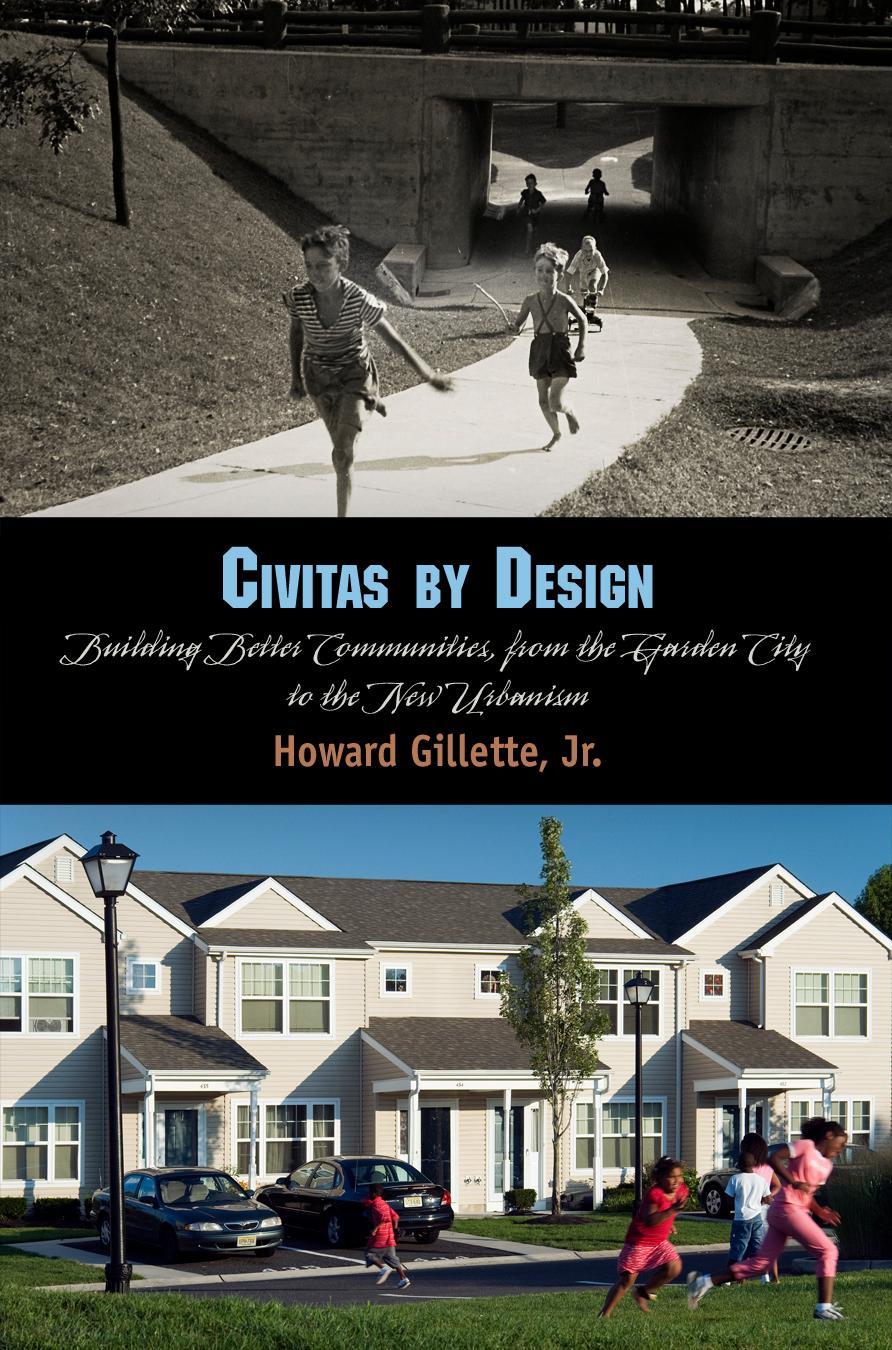
Since the end of the nineteenth century, city planners have aspired not only to improve the physical living conditions of urban residents but also to strengthen civic ties through better design of built environments. From Ebenezer Howard and his vision for garden cities to today's New Urbanists, these visionaries have sought to deepen civitas, or the shared community of citizens.
In Civitas by Design, historian Howard Gillette, Jr., takes a critical look at this planning tradition, examining a wide range of environmental interventions and their consequences over the course of the twentieth century. As American reform efforts moved from progressive idealism through the era of government urban renewal programs to the rise of faith in markets, planners attempted to cultivate community in places such as Forest Hills Gardens in Queens, New York; Celebration, Florida; and the post-Katrina Gulf Coast. Key figures—including critics Lewis Mumford and Oscar Newman, entrepreneur James Rouse, and housing reformer Catherine Bauer—introduced concepts such as neighborhood units, pedestrian shopping malls, and planned communities that were implemented on a national scale. Many of the buildings, landscapes, and infrastructures that planners envisioned still remain, but frequently these physical designs have proven insufficient to sustain the ideals they represented. Will contemporary urbanists' efforts to join social justice with environmentalism generate better results? Gillette places the work of reformers and designers in the context of their times, providing a careful analysis of the major ideas and trends in urban planning for current and future policy makers.
Paga facilmente con carta, Klarna, Apple Pay o Google Pay. Non sei soddisfatto? Hai sempre 14 giorni per il rimborso. Leggi di più nei nostri termini. Per qualsiasi domanda, scrivici a hello@memmo.org.
Memmo rende lo studio più facile, ovunque tu sia nel mondo. Qui trovi i tuoi libri di testo e strumenti di studio intelligenti, tutto in un unico posto: riassunti, quiz, podcast e flashcard. E poi c'è Ted, il tuo compagno di studio che risponde a ogni tua domanda. Oltre 50.000 studenti studiano già qui: è stato creato per aiutarti a imparare più velocemente e a stressarti meno.