
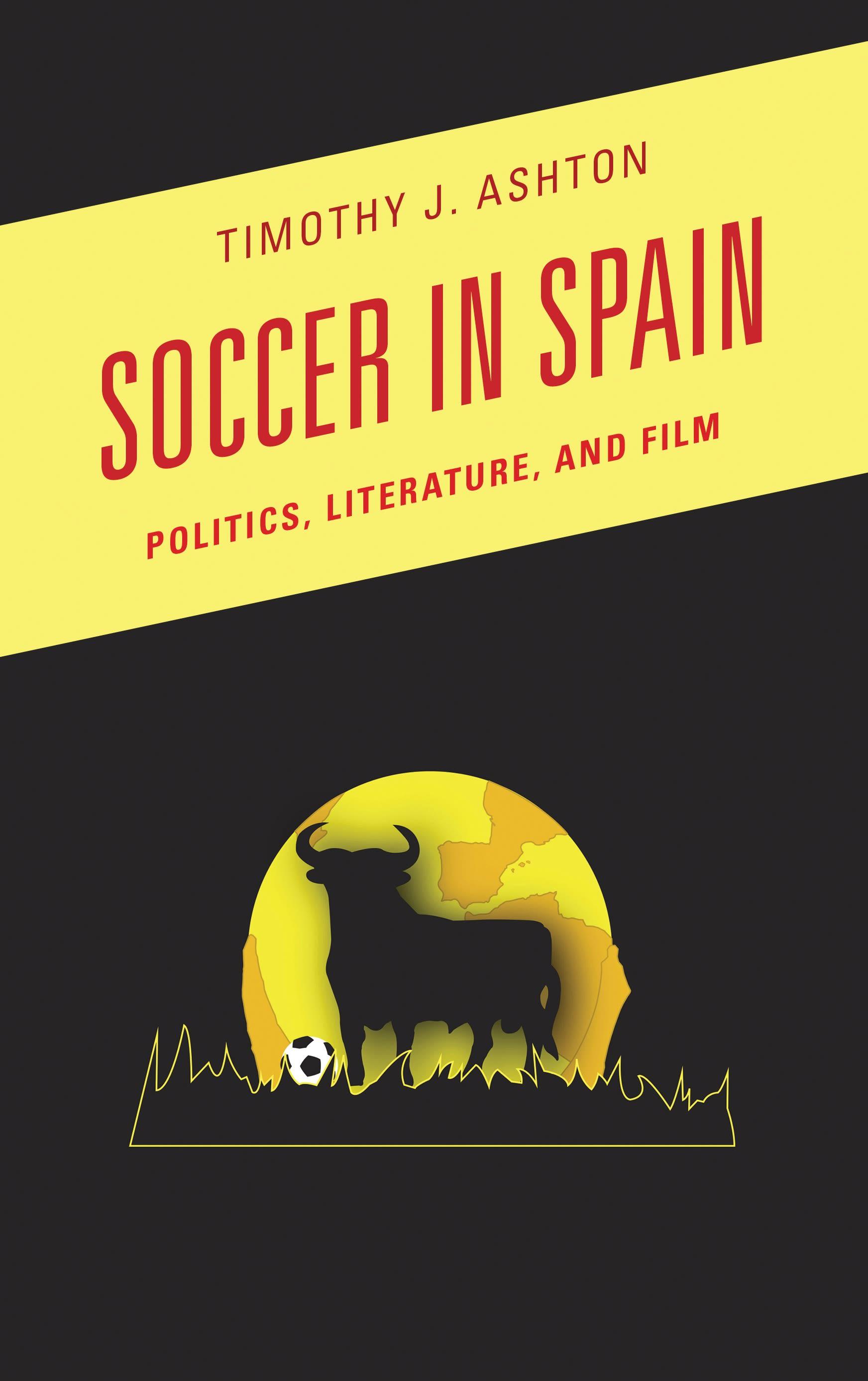
Soccer has the unique ability to represent and strengthen different cultural identities and ideologies throughout the world. Perhaps nowhere can this be seen more prominently than in Spain, which has surged to the forefront of the world’s most popular sport. The national team has won the last two European Championships and the 2010 World Cup, while the two preeminent club teams in Spain, Real Madrid and FC Barcelona, have reached the semifinals of the UEFA Champions League in 2011, 2012, and 2013. Even before the sport became a global phenomenon, soccer had established a strong connection with Spanish identity and culture.
In Soccer in Spain: Politics, Literature, and Film, Timothy J. Ashton examines the sport’s association with Spanish culture and society. In this volume, Ashton demonstrates how Spain’s soccer clubs reflected the politics of the region they represented and continue to reflect them today. The author also explores the often-tenuous relationship between the intellectual classes and the soccer community in Spain. Although some of the country’s most highly-praised literary figures had a passion for soccer—which was often reflected in their work—many intellectuals deemed the topic unsuitable for critical study. Ashton also discusses how soccer films faced a similar rebuff from Spanish intellectuals, though the popularity of these films has grown in recent years.
As soccer continues to be one of the modern world’s most significant representations of globalization, its importance as a cultural touchpoint cannot be ignored. For anyone wanting to learn more about the relationship between soccer, politics, and popular culture, this volume offers critical insights. Soccer in Spain is a valuable read for students and scholars of Spanish political history, literature, film, and sport.
In Soccer in Spain: Politics, Literature, and Film, Timothy J. Ashton examines the sport’s association with Spanish culture and society. In this volume, Ashton demonstrates how Spain’s soccer clubs reflected the politics of the region they represented and continue to reflect them today. The author also explores the often-tenuous relationship between the intellectual classes and the soccer community in Spain. Although some of the country’s most highly-praised literary figures had a passion for soccer—which was often reflected in their work—many intellectuals deemed the topic unsuitable for critical study. Ashton also discusses how soccer films faced a similar rebuff from Spanish intellectuals, though the popularity of these films has grown in recent years.
As soccer continues to be one of the modern world’s most significant representations of globalization, its importance as a cultural touchpoint cannot be ignored. For anyone wanting to learn more about the relationship between soccer, politics, and popular culture, this volume offers critical insights. Soccer in Spain is a valuable read for students and scholars of Spanish political history, literature, film, and sport.
Paga facilmente con carta, Klarna, Apple Pay o Google Pay. Non sei soddisfatto? Hai sempre 14 giorni per il rimborso. Leggi di più nei nostri termini. Per qualsiasi domanda, scrivici a hello@memmo.org.
Memmo rende lo studio più facile, ovunque tu sia nel mondo. Qui trovi i tuoi libri di testo e strumenti di studio intelligenti, tutto in un unico posto: riassunti, quiz, podcast e flashcard. E poi c'è Ted, il tuo compagno di studio che risponde a ogni tua domanda. Oltre 50.000 studenti studiano già qui: è stato creato per aiutarti a imparare più velocemente e a stressarti meno.