
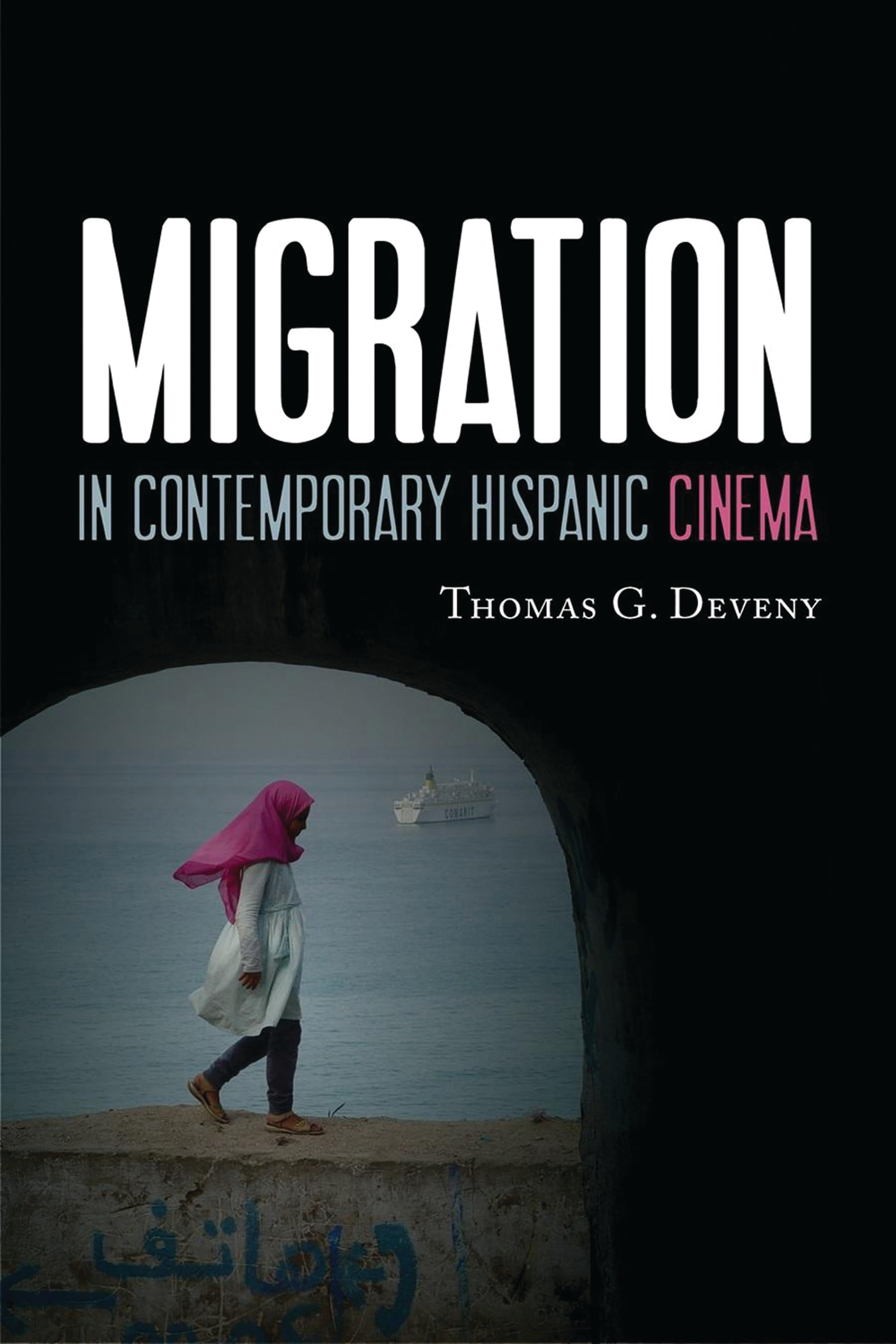
Immigration is an important and much-discussed topic throughout the world, and its depiction on screen helps shape the way we perceive this issue. In Migration in Contemporary Hispanic Cinema, Thomas G. Deveny looks at film and immigration with a global perspective, examining emigration and immigration films from Spain, Mexico, Argentina, Central America, and the Hispanic Caribbean.
In this volume, Deveny approaches each movie with a close textual analysis, keeping in mind the sociological theories regarding migration, as well as incorporating criticism on the film. Recurring themes, such as the depiction of the “Other,” individual identity, and social and cultural contextualization (stereotypes, rejection, acceptance, and change) are identified and discussed. Films such as Flowers from Another World, Return to Hansala, El Camino, 14 Kilometers, María Full of Grace, and others are carefully studied. Additional chapters analyze films about Colombian “mules” coming to the United States and Uruguayan prostitutes in Spain, and the final chapter examines Al otro Lado (To the Other Side), a film with narratives involving three nationalities and three destinations, thus showing the global nature of the phenomenon.
Through the analyses of immigration and emigration depictions in film, this book enables readers to comprehend the universal nature of migration. Like the films it analyzes, Migration in Contemporary Hispanic Cinema will provide a deeper understanding of people who leave their homeland for a better life.
In this volume, Deveny approaches each movie with a close textual analysis, keeping in mind the sociological theories regarding migration, as well as incorporating criticism on the film. Recurring themes, such as the depiction of the “Other,” individual identity, and social and cultural contextualization (stereotypes, rejection, acceptance, and change) are identified and discussed. Films such as Flowers from Another World, Return to Hansala, El Camino, 14 Kilometers, María Full of Grace, and others are carefully studied. Additional chapters analyze films about Colombian “mules” coming to the United States and Uruguayan prostitutes in Spain, and the final chapter examines Al otro Lado (To the Other Side), a film with narratives involving three nationalities and three destinations, thus showing the global nature of the phenomenon.
Through the analyses of immigration and emigration depictions in film, this book enables readers to comprehend the universal nature of migration. Like the films it analyzes, Migration in Contemporary Hispanic Cinema will provide a deeper understanding of people who leave their homeland for a better life.
Paga facilmente con carta, Klarna, Apple Pay o Google Pay. Non sei soddisfatto? Hai sempre 14 giorni per il rimborso. Leggi di più nei nostri termini. Per qualsiasi domanda, scrivici a hello@memmo.org.
Memmo rende lo studio più facile, ovunque tu sia nel mondo. Qui trovi i tuoi libri di testo e strumenti di studio intelligenti, tutto in un unico posto: riassunti, quiz, podcast e flashcard. E poi c'è Ted, il tuo compagno di studio che risponde a ogni tua domanda. Oltre 50.000 studenti studiano già qui: è stato creato per aiutarti a imparare più velocemente e a stressarti meno.