
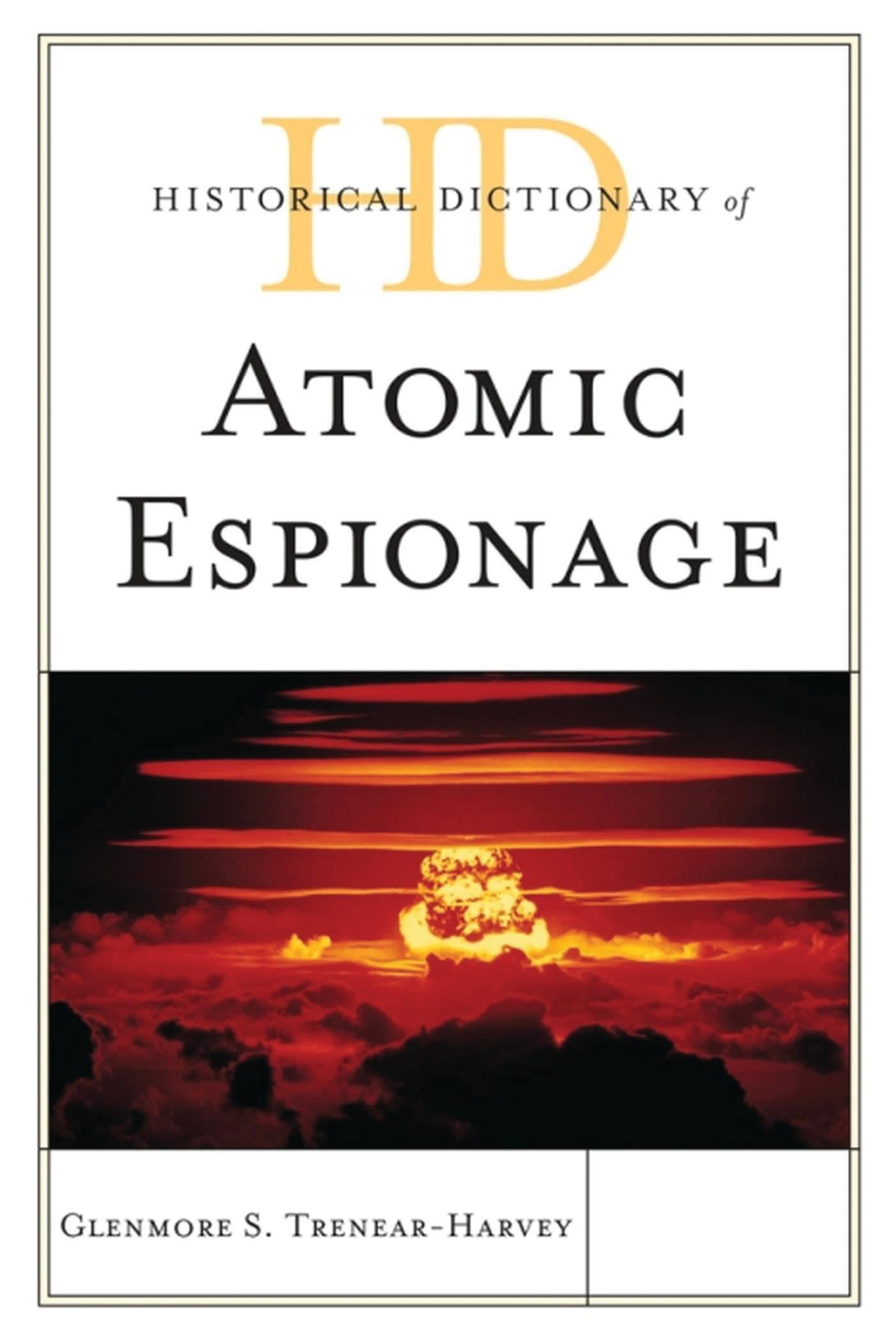
Almost from the moment in 1940 that Otto Frisch and Rudofl Peierls suggested, from their small office in the University of Birmingham, that an atomic weapon could be miniaturized and delivered to its target by aircraft, the concept of atomic espionage can be said to have existed. No sooner had the famous Frisch-Peierls Memorandum been received by the British War Cabinet than a Soviet mole, John Cairncross, passed the details on to his Soviet contact. And 70 years later with the International Atomic Energy Authority (IAEA) estimating that up to 40 countries now have the capability of building nuclear weapons, the need to monitor this activity remains crucial.
The Historical Dictionary of Atomic Espionage relates the history of atomic espionage through a chronology, an introductory essay, and cross-referenced dictionary entries on the agencies, agents, and operations. This book is an excellent access point for students, researchers, and anyone wanting to know more about atomic espionage.
The Historical Dictionary of Atomic Espionage relates the history of atomic espionage through a chronology, an introductory essay, and cross-referenced dictionary entries on the agencies, agents, and operations. This book is an excellent access point for students, researchers, and anyone wanting to know more about atomic espionage.
Paga facilmente con carta, Klarna, Apple Pay o Google Pay. Non sei soddisfatto? Hai sempre 14 giorni per il rimborso. Leggi di più nei nostri termini. Per qualsiasi domanda, scrivici a hello@memmo.org.
Memmo rende lo studio più facile, ovunque tu sia nel mondo. Qui trovi i tuoi libri di testo e strumenti di studio intelligenti, tutto in un unico posto: riassunti, quiz, podcast e flashcard. E poi c'è Ted, il tuo compagno di studio che risponde a ogni tua domanda. Oltre 50.000 studenti studiano già qui: è stato creato per aiutarti a imparare più velocemente e a stressarti meno.