
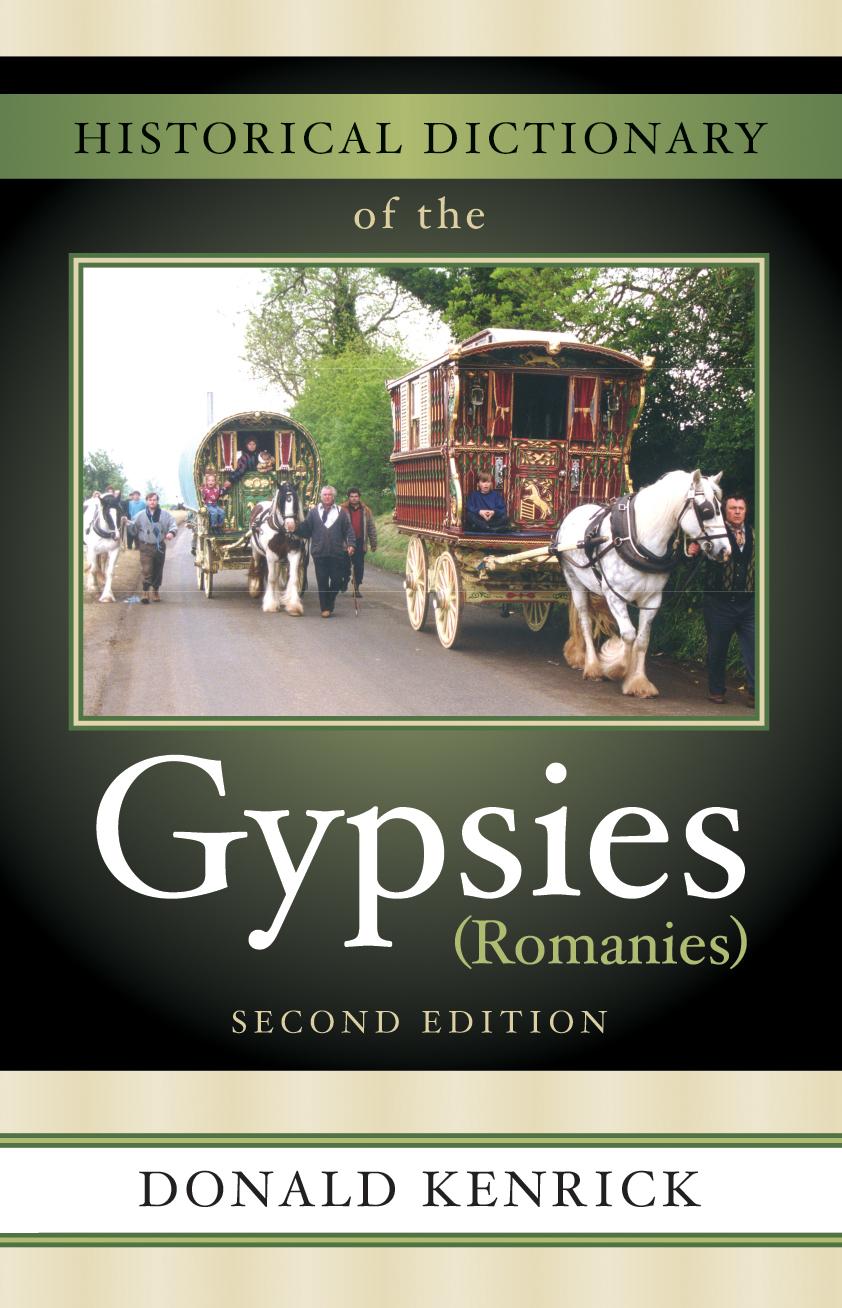
Originating in India, the Gypsies arrived in Europe around the 14th century, spreading not only across the entirety of the continent but also immigrating to the Americas. The first Gypsy migration included farmworkers, blacksmiths, and mercenary soldiers, as well as musicians, fortune-tellers, and entertainers. At first, they were generally welcome as an interesting diversion to the dull routine of that period. Soon, however, they attracted the antagonism of the governing powers, as they have continually done throughout the following centuries.
The second edition of the Historical Dictionary of the Gypsies (Romanies) seeks to end such prejudice by clarifying the facts about this nomadic people. Through a list of acronyms, a chronology, an introductory essay, a bibliography, and hundreds of cross-referenced dictionary entries on significant persons, places, events, institutions, and aspects of culture, society, economy, and politics, the history of the Gypsies and their culture is told.
The second edition of the Historical Dictionary of the Gypsies (Romanies) seeks to end such prejudice by clarifying the facts about this nomadic people. Through a list of acronyms, a chronology, an introductory essay, a bibliography, and hundreds of cross-referenced dictionary entries on significant persons, places, events, institutions, and aspects of culture, society, economy, and politics, the history of the Gypsies and their culture is told.
Paga facilmente con carta, Klarna, Apple Pay o Google Pay. Non sei soddisfatto? Hai sempre 14 giorni per il rimborso. Leggi di più nei nostri termini. Per qualsiasi domanda, scrivici a hello@memmo.org.
Memmo rende lo studio più facile, ovunque tu sia nel mondo. Qui trovi i tuoi libri di testo e strumenti di studio intelligenti, tutto in un unico posto: riassunti, quiz, podcast e flashcard. E poi c'è Ted, il tuo compagno di studio che risponde a ogni tua domanda. Oltre 50.000 studenti studiano già qui: è stato creato per aiutarti a imparare più velocemente e a stressarti meno.