
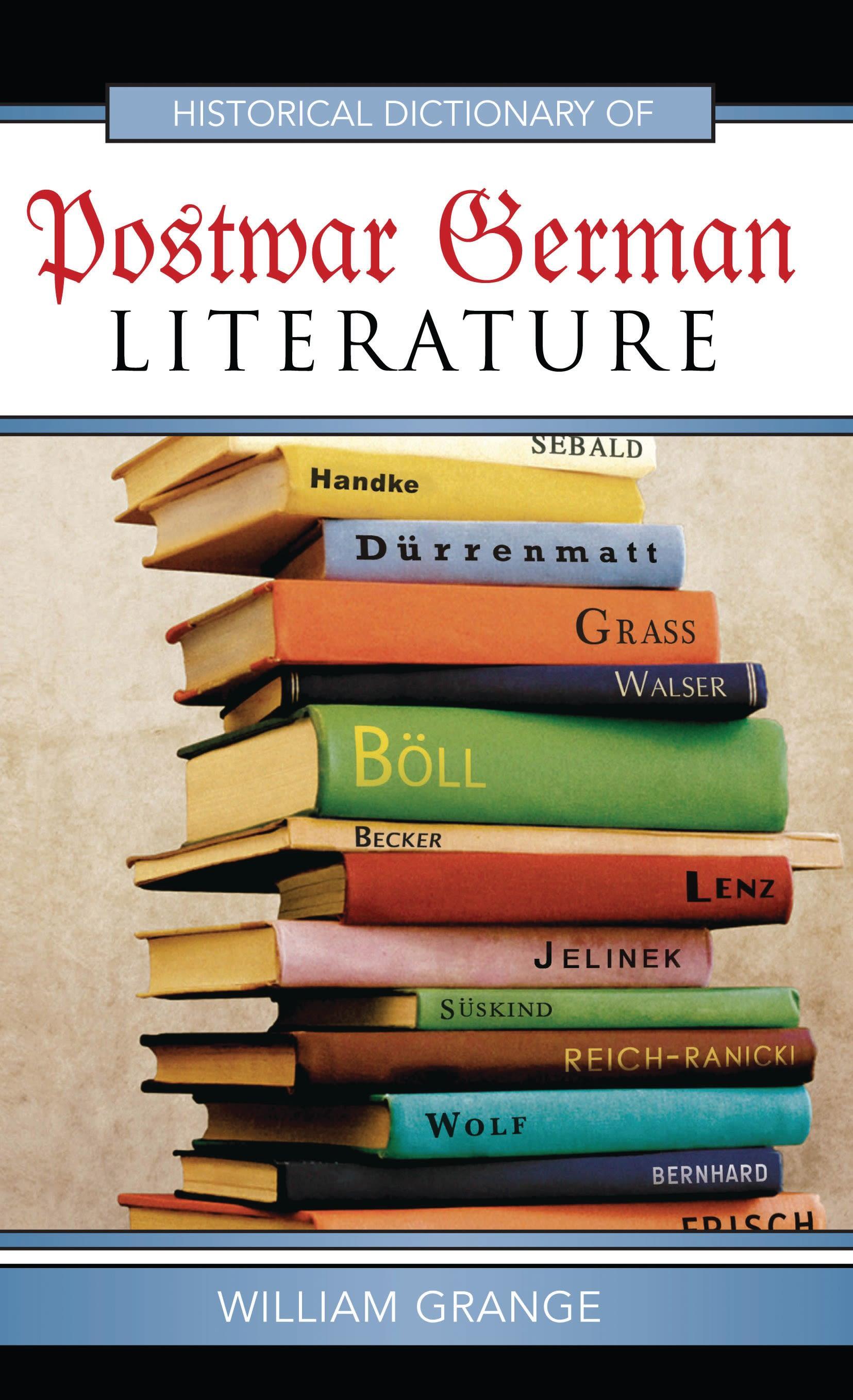
Some authors strongly criticized attempts to rebuild a German literary culture in the aftermath of World War II, while others actively committed themselves to "dealing with the German past." There are writers in Austria and Switzerland that find other contradictions of contemporary life troubling, while some find them funny or even worth celebrating. German postwar literature has, in the minds of some observers, developed a kind of split personality. In view of the traumatic monstrosities of the previous century that development may seem logical to some.
The Historical Dictionary of Postwar German Literature is devoted to modern literature produced in the German language, whether from Germany, Austria, Switzerland or writers using German in other countries. This volume covers an extensive period of time, beginning in 1945 at what was called "zero hour" for German literature and proceeds into the 21st century, concluding in 2008. This is done through a list of acronyms and abbreviations, a chronology, an introductory essay, a bibliography, and hundreds of cross-referenced dictionary entries on writers, such as Nobel Prize-winners Heinrich Böll, Günter Grass, Elias Canetti, Elfriede Jelinek, and W. G. Sebald. There are also entries on individual works, genres, movements, literary styles, and forms.
The Historical Dictionary of Postwar German Literature is devoted to modern literature produced in the German language, whether from Germany, Austria, Switzerland or writers using German in other countries. This volume covers an extensive period of time, beginning in 1945 at what was called "zero hour" for German literature and proceeds into the 21st century, concluding in 2008. This is done through a list of acronyms and abbreviations, a chronology, an introductory essay, a bibliography, and hundreds of cross-referenced dictionary entries on writers, such as Nobel Prize-winners Heinrich Böll, Günter Grass, Elias Canetti, Elfriede Jelinek, and W. G. Sebald. There are also entries on individual works, genres, movements, literary styles, and forms.
Paga facilmente con carta, Klarna, Apple Pay o Google Pay. Non sei soddisfatto? Hai sempre 14 giorni per il rimborso. Leggi di più nei nostri termini. Per qualsiasi domanda, scrivici a hello@memmo.org.
Memmo rende lo studio più facile, ovunque tu sia nel mondo. Qui trovi i tuoi libri di testo e strumenti di studio intelligenti, tutto in un unico posto: riassunti, quiz, podcast e flashcard. E poi c'è Ted, il tuo compagno di studio che risponde a ogni tua domanda. Oltre 50.000 studenti studiano già qui: è stato creato per aiutarti a imparare più velocemente e a stressarti meno.