
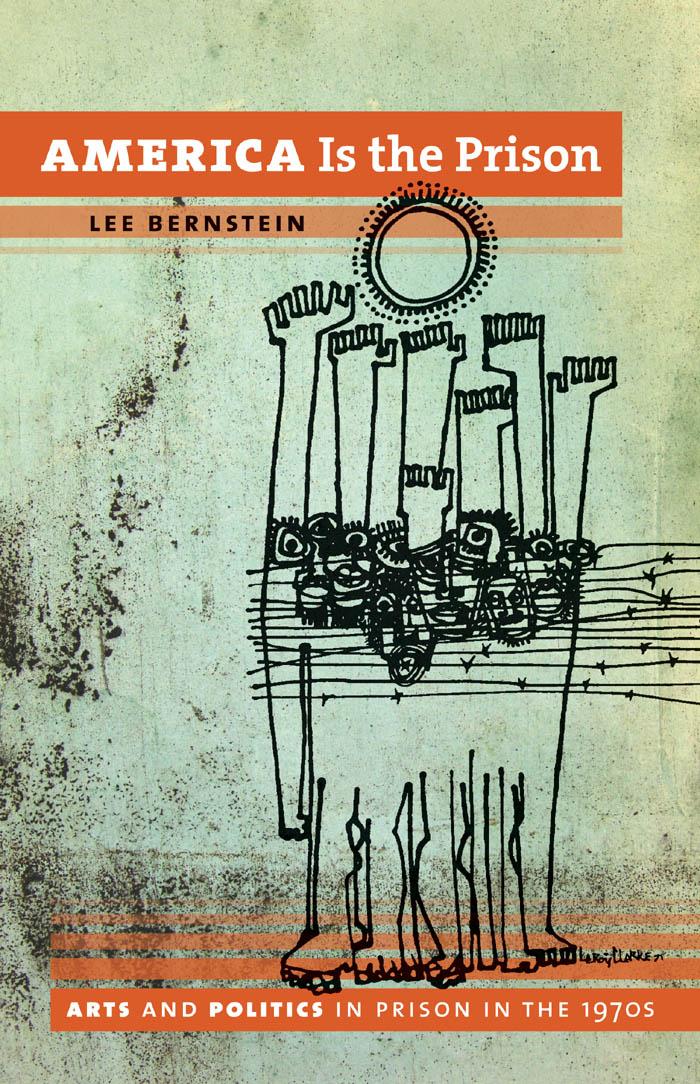
In the 1970s, while politicians and activists outside prisons debated the proper response to crime, incarcerated people helped shape those debates though a broad range of remarkable political and literary writings.
Lee Bernstein explores the forces that sparked a dramatic “prison art renaissance,” shedding light on how incarcerated people produced powerful works of writing, performance, and visual art. These included everything from George Jackson’s revolutionary Soledad Brother to Miguel Piñero’s acclaimed off-Broadway play and Hollywood film Short Eyes. An extraordinary range of prison programs — fine arts, theater, secondary education, and prisoner-run programs — allowed the voices of prisoners to influence the Black Arts Movement, the Nuyorican writers, “New Journalism,” and political theater, among the most important aesthetic contributions of the decade.
By the 1980s and '90s, prisoners' educational and artistic programs were scaled back or eliminated as the “war on crime” escalated. But by then these prisoners' words had crossed over the wall, helping many Americans to rethink the meaning of the walls themselves and, ultimately, the meaning of the society that produced them.
Lee Bernstein explores the forces that sparked a dramatic “prison art renaissance,” shedding light on how incarcerated people produced powerful works of writing, performance, and visual art. These included everything from George Jackson’s revolutionary Soledad Brother to Miguel Piñero’s acclaimed off-Broadway play and Hollywood film Short Eyes. An extraordinary range of prison programs — fine arts, theater, secondary education, and prisoner-run programs — allowed the voices of prisoners to influence the Black Arts Movement, the Nuyorican writers, “New Journalism,” and political theater, among the most important aesthetic contributions of the decade.
By the 1980s and '90s, prisoners' educational and artistic programs were scaled back or eliminated as the “war on crime” escalated. But by then these prisoners' words had crossed over the wall, helping many Americans to rethink the meaning of the walls themselves and, ultimately, the meaning of the society that produced them.
Paga facilmente con carta, Klarna, Apple Pay o Google Pay. Non sei soddisfatto? Hai sempre 14 giorni per il rimborso. Leggi di più nei nostri termini. Per qualsiasi domanda, scrivici a hello@memmo.org.
Memmo rende lo studio più facile, ovunque tu sia nel mondo. Qui trovi i tuoi libri di testo e strumenti di studio intelligenti, tutto in un unico posto: riassunti, quiz, podcast e flashcard. E poi c'è Ted, il tuo compagno di studio che risponde a ogni tua domanda. Oltre 50.000 studenti studiano già qui: è stato creato per aiutarti a imparare più velocemente e a stressarti meno.
Potrebbe interessarti anche
Acquista il libro0