
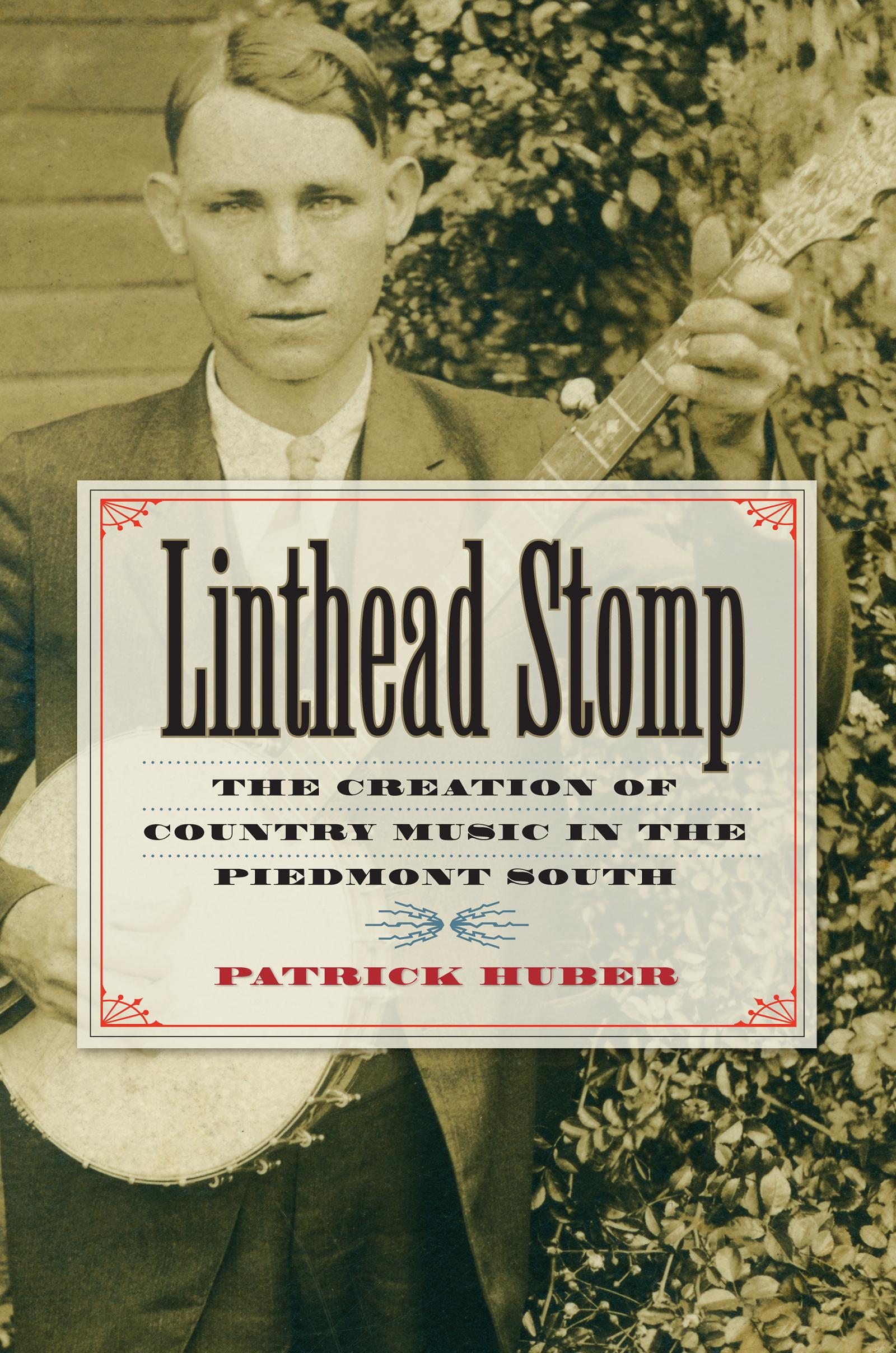
Contrary to popular belief, the roots of American country music do not lie solely on southern farms or in mountain hollows. Rather, much of this music recorded before World War II emerged from the bustling cities and towns of the Piedmont South. No group contributed more to the commercialization of early country music than southern factory workers. In Linthead Stomp, Patrick Huber explores the origins and development of this music in the Piedmont’s mill villages.
Huber offers vivid portraits of a colorful cast of Piedmont millhand musicians, including Fiddlin' John Carson, Charlie Poole, Dave McCarn, and the Dixon Brothers, and considers the impact that urban living, industrial work, and mass culture had on their lives and music. Drawing on a broad range of sources, including rare 78-rpm recordings and unpublished interviews, Huber reveals how the country music recorded between 1922 and 1942 was just as modern as the jazz music of the same era. Linthead Stomp celebrates the Piedmont millhand fiddlers, guitarists, and banjo pickers who combined the collective memories of the rural countryside with the upheavals of urban-industrial life to create a distinctive American music that spoke to the changing realities of the twentieth-century South.
Paga facilmente con carta, Klarna, Apple Pay o Google Pay. Non sei soddisfatto? Hai sempre 14 giorni per il rimborso. Leggi di più nei nostri termini. Per qualsiasi domanda, scrivici a hello@memmo.org.
Memmo rende lo studio più facile, ovunque tu sia nel mondo. Qui trovi i tuoi libri di testo e strumenti di studio intelligenti, tutto in un unico posto: riassunti, quiz, podcast e flashcard. E poi c'è Ted, il tuo compagno di studio che risponde a ogni tua domanda. Oltre 50.000 studenti studiano già qui: è stato creato per aiutarti a imparare più velocemente e a stressarti meno.