
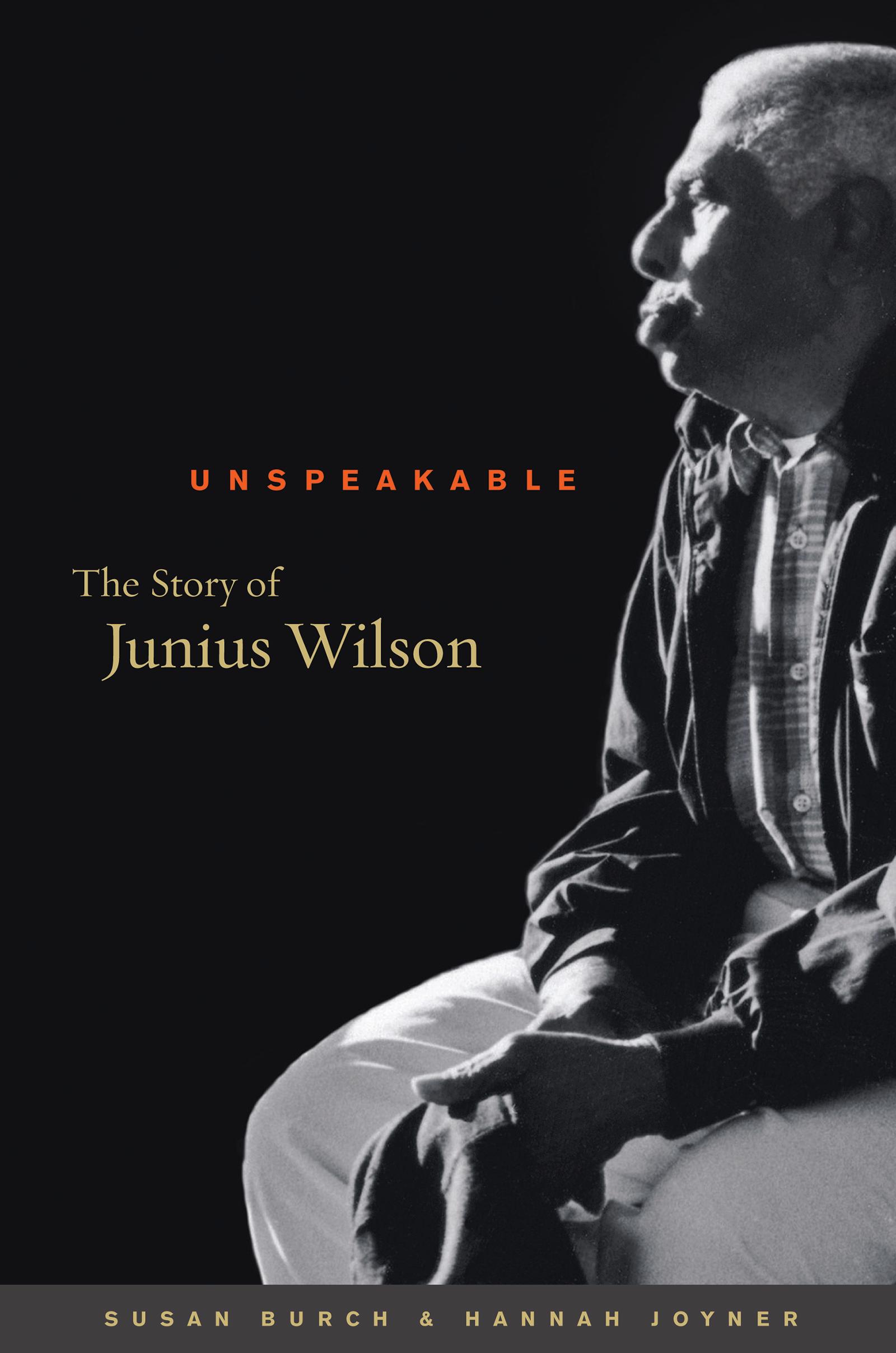
Junius Wilson (1908–2001) spent seventy-six years at a state mental hospital in Goldsboro, North Carolina, including six in the criminal ward. He had never been declared insane by a medical professional or found guilty of any criminal charge. But he was deaf and black in the Jim Crow South. Unspeakable is the story of his life.
Using legal records, institutional files, and extensive oral history interviews — some conducted in sign language — Susan Burch and Hannah Joyner piece together the story of a deaf man accused in 1925 of attempted rape, found insane at a lunacy hearing, committed to the criminal ward of the State Hospital for the Colored Insane, castrated, forced to labor for the institution, and held at the hospital for more than seven decades. Junius Wilson’s life was shaped by some of the major developments of twentieth-century America: Jim Crow segregation, the civil rights movement, deinstitutionalization, the rise of professional social work, and the emergence of the deaf and disability rights movements. In addition to offering a bottom-up history of life in a segregated mental institution, Burch and Joyner’s work also enriches the traditional interpretation of Jim Crow by highlighting the complicated intersections of race and disability as well as of community and language.
This moving study expands the boundaries of what biography can and should be. There is much to learn and remember about Junius Wilson — and the countless others who have lived unspeakable histories.
Using legal records, institutional files, and extensive oral history interviews — some conducted in sign language — Susan Burch and Hannah Joyner piece together the story of a deaf man accused in 1925 of attempted rape, found insane at a lunacy hearing, committed to the criminal ward of the State Hospital for the Colored Insane, castrated, forced to labor for the institution, and held at the hospital for more than seven decades. Junius Wilson’s life was shaped by some of the major developments of twentieth-century America: Jim Crow segregation, the civil rights movement, deinstitutionalization, the rise of professional social work, and the emergence of the deaf and disability rights movements. In addition to offering a bottom-up history of life in a segregated mental institution, Burch and Joyner’s work also enriches the traditional interpretation of Jim Crow by highlighting the complicated intersections of race and disability as well as of community and language.
This moving study expands the boundaries of what biography can and should be. There is much to learn and remember about Junius Wilson — and the countless others who have lived unspeakable histories.
Paga facilmente con carta, Klarna, Apple Pay o Google Pay. Non sei soddisfatto? Hai sempre 14 giorni per il rimborso. Leggi di più nei nostri termini. Per qualsiasi domanda, scrivici a hello@memmo.org.
Memmo rende lo studio più facile, ovunque tu sia nel mondo. Qui trovi i tuoi libri di testo e strumenti di studio intelligenti, tutto in un unico posto: riassunti, quiz, podcast e flashcard. E poi c'è Ted, il tuo compagno di studio che risponde a ogni tua domanda. Oltre 50.000 studenti studiano già qui: è stato creato per aiutarti a imparare più velocemente e a stressarti meno.
Potrebbe interessarti anche
Acquista il libro0