
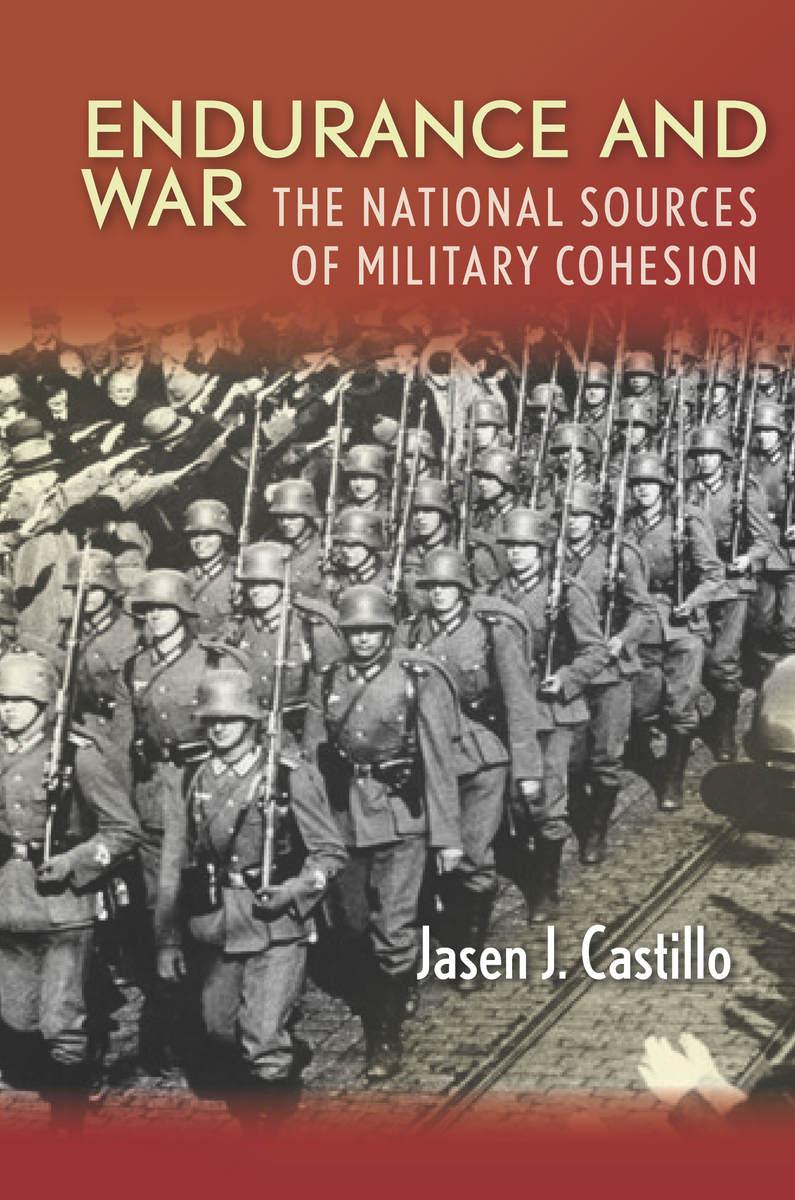
Scholars and military practitioners alike have long sought to understand why some country's militaries fight hard when facing defeat while others collapse. In Endurance and War, Jasen Castillo presents a new unifying theory—cohesion theory—to explain why national militaries differ in their staying power. His argument builds on insights from the literatures on group solidarity in general and military effectiveness in particular, which argue that the stronger the ties binding together individuals in a group of any kind, the higher the degree of cohesion that a group will exhibit when taking collective action, including fighting in war. Specifically, he argues that two types of ties determine the cohesion, and therefore the resilience, of a nation's armed forces during war: the degree of control a regime holds over its citizens and the amount of autonomy the armed forces possess to focus on training for warfighting.
Understanding why armed forces differ in their cohesion should help U.S. military planners better assess the military capabilities of potential adversaries, like Iran and North Korea. For scholars of international politics, cohesion theory can help provide insights into how countries create military power and how they win wars.
Paga facilmente con carta, Klarna, Apple Pay o Google Pay. Non sei soddisfatto? Hai sempre 14 giorni per il rimborso. Leggi di più nei nostri termini. Per qualsiasi domanda, scrivici a hello@memmo.org.
Memmo rende lo studio più facile, ovunque tu sia nel mondo. Qui trovi i tuoi libri di testo e strumenti di studio intelligenti, tutto in un unico posto: riassunti, quiz, podcast e flashcard. E poi c'è Ted, il tuo compagno di studio che risponde a ogni tua domanda. Oltre 50.000 studenti studiano già qui: è stato creato per aiutarti a imparare più velocemente e a stressarti meno.