
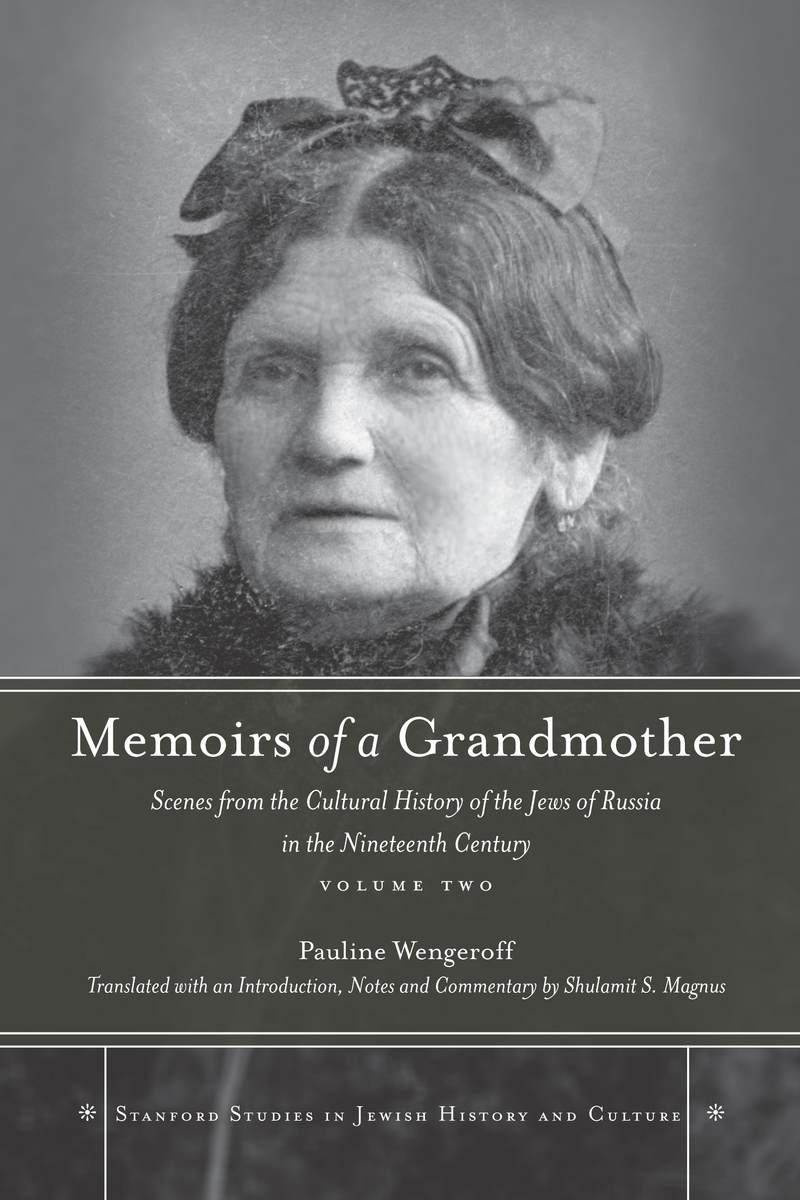
Pauline Wengeroff's Memoirs of a Grandmother offers a unique first-person window into traditionalism, modernity, and the tensions linking the two in nineteenth-century Russia. Wengeroff (1833–1916), a perceptive, highly literate social observer, tells a gripping tale of cultural transformation, situating her narrative in the experience of women and families.
In Volume Two, Wengeroff claims that Jewish women were capable and desirous of adopting the best of European modernity but were also wedded to tradition, while Jewish men recklessly abandoned tradition and forced their wives to do the same. The result was not only marital and intergenerational conflict but also catastrophic cultural loss, with women's inability to transmit tradition in the home leading to larger cultural drift. Two of Wengeroff's children converted when faced with anti-Jewish educational and professional discrimination, unwilling to sacrifice secular ambitions and visions for the sake of a traditional culture they did not know. Memoirs is a tale of loss but also of significant hope, which Wengeroff situates not in her children but in a new generation of Jewish youth reclaiming Jewish memory. To them, she addresses her Memoirs, giving an "orphaned youth"—orphaned of their past and culture—a "grandmother."
Paga facilmente con carta, Klarna, Apple Pay o Google Pay. Non sei soddisfatto? Hai sempre 14 giorni per il rimborso. Leggi di più nei nostri termini. Per qualsiasi domanda, scrivici a hello@memmo.org.
Memmo rende lo studio più facile, ovunque tu sia nel mondo. Qui trovi i tuoi libri di testo e strumenti di studio intelligenti, tutto in un unico posto: riassunti, quiz, podcast e flashcard. E poi c'è Ted, il tuo compagno di studio che risponde a ogni tua domanda. Oltre 50.000 studenti studiano già qui: è stato creato per aiutarti a imparare più velocemente e a stressarti meno.