
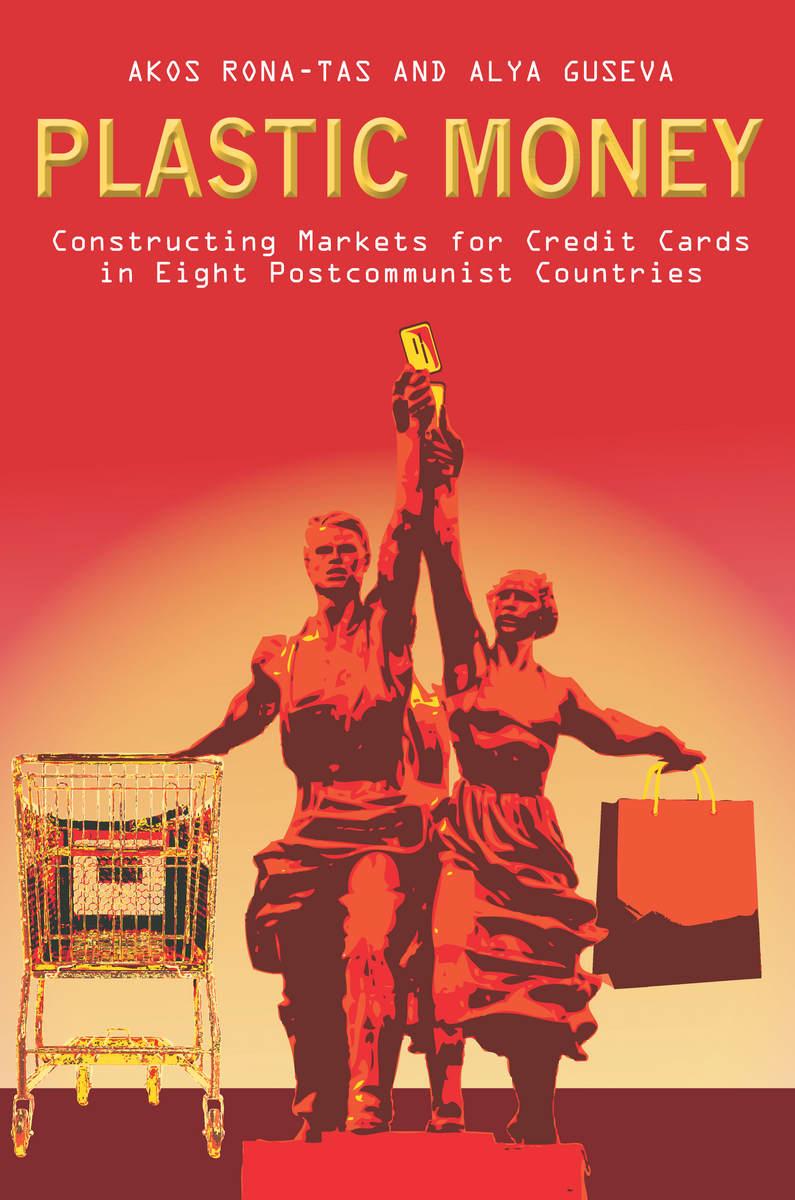
In the United States, we now take our ability to pay with plastic for granted. In other parts of the world, however, the establishment of a "credit-card economy" has not been easy. In countries without a history of economic stability, how can banks decide who should be given a credit card? How do markets convince people to use cards, make their transactions visible to authorities, assume the potential risk of fraud, and pay to use their own money? Why should merchants agree to pay extra if customers use cards instead of cash?
In Plastic Money, Akos Rona-Tas and Alya Guseva tell the story of how banks overcame these and other quandaries as they constructed markets for credit cards in eight postcommunist countries. We know how markets work once they are built, but this book develops a unique framework for understanding how markets are engineered from the ground up—by selecting key players, ensuring cooperation, and providing conditions for the valuation of a product. Drawing on extensive interviews and fieldwork, the authors chronicle how banks overcame these hurdles and generated a desire for their new product in the midst of a transition from communism to capitalism.
Paga facilmente con carta, Klarna, Apple Pay o Google Pay. Non sei soddisfatto? Hai sempre 14 giorni per il rimborso. Leggi di più nei nostri termini. Per qualsiasi domanda, scrivici a hello@memmo.org.
Memmo rende lo studio più facile, ovunque tu sia nel mondo. Qui trovi i tuoi libri di testo e strumenti di studio intelligenti, tutto in un unico posto: riassunti, quiz, podcast e flashcard. E poi c'è Ted, il tuo compagno di studio che risponde a ogni tua domanda. Oltre 50.000 studenti studiano già qui: è stato creato per aiutarti a imparare più velocemente e a stressarti meno.