
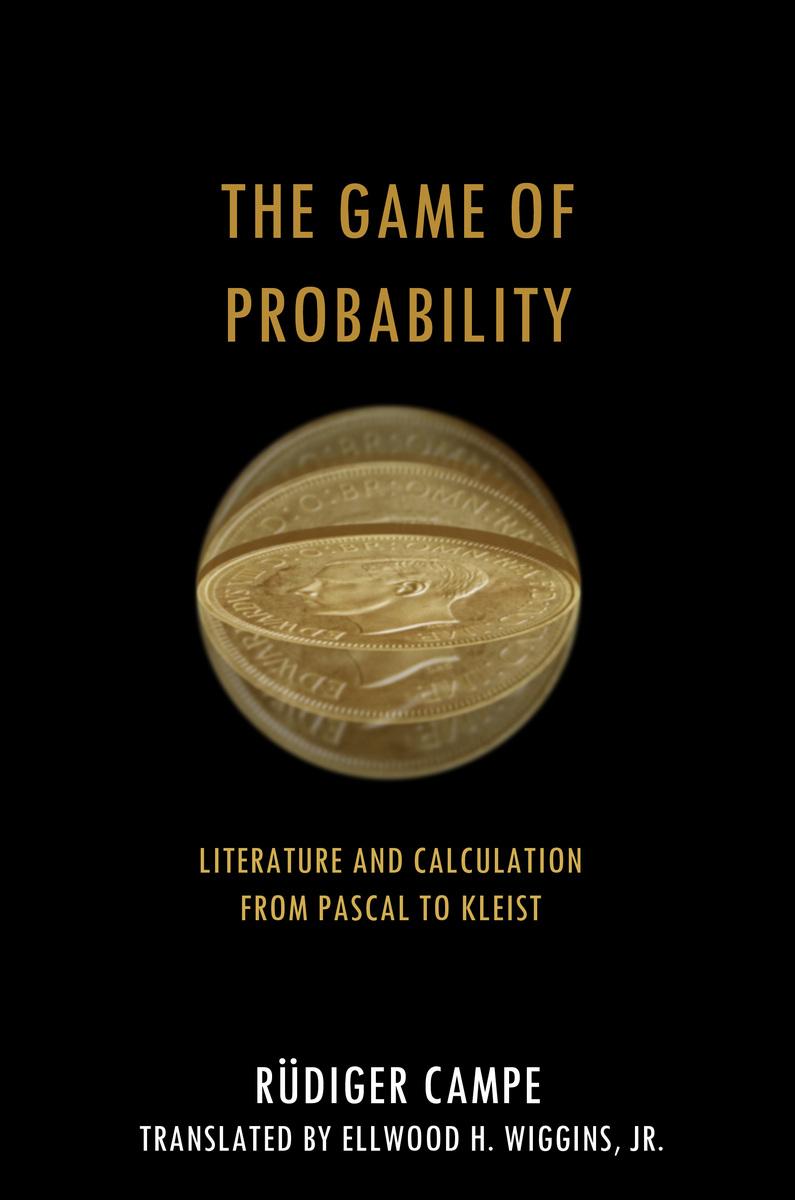
There exist literary histories of probability and scientific histories of probability, but it has generally been thought that the two did not meet. Campe begs to differ. Mathematical probability, he argues, took over the role of the old probability of poets, orators, and logicians, albeit in scientific terms. Indeed, mathematical probability would not even have been possible without the other probability, whose roots lay in classical antiquity.
The Game of Probability revisits the seventeenth and eighteenth-century "probabilistic revolution," providing a history of the relations between mathematical and rhetorical techniques, between the scientific and the aesthetic. This was a revolution that overthrew the "order of things," notably the way that science and art positioned themselves with respect to reality, and its participants included a wide variety of people from as many walks of life. Campe devotes chapters to them in turn. Focusing on the interpretation of games of chance as the model for probability and on the reinterpretation of aesthetic form as verisimilitude (a critical question for theoreticians of that new literary genre, the novel), the scope alone of Campe's book argues for probability's crucial role in the constitution of modernity.
Paga facilmente con carta, Klarna, Apple Pay o Google Pay. Non sei soddisfatto? Hai sempre 14 giorni per il rimborso. Leggi di più nei nostri termini. Per qualsiasi domanda, scrivici a hello@memmo.org.
Memmo rende lo studio più facile, ovunque tu sia nel mondo. Qui trovi i tuoi libri di testo e strumenti di studio intelligenti, tutto in un unico posto: riassunti, quiz, podcast e flashcard. E poi c'è Ted, il tuo compagno di studio che risponde a ogni tua domanda. Oltre 50.000 studenti studiano già qui: è stato creato per aiutarti a imparare più velocemente e a stressarti meno.