
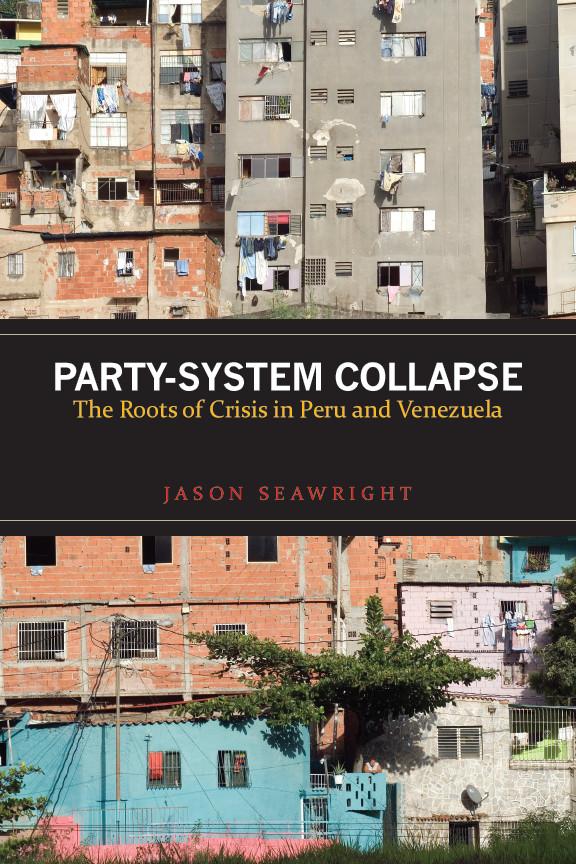
Most party systems are relatively stable over time. Yet in the 1980s and 1990s, established party systems in Peru and Venezuela broke down, leading to the elections of outsider Alberto Fujimori and anti-party populist Hugo Chavez. Focusing on these two cases, this book explores the causes of systemic collapse.
To date, scholars have pointed to economic crises, the rise of the informal economy, and the charisma and political brilliance of Fujimori and Chavez to explain the changes in Peru and Venezuela. This book uses economic data, surveys, and experiments to show that these explanations are incomplete. Political scientist Jason Seawright argues that party-system collapse is motivated fundamentally by voter anger at the traditional political parties, which is produced by corruption scandals and failures of representation. Integrating economic, organizational, and individual considerations, Seawright provides a new explanation and compelling new evidence to present a fuller picture of voters' decisions and actions in bringing about party-system collapse, and the rise of important outsider political leaders in South America.
Paga facilmente con carta, Klarna, Apple Pay o Google Pay. Non sei soddisfatto? Hai sempre 14 giorni per il rimborso. Leggi di più nei nostri termini. Per qualsiasi domanda, scrivici a hello@memmo.org.
Memmo rende lo studio più facile, ovunque tu sia nel mondo. Qui trovi i tuoi libri di testo e strumenti di studio intelligenti, tutto in un unico posto: riassunti, quiz, podcast e flashcard. E poi c'è Ted, il tuo compagno di studio che risponde a ogni tua domanda. Oltre 50.000 studenti studiano già qui: è stato creato per aiutarti a imparare più velocemente e a stressarti meno.