
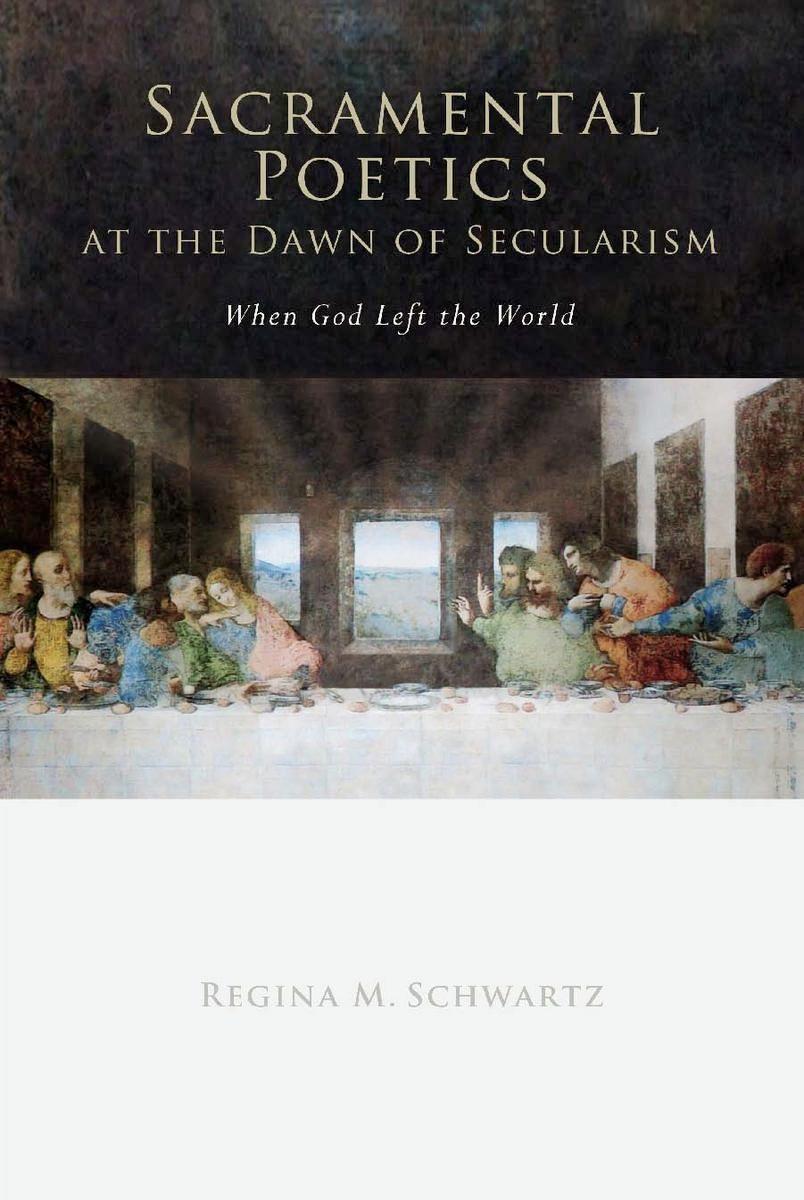
Sacramental Poetics at the Dawn of Secularism asks what happened when the world was shaken by challenges to the sacred order as people had known it, an order that regulated both their actions and beliefs. When Reformers gave up the doctrine of transubstantiation (even as they held onto revised forms of the Eucharist), they lost a doctrine that infuses all materiality, spirituality, and signification with the presence of God. That presence guaranteed the cleansing of human fault, the establishment of justice, the success of communication, the possibility of union with God and another, and love. These longings were not lost but displaced, Schwartz argues, onto other cultural forms in a movement from ritual to the arts, from the sacrament to the sacramental. Investigating the relationship of the arts to the sacred, Schwartz returns to the primary meaning of "sacramental" as "sign making," noting that because the sign always points beyond itself, it participates in transcendence, and this evocation of transcendence, of mystery, is the work of a sacramental poetics.
Paga facilmente con carta, Klarna, Apple Pay o Google Pay. Non sei soddisfatto? Hai sempre 14 giorni per il rimborso. Leggi di più nei nostri termini. Per qualsiasi domanda, scrivici a hello@memmo.org.
Memmo rende lo studio più facile, ovunque tu sia nel mondo. Qui trovi i tuoi libri di testo e strumenti di studio intelligenti, tutto in un unico posto: riassunti, quiz, podcast e flashcard. E poi c'è Ted, il tuo compagno di studio che risponde a ogni tua domanda. Oltre 50.000 studenti studiano già qui: è stato creato per aiutarti a imparare più velocemente e a stressarti meno.