
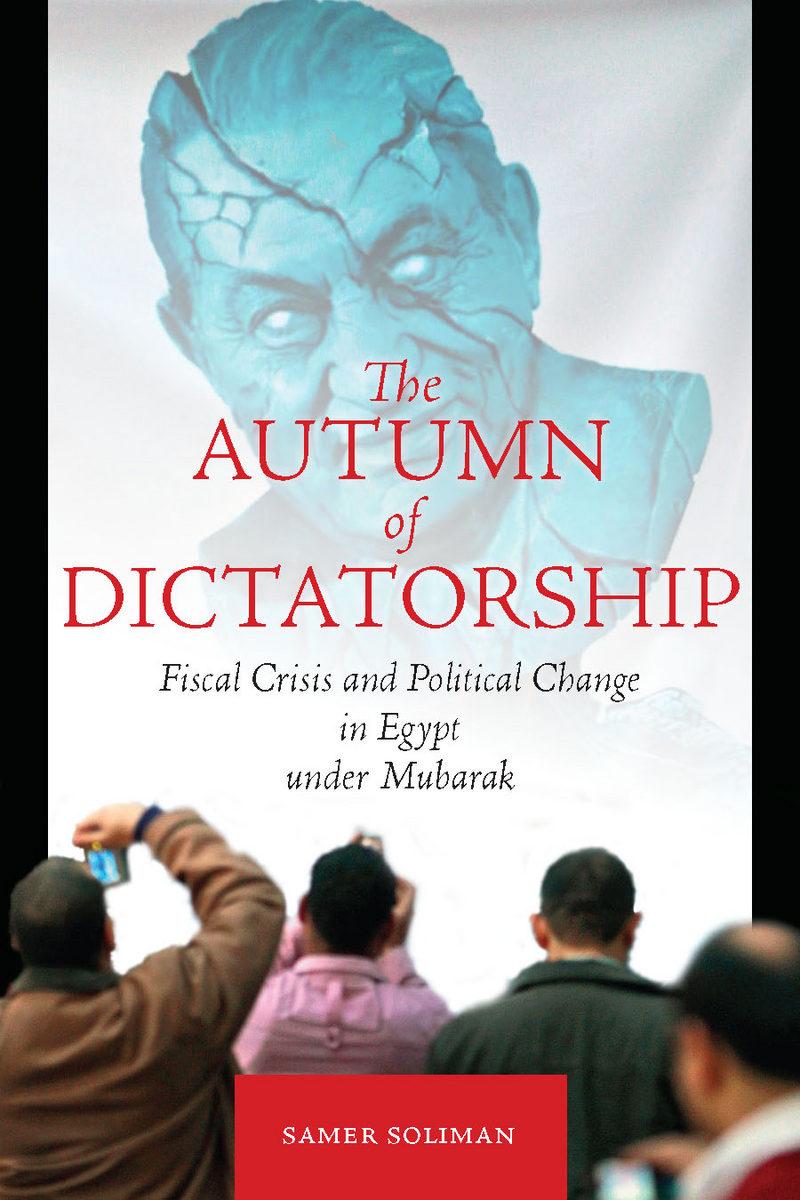
The Egyptian protests in early 2011 took many by surprise. In the days immediately following, commentators wondered openly over the changing situation across the Middle East. But protest is nothing new to Egypt, and labor activism and political activism, most notably the Kifaya (Enough) movement, have increased dramatically over recent years. In hindsight, it is the durability of the Mubarak regime, not its sudden loss of legitimacy that should be more surprising. Though many have turned to social media for explanation of the events, in this book, Samer Soliman follows the age-old adage—follow the money.
Over the last thirty years, the Egyptian state has increasingly given its citizens less money and fewer social benefits while simultaneously demanding more taxes and resources. This has lead to a weakened state—deteriorating public services, low levels of law enforcement, poor opportunities for employment and economic development—while simultaneously inflated the security machine that sustains the authoritarian regime. Studying the regime from the point of view of its deeds rather than its discourse, this book tackles the relationship between fiscal crisis and political change in Egypt.
Ultimately, the Egyptian case is not one of the success of a regime, but the failure of a state. The regime lasted for 30 years because it was able to sustain and reproduce itself, but left an increasingly weakened state, unable to facilitate capitalist development in the country. The resulting financial crisis profoundly changed the socio-economic landscape of the country, and now is paving the way for political change and the emergence of new social forces.
Paga facilmente con carta, Klarna, Apple Pay o Google Pay. Non sei soddisfatto? Hai sempre 14 giorni per il rimborso. Leggi di più nei nostri termini. Per qualsiasi domanda, scrivici a hello@memmo.org.
Memmo rende lo studio più facile, ovunque tu sia nel mondo. Qui trovi i tuoi libri di testo e strumenti di studio intelligenti, tutto in un unico posto: riassunti, quiz, podcast e flashcard. E poi c'è Ted, il tuo compagno di studio che risponde a ogni tua domanda. Oltre 50.000 studenti studiano già qui: è stato creato per aiutarti a imparare più velocemente e a stressarti meno.