
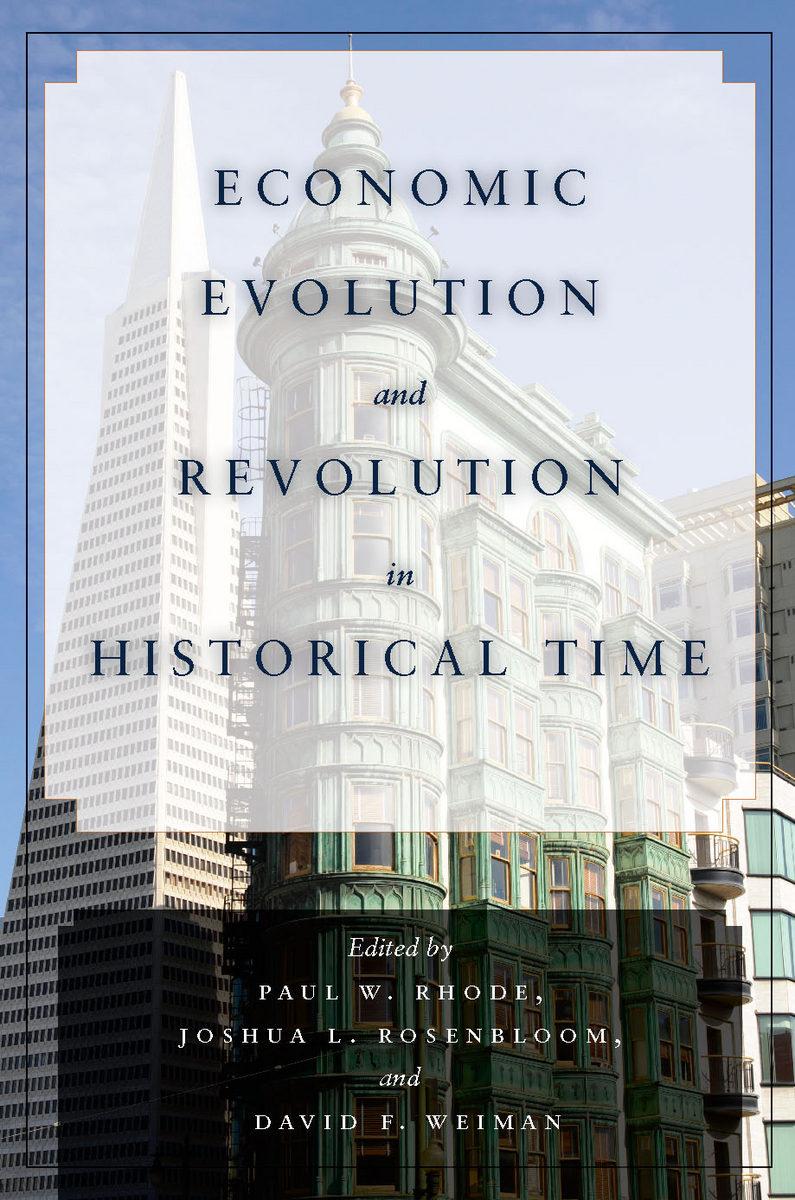
This book challenges the static, ahistorical models on which Economics continues to rely. These models presume that markets operate on a "frictionless" plane where abstract forces play out independent of their institutional and spatial contexts, and of the influences of the past. In reality, at any point in time exogenous factors are themselves outcomes of complex historical processes. They are shaped by institutional and spatial contexts, which are "carriers of history," including past economic dynamics and market outcomes.
To examine the connections between gradual, evolutionary change and more dramatic, revolutionary shifts the text takes on a wide array of historically salient economic questions—ranging from how formative, European encounters reconfigured the political economies of indigenous populations in Africa, the Americas, and Australia to how the rise and fall of the New Deal order reconfigured labor market institutions and outcomes in the twentieth century United States. These explorations are joined by a common focus on formative institutions, spatial structures, and market processes. Through historically informed economic analyses, contributors recognize the myriad interdependencies among these three frames, as well as their distinct logics and temporal rhythms.
Paga facilmente con carta, Klarna, Apple Pay o Google Pay. Non sei soddisfatto? Hai sempre 14 giorni per il rimborso. Leggi di più nei nostri termini. Per qualsiasi domanda, scrivici a hello@memmo.org.
Memmo rende lo studio più facile, ovunque tu sia nel mondo. Qui trovi i tuoi libri di testo e strumenti di studio intelligenti, tutto in un unico posto: riassunti, quiz, podcast e flashcard. E poi c'è Ted, il tuo compagno di studio che risponde a ogni tua domanda. Oltre 50.000 studenti studiano già qui: è stato creato per aiutarti a imparare più velocemente e a stressarti meno.