
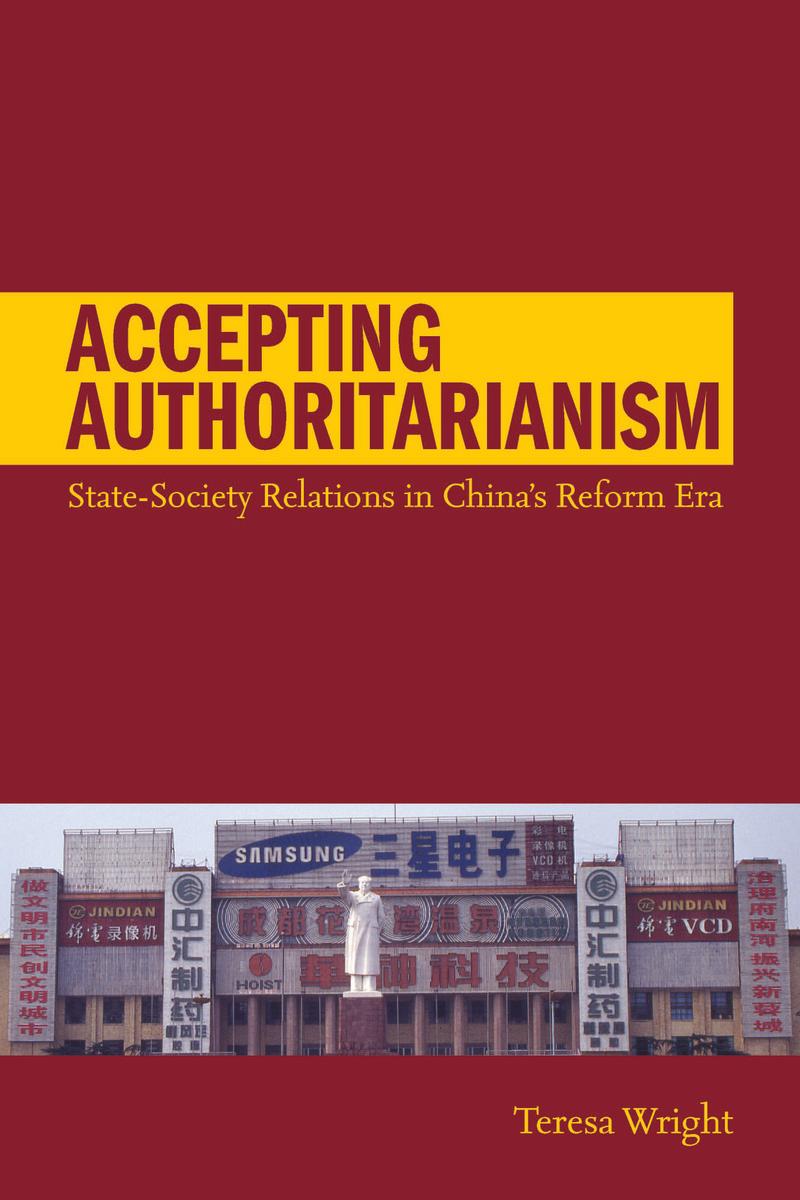
Why hasn't the emergence of capitalism led China's citizenry to press for liberal democratic change? This book argues that China's combination of state-led development, late industrialization, and socialist legacies have affected popular perceptions of socioeconomic mobility, economic dependence on the state, and political options, giving citizens incentives to perpetuate the political status quo and disincentives to embrace liberal democratic change.
Wright addresses the ways in which China's political and economic development shares broader features of state-led late industrialization and post-socialist transformation with countries as diverse as Mexico, India, Tunisia, Indonesia, South Korea, Brazil, Russia, and Vietnam.
With its detailed analysis of China's major socioeconomic groups (private entrepreneurs, state sector workers, private sector workers, professionals and students, and farmers), Accepting Authoritarianism is an up-to-date, comprehensive, and coherent text on the evolution of state-society relations in reform-era China.
Paga facilmente con carta, Klarna, Apple Pay o Google Pay. Non sei soddisfatto? Hai sempre 14 giorni per il rimborso. Leggi di più nei nostri termini. Per qualsiasi domanda, scrivici a hello@memmo.org.
Memmo rende lo studio più facile, ovunque tu sia nel mondo. Qui trovi i tuoi libri di testo e strumenti di studio intelligenti, tutto in un unico posto: riassunti, quiz, podcast e flashcard. E poi c'è Ted, il tuo compagno di studio che risponde a ogni tua domanda. Oltre 50.000 studenti studiano già qui: è stato creato per aiutarti a imparare più velocemente e a stressarti meno.