
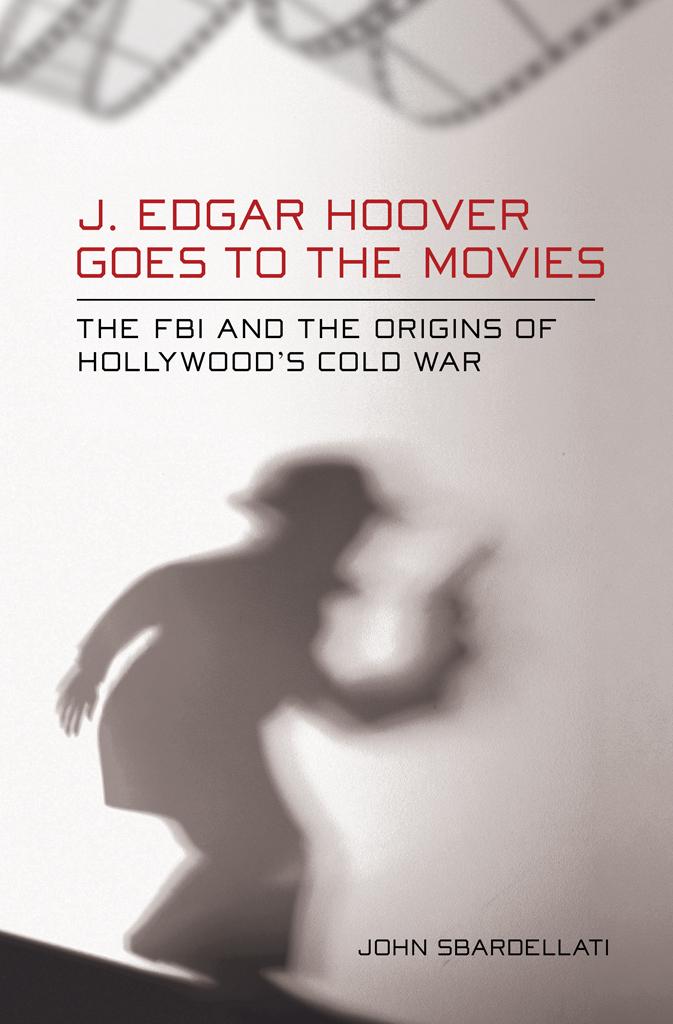
Between 1942 and 1958, J. Edgar Hoover's Federal Bureau of Investigation conducted a sweeping and sustained investigation of the motion picture industry to expose Hollywood's alleged subversion of "the American Way" through its depiction of social problems, class differences, and alternative political ideologies. FBI informants (their names still redacted today) reported to Hoover's G-men on screenplays and screenings of such films as Frank Capra's It's a Wonderful Life (1946), noting that "this picture deliberately maligned the upper class attempting to show that people who had money were mean and despicable characters." The FBI's anxiety over this film was not unique; it extended to a wide range of popular and critical successes, including The Grapes of Wrath (1940), The Best Years of Our Lives (1946), Crossfire (1947) and On the Waterfront (1954).
In J. Edgar Hoover Goes to the Movies, John Sbardellati provides a new consideration of Hollywood's history and the post–World War II Red Scare. In addition to governmental intrusion into the creative process, he details the efforts of left-wing filmmakers to use the medium to bring social problems to light and the campaigns of their colleagues on the political right, through such organizations as the Motion Picture Alliance for the Preservation of American Ideals, to prevent dissemination of "un-American" ideas and beliefs.
Sbardellati argues that the attack on Hollywood drew its motivation from a sincerely held fear that film content endangered national security by fostering a culture that would be at best apathetic to the Cold War struggle, or, at its worst, conducive to communism at home. Those who took part in Hollywood's Cold War struggle, whether on the left or right, shared one common trait: a belief that the movies could serve as engines for social change. This strongly held assumption explains why the stakes were so high and, ultimately, why Hollywood became one of the most important ideological battlegrounds of the Cold War.
Paga facilmente con carta, Klarna, Apple Pay o Google Pay. Non sei soddisfatto? Hai sempre 14 giorni per il rimborso. Leggi di più nei nostri termini. Per qualsiasi domanda, scrivici a hello@memmo.org.
Memmo rende lo studio più facile, ovunque tu sia nel mondo. Qui trovi i tuoi libri di testo e strumenti di studio intelligenti, tutto in un unico posto: riassunti, quiz, podcast e flashcard. E poi c'è Ted, il tuo compagno di studio che risponde a ogni tua domanda. Oltre 50.000 studenti studiano già qui: è stato creato per aiutarti a imparare più velocemente e a stressarti meno.