
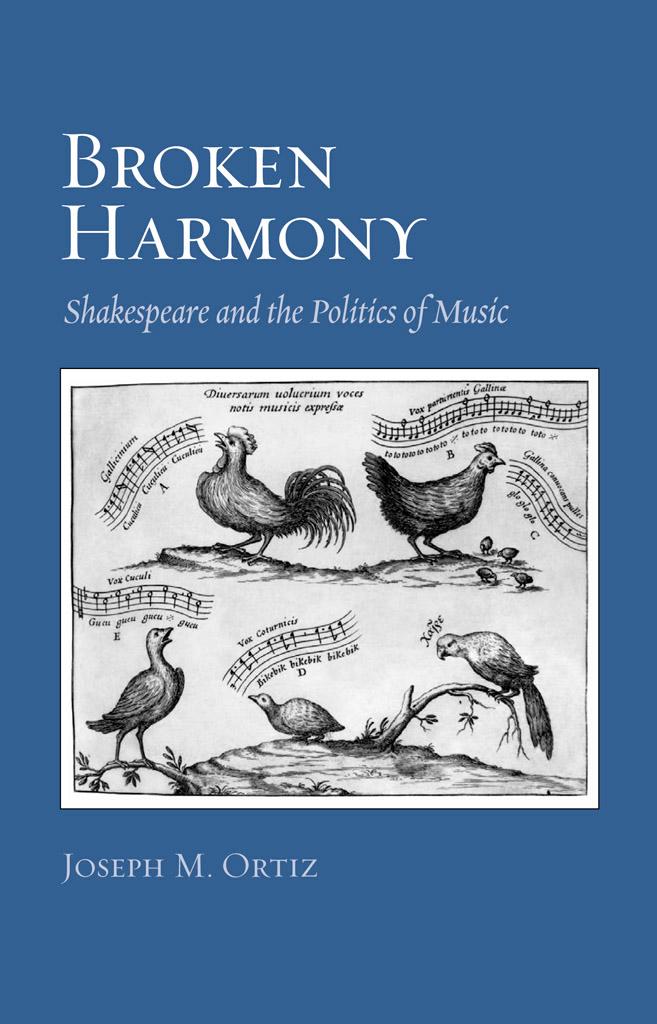
Music was a subject of considerable debate during the Renaissance. The notion that music could be interpreted in a meaningful way clashed regularly with evidence that music was in fact profoundly promiscuous in its application and effects. Subsequently, much writing in the period reflects a desire to ward off music's illegibility rather than come to terms with its actual effects. In Broken Harmony Joseph M. Ortiz revises our understanding of music's relationship to language in Renaissance England. In the process he shows the degree to which discussions of music were ideologically and politically charged.
Offering a historically nuanced account of the early modern debate over music, along with close readings of several of Shakespeare's plays (including Titus Andronicus, The Merchant of Venice, The Tempest, and The Winter's Tale) and Milton's A Maske, Ortiz challenges the consensus that music's affinity with poetry was widely accepted, or even desired, by Renaissance poets. Shakespeare more than any other early modern poet exposed the fault lines in the debate about music's function in art, repeatedly staging disruptive scenes of music that expose an underlying struggle between textual and sensuous authorities. Such musical interventions in textual experiences highlight the significance of sound as an aesthetic and sensory experience independent of any narrative function.
Paga facilmente con carta, Klarna, Apple Pay o Google Pay. Non sei soddisfatto? Hai sempre 14 giorni per il rimborso. Leggi di più nei nostri termini. Per qualsiasi domanda, scrivici a hello@memmo.org.
Memmo rende lo studio più facile, ovunque tu sia nel mondo. Qui trovi i tuoi libri di testo e strumenti di studio intelligenti, tutto in un unico posto: riassunti, quiz, podcast e flashcard. E poi c'è Ted, il tuo compagno di studio che risponde a ogni tua domanda. Oltre 50.000 studenti studiano già qui: è stato creato per aiutarti a imparare più velocemente e a stressarti meno.