
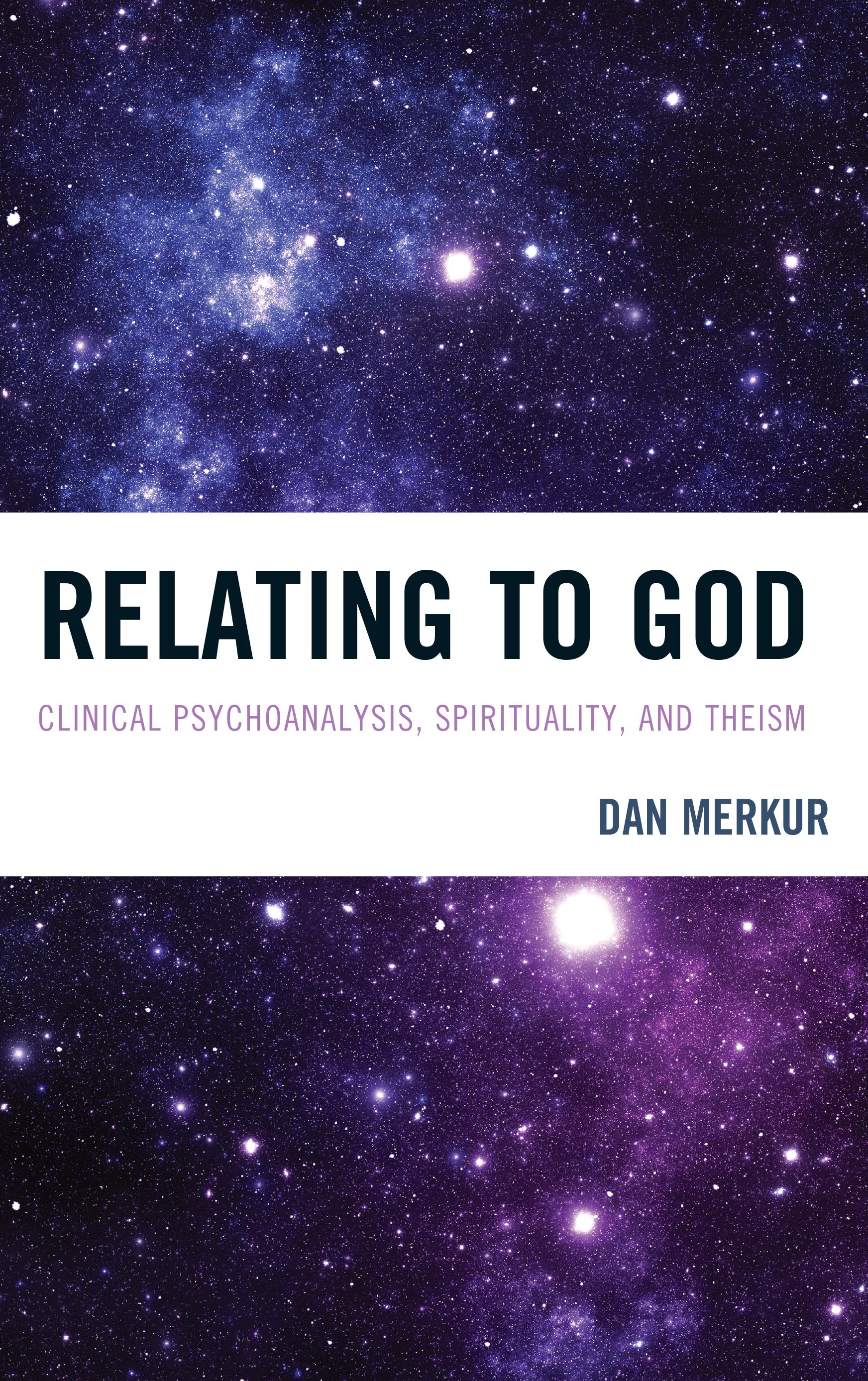
In Relating to God: Clinical Psychoanalysis, Spirituality, and Theism, Dan Merkur conceptualizes religious discourse within psychoanalysis. He proposes that God be treated as a transferential figure whose analysis leads to a reduction of the parental content that is projected onto God. Merkur notes that religious conversion experiences regularly involve theological intuitions that are either rational or, owing to morbid complications, have undergone displacement into irrational symbolism. Analysis renders the religiosity more wholesome.
Traditionally, psychoanalytic thought has been dismissive of religion. Freud is on record, however, as having called psychoanalysis a neutral procedure. He argued that religion, with its dependency on a providential God who punishes disobedience, imagines spirituality on the model of human parents and fails to approach spirituality in an appropriately scientific manner. He wrote little of spiritual phenomena, but mentioned both the rationality of the universe and the parapsychological occurrence of thought transference.
Occasionally, later psychoanalysts used different language in order to contrast wholesome and morbid forms of religion. Erich Fromm distinguished authoritarian and humanistic religions, while D. W. Winnicott condemned fetishistic behavior while approving of playful illusions that require “belief-in.” These formulations constructed a middle position for clinicians, neither categorically opposed to religion as classical psychoanalysis was, nor do they embrace cultural relativity as “spiritually oriented” psychotherapists are currently advocating.
What sorts of spiritual practices does psychoanalysis find unobjectionable? As examples of humanistic religion, Fromm named Zen Buddhism, Buddhist mindfulness meditation, and the via negativa or “way of negating” that some Christian and Jewish mystics have followed. Because the Bible-based approaches are little known, Merkur discusses their histories, procedures, and psychoanalytic understanding.
Traditionally, psychoanalytic thought has been dismissive of religion. Freud is on record, however, as having called psychoanalysis a neutral procedure. He argued that religion, with its dependency on a providential God who punishes disobedience, imagines spirituality on the model of human parents and fails to approach spirituality in an appropriately scientific manner. He wrote little of spiritual phenomena, but mentioned both the rationality of the universe and the parapsychological occurrence of thought transference.
Occasionally, later psychoanalysts used different language in order to contrast wholesome and morbid forms of religion. Erich Fromm distinguished authoritarian and humanistic religions, while D. W. Winnicott condemned fetishistic behavior while approving of playful illusions that require “belief-in.” These formulations constructed a middle position for clinicians, neither categorically opposed to religion as classical psychoanalysis was, nor do they embrace cultural relativity as “spiritually oriented” psychotherapists are currently advocating.
What sorts of spiritual practices does psychoanalysis find unobjectionable? As examples of humanistic religion, Fromm named Zen Buddhism, Buddhist mindfulness meditation, and the via negativa or “way of negating” that some Christian and Jewish mystics have followed. Because the Bible-based approaches are little known, Merkur discusses their histories, procedures, and psychoanalytic understanding.
Pagine: 304
Categoria: Religion & Teologi
e-ISBN: 9780765710161
Peso di spedizione: 1.2 kg
Spedito in: 1-2 giorni
Paga facilmente con carta, Klarna, Apple Pay o Google Pay. Non sei soddisfatto? Hai sempre 14 giorni per il rimborso. Leggi di più nei nostri termini. Per qualsiasi domanda, scrivici a hello@memmo.org.
Memmo rende lo studio più facile, ovunque tu sia nel mondo. Qui trovi i tuoi libri di testo e strumenti di studio intelligenti, tutto in un unico posto: riassunti, quiz, podcast e flashcard. E poi c'è Ted, il tuo compagno di studio che risponde a ogni tua domanda. Oltre 50.000 studenti studiano già qui: è stato creato per aiutarti a imparare più velocemente e a stressarti meno.