
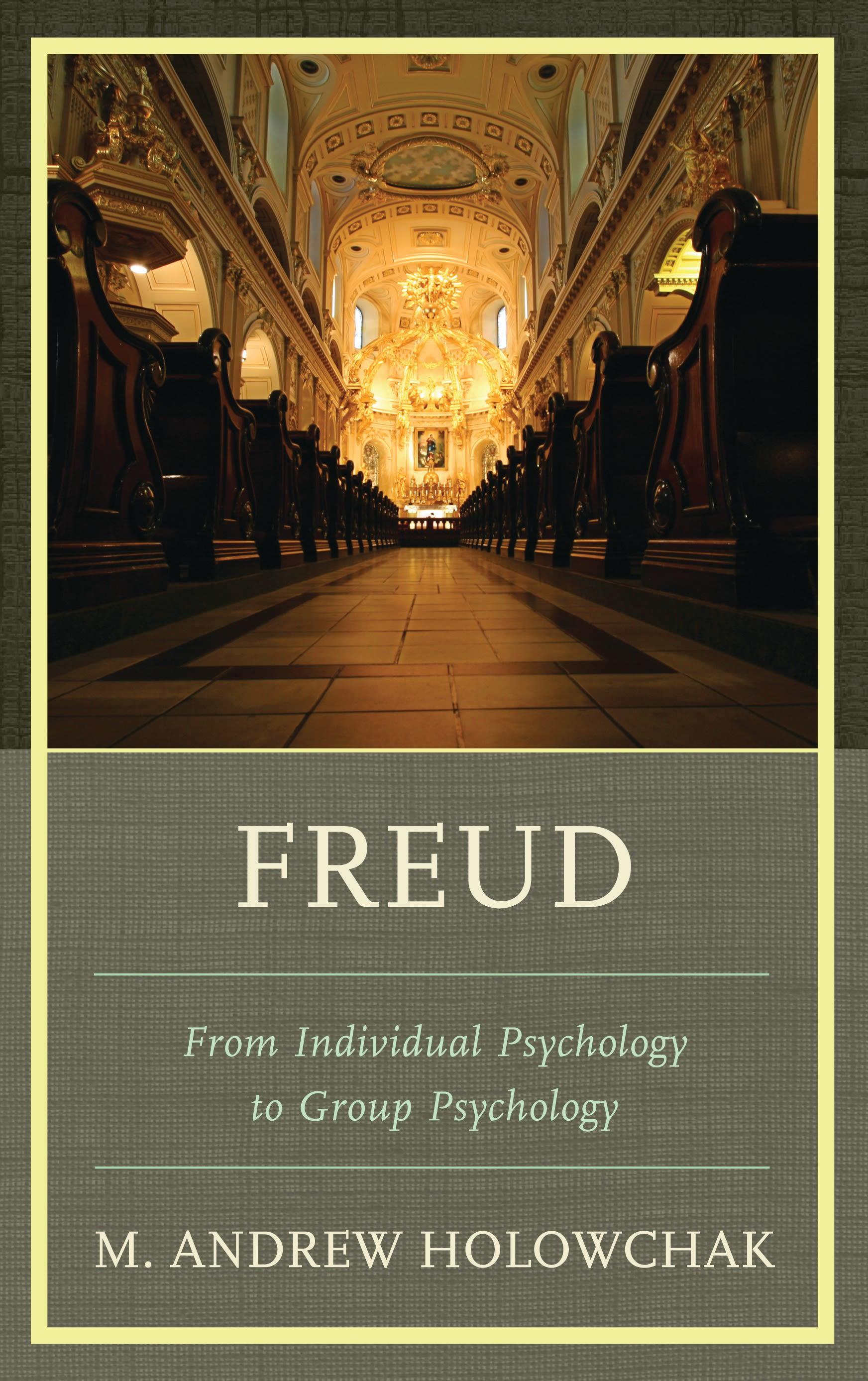
Freud: From Individual Psychology to Group Psychology, by M. Andrew Holowchak, explores Freudian psychoanalysis as a full-fledged science, as it relates psychoanalytically to issues of individual psychology (Individualpsychologie) and group psychology (Massenpsychologie). It answers questions such as “How effective did Freud perceive individual psychology to be?,” “What is group psychology?,” “To what extent did Freud think psychoanalytic investigation of group pathology could be curative of social ills?,” “How seriously did Freud take metapsychological explanation?,” and “How important were auxiliary hypotheses, borrowed (often uncritically) from other disciplines, in the formation of group psychology?” In sketching out the development of individual psychology and group psychology, Holowchak argues that for Freud, psychoanalysis was always essentially a procedure for investigating unconscious phenomena that allowed for explication and understanding of both individual and group issues.
Part I of Freud focuses on individual psychology, traces out the development of Freud’s thought on clinical therapy and analyzing the various clinical methods and theories Freud employed over the years. Holowchak critically examines the merit of Freudian psychoanalysis as a remedy for individual pathology. Part IIfocuses on group psychology, starting with an overview of the conditions influencing Freud’s shift to group-psychology issues and moving on to a psychoanalytic examination of other disciplines—non-sciences and sciences alike. Finally, Holowchak analyzes the worth of Freudian psychoanalysis as a remedy for group pathology.
Readers are given a comprehensive depiction as well as a critical analysis of the development of psychoanalysis in an easy-to-assimilate manner from Freud’s early days in analytic therapy, beginning with his stays with Charcot and Bernheim in France, to his mature thinking, where he develops notions such as the death drive and the structural model (id, ego, and super-ego) to compensate for theoretical defects in his earlier thinking.
Part I of Freud focuses on individual psychology, traces out the development of Freud’s thought on clinical therapy and analyzing the various clinical methods and theories Freud employed over the years. Holowchak critically examines the merit of Freudian psychoanalysis as a remedy for individual pathology. Part IIfocuses on group psychology, starting with an overview of the conditions influencing Freud’s shift to group-psychology issues and moving on to a psychoanalytic examination of other disciplines—non-sciences and sciences alike. Finally, Holowchak analyzes the worth of Freudian psychoanalysis as a remedy for group pathology.
Readers are given a comprehensive depiction as well as a critical analysis of the development of psychoanalysis in an easy-to-assimilate manner from Freud’s early days in analytic therapy, beginning with his stays with Charcot and Bernheim in France, to his mature thinking, where he develops notions such as the death drive and the structural model (id, ego, and super-ego) to compensate for theoretical defects in his earlier thinking.
Paga facilmente con carta, Klarna, Apple Pay o Google Pay. Non sei soddisfatto? Hai sempre 14 giorni per il rimborso. Leggi di più nei nostri termini. Per qualsiasi domanda, scrivici a hello@memmo.org.
Memmo rende lo studio più facile, ovunque tu sia nel mondo. Qui trovi i tuoi libri di testo e strumenti di studio intelligenti, tutto in un unico posto: riassunti, quiz, podcast e flashcard. E poi c'è Ted, il tuo compagno di studio che risponde a ogni tua domanda. Oltre 50.000 studenti studiano già qui: è stato creato per aiutarti a imparare più velocemente e a stressarti meno.