
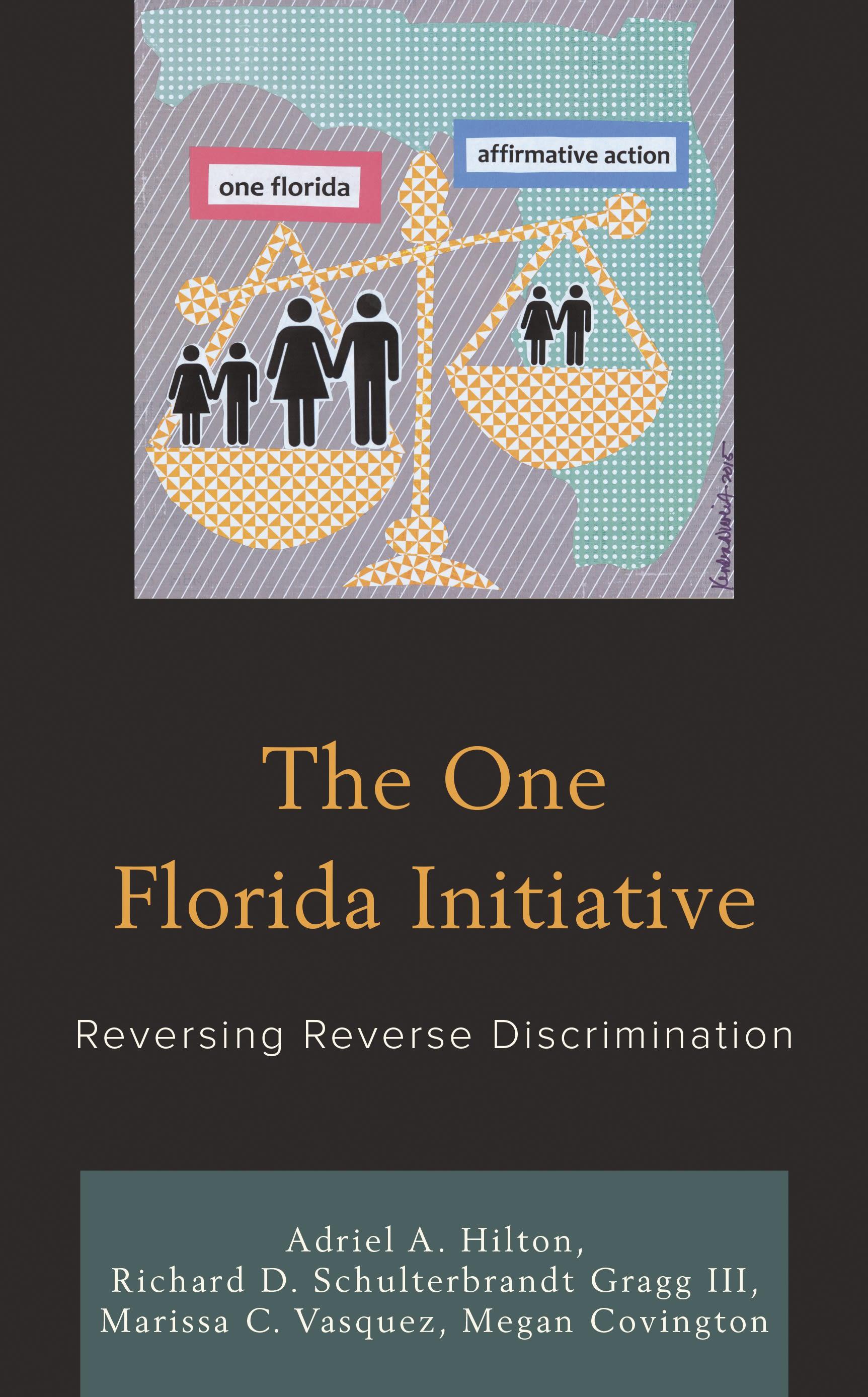
In this sixty-seventh anniversary year of the groundbreaking Supreme Court decision in the Brown v. Board of Education case that outlawed segregation in the nation’s public schools, research reveals that schools have undergone significant re-segregation. The anguish that many of us feel about this incredible failure of public policy underscores the layered aspect of achieving racial equality in America. In Florida, and across the nation, the steps that have been taken to implement affirmative action in higher education have been under constant attack by conservatives, and a series of actions by various state and federal courts have resulted in reduced access and enrollment of students of color in several states. In 1999, Governor Jeb Bush used his authority to redefine affirmative action in his state by issuing an executive order that established the One Florida Initiative (OFI). Bush’s claim that the OFI was intended to increase diversity and opportunities for people of color in Florida’s state university system appears to be contradicted by findings that minority representation actually decreased in most of the state universities after the policy was implemented.
Hilton and colleagues provide a cogent analysis of the effects of the OFI on enrollment patterns in the state’s public law schools to help us understand how changes in public policy can have detrimental effects on particular communities. The research is both enriched and complicated by the inclusion of the two law schools: Florida A&M and Florida International Universities, both of which are minority-serving institutions (MSIs). These schools were developed independently of the OFI but had a potential effect on the level of diversity that can be calculated across the system. The use of critical race theory offers an approach that will prove unnerving to some readers, but is one that provided insights that may not have been revealed through a different framework.
Hilton and colleagues provide a cogent analysis of the effects of the OFI on enrollment patterns in the state’s public law schools to help us understand how changes in public policy can have detrimental effects on particular communities. The research is both enriched and complicated by the inclusion of the two law schools: Florida A&M and Florida International Universities, both of which are minority-serving institutions (MSIs). These schools were developed independently of the OFI but had a potential effect on the level of diversity that can be calculated across the system. The use of critical race theory offers an approach that will prove unnerving to some readers, but is one that provided insights that may not have been revealed through a different framework.
Paga facilmente con carta, Klarna, Apple Pay o Google Pay. Non sei soddisfatto? Hai sempre 14 giorni per il rimborso. Leggi di più nei nostri termini. Per qualsiasi domanda, scrivici a hello@memmo.org.
Memmo rende lo studio più facile, ovunque tu sia nel mondo. Qui trovi i tuoi libri di testo e strumenti di studio intelligenti, tutto in un unico posto: riassunti, quiz, podcast e flashcard. E poi c'è Ted, il tuo compagno di studio che risponde a ogni tua domanda. Oltre 50.000 studenti studiano già qui: è stato creato per aiutarti a imparare più velocemente e a stressarti meno.