
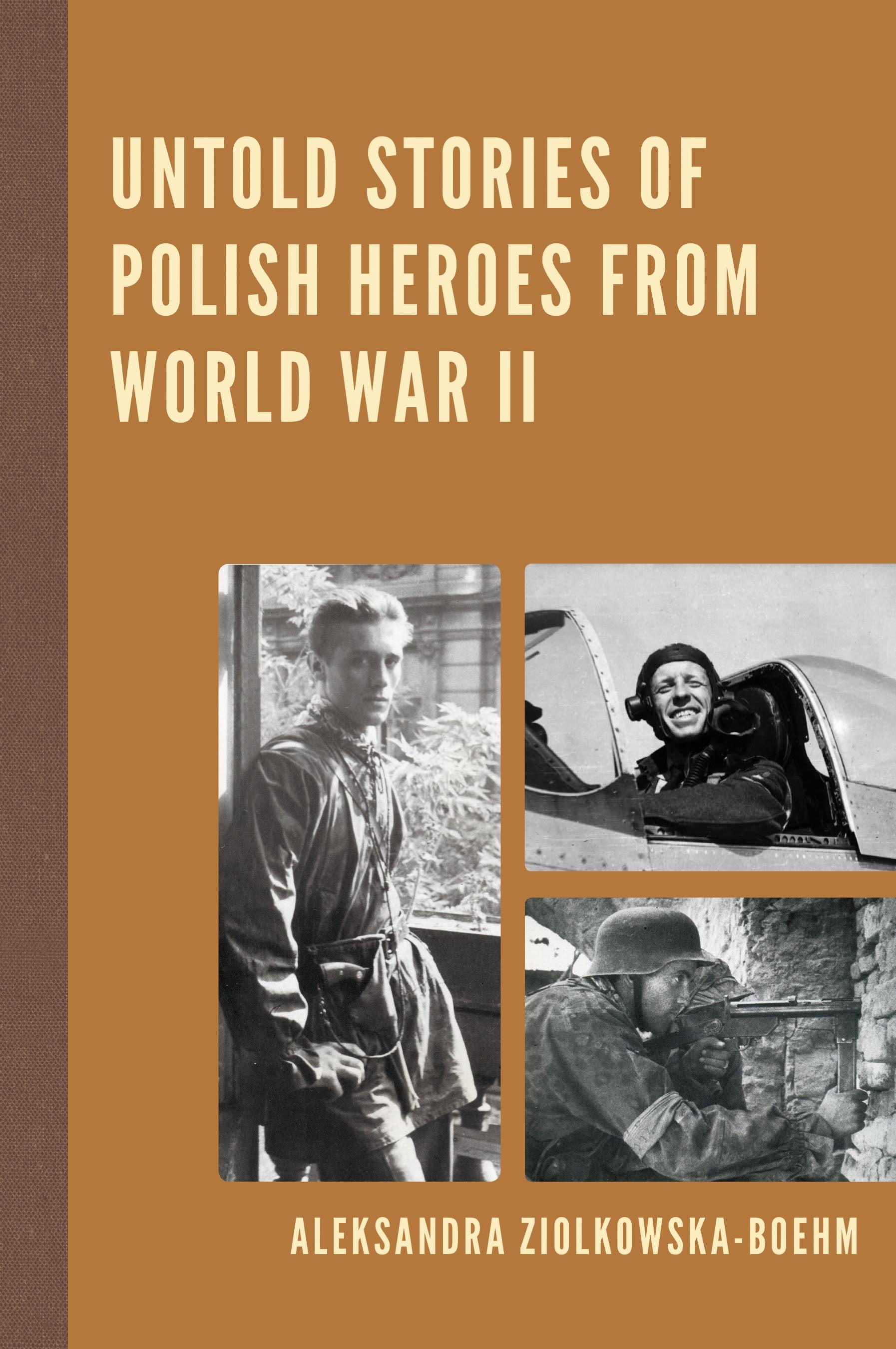
A full understanding of the historical process must include studies of the social and economic conditions of societies as well as biographies of the people on which a clear understanding of history is based—but not just the “great” people. Biographies of “average” individuals, who exist in a society, have their own experiences and are acted upon by their surrounding environments, are essential to a clear and complete understanding of the past and its influence on the present. In this respect, Aleksandra Ziolkowska-Boehm has made a major contribution to furthering the understanding of World War II, and especially the part played by Poland and Poles, with her compilation of individual biographies of people who participated in many of its formative events.
Ziolkowska-Boehm’s protagonists include a variety of people and experiences that enhance the usefulness of the volume. There are: Tadeusz Brzezinski, a member of the Polish diplomatic corps; the hero who escaped the Lwów ghetto to fight in the Warsaw Uprising and later founded a theatre group in Montréal; a pilot who escaped from the Soviet Union to fly fighters over Great Britain; a photographer of the Warsaw Uprising; a nurse during the Warsaw Uprising; a personal memories of the post-war era move to the United States; a person who was forcefully deported with her family to the Soviet Urals, later escaping to the Middle East and eventually Mexico; the boy who, though only eight when the war began, but survived Pawiak Prison, moved to Brazil, and became an internationally-known poet and artist.
Ziolkowska-Boehm’s protagonists include a variety of people and experiences that enhance the usefulness of the volume. There are: Tadeusz Brzezinski, a member of the Polish diplomatic corps; the hero who escaped the Lwów ghetto to fight in the Warsaw Uprising and later founded a theatre group in Montréal; a pilot who escaped from the Soviet Union to fly fighters over Great Britain; a photographer of the Warsaw Uprising; a nurse during the Warsaw Uprising; a personal memories of the post-war era move to the United States; a person who was forcefully deported with her family to the Soviet Urals, later escaping to the Middle East and eventually Mexico; the boy who, though only eight when the war began, but survived Pawiak Prison, moved to Brazil, and became an internationally-known poet and artist.
Paga facilmente con carta, Klarna, Apple Pay o Google Pay. Non sei soddisfatto? Hai sempre 14 giorni per il rimborso. Leggi di più nei nostri termini. Per qualsiasi domanda, scrivici a hello@memmo.org.
Memmo rende lo studio più facile, ovunque tu sia nel mondo. Qui trovi i tuoi libri di testo e strumenti di studio intelligenti, tutto in un unico posto: riassunti, quiz, podcast e flashcard. E poi c'è Ted, il tuo compagno di studio che risponde a ogni tua domanda. Oltre 50.000 studenti studiano già qui: è stato creato per aiutarti a imparare più velocemente e a stressarti meno.