
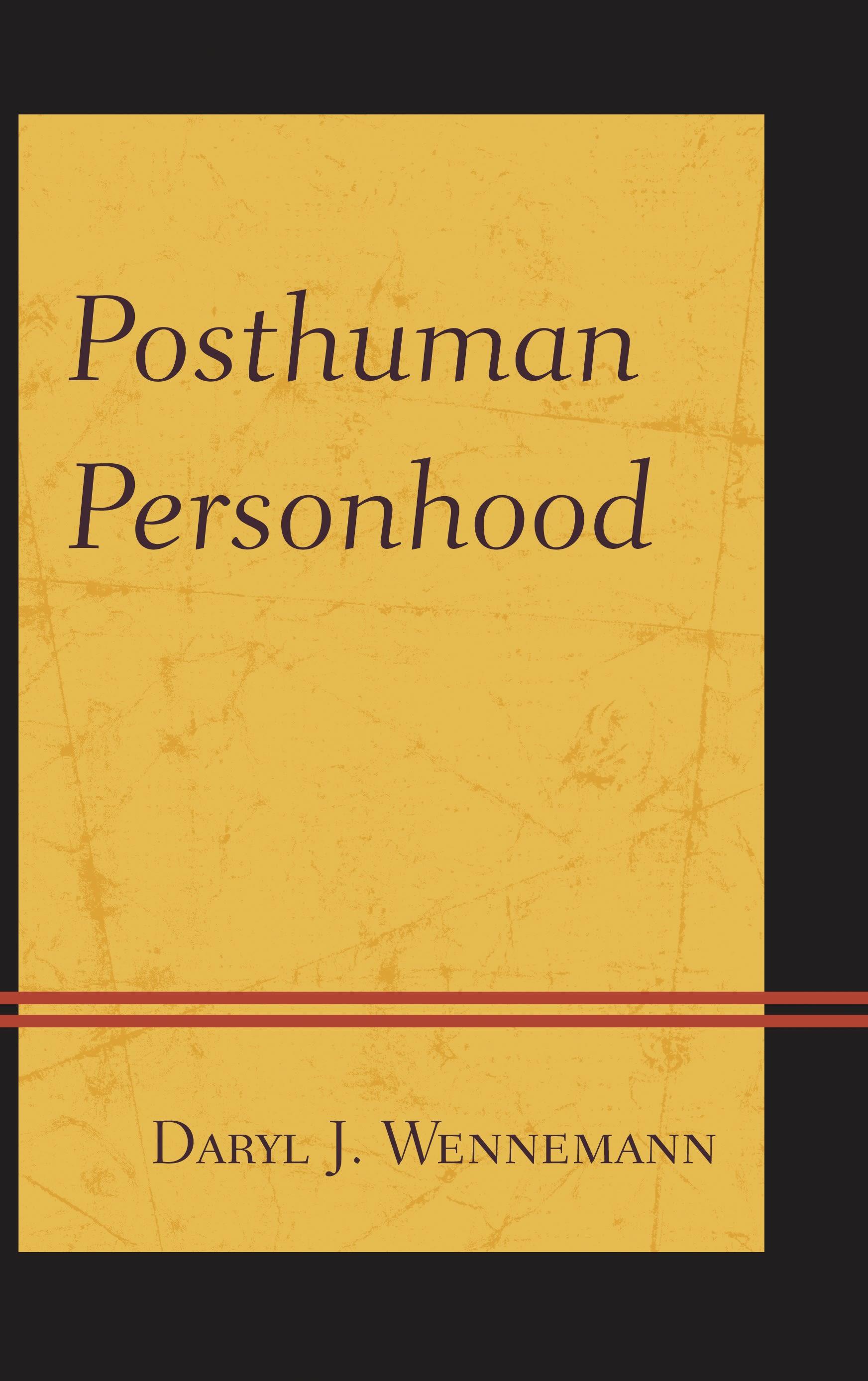
Posthuman Personhood takes up the ethical challenge posed by Francis Fukuyama’s work, Our Posthuman Future. Daryl J. Wennemann argues that the traditional concept of personhood may be fruitfully applied to the ethical challenge we facein a posthuman age. He draws upon Wilfrid Sellars’ treatment of the concept of a person within “the manifest image of man in the world.” Sellars proposed that we develop a stereoscopic view of reality that includes both a scientific understanding of the world and a meaningful place for persons living and acting in the world. Following Mary Anne Warren, Wennemann develops a distinction between two meanings of the term “human,” a biological meaning and a moral meaning, and maintains that all (biologically) humanbeings are persons. But, it is not necessarily the case that all personsmust be (biologically) human. After drawing on a contemporary version of Kant’s distinction between a theoretical possibility and a real possibility, the book posits that biologically non-human persons like robots, computers, or aliens are a theoretical possibility but that we do not know if they are a real possibility. Finally, Wennemann describes an ethic of self-limitation for the posthuman age.
Paga facilmente con carta, Klarna, Apple Pay o Google Pay. Non sei soddisfatto? Hai sempre 14 giorni per il rimborso. Leggi di più nei nostri termini. Per qualsiasi domanda, scrivici a hello@memmo.org.
Memmo rende lo studio più facile, ovunque tu sia nel mondo. Qui trovi i tuoi libri di testo e strumenti di studio intelligenti, tutto in un unico posto: riassunti, quiz, podcast e flashcard. E poi c'è Ted, il tuo compagno di studio che risponde a ogni tua domanda. Oltre 50.000 studenti studiano già qui: è stato creato per aiutarti a imparare più velocemente e a stressarti meno.