
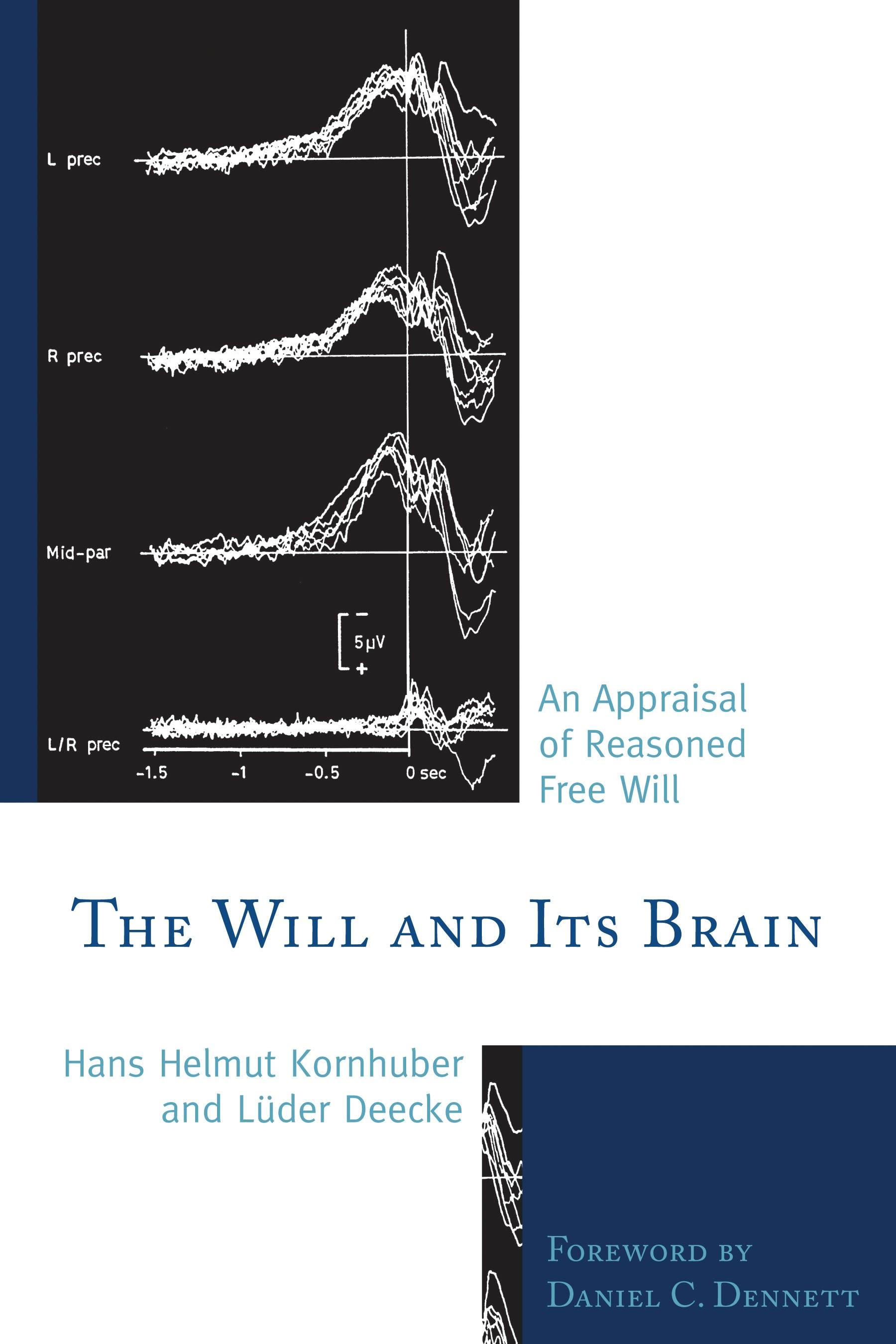
In 1964–1965, Hans Helmut Kornhuber and Lüder Deecke achieved a scientific breakthrough with the discovery of the Bereitschaftspotential (BP), or readiness potential. In The Will and its Brain, Kornhuber and Deecke present evidence that proves we can record activity from the human brain occurring prior to our volitional movements or actions. Such preparatory activity is generated by specific brain regions, particularly by the supplementary motor area (SMA) of the frontal lobe, which lies on the inner surface of the brain between the hemispheres. The primary (precentral) motor cortex (MI) later becomes activated in preparing for action. Consequently, the authors discriminate between two components of the preparatory activity of the Bereitschaftspotential: an early SMA-generated BP1 and a late MI-derived BP2. Between BP1 and BP2, the intentional activity runs over the so-called motor loop via the basal ganglia. Kornhuber and Deecke discuss these and other brain processing systems while focusing on the concept of free will. They claim that we, indeed, have free will. It may not be absolutely free, but free in terms of degrees. We can take efforts to increase our degrees of freedom through self-improvement, but we can also lose degrees of freedom through self-mismanagement.
Paga facilmente con carta, Klarna, Apple Pay o Google Pay. Non sei soddisfatto? Hai sempre 14 giorni per il rimborso. Leggi di più nei nostri termini. Per qualsiasi domanda, scrivici a hello@memmo.org.
Memmo rende lo studio più facile, ovunque tu sia nel mondo. Qui trovi i tuoi libri di testo e strumenti di studio intelligenti, tutto in un unico posto: riassunti, quiz, podcast e flashcard. E poi c'è Ted, il tuo compagno di studio che risponde a ogni tua domanda. Oltre 50.000 studenti studiano già qui: è stato creato per aiutarti a imparare più velocemente e a stressarti meno.