
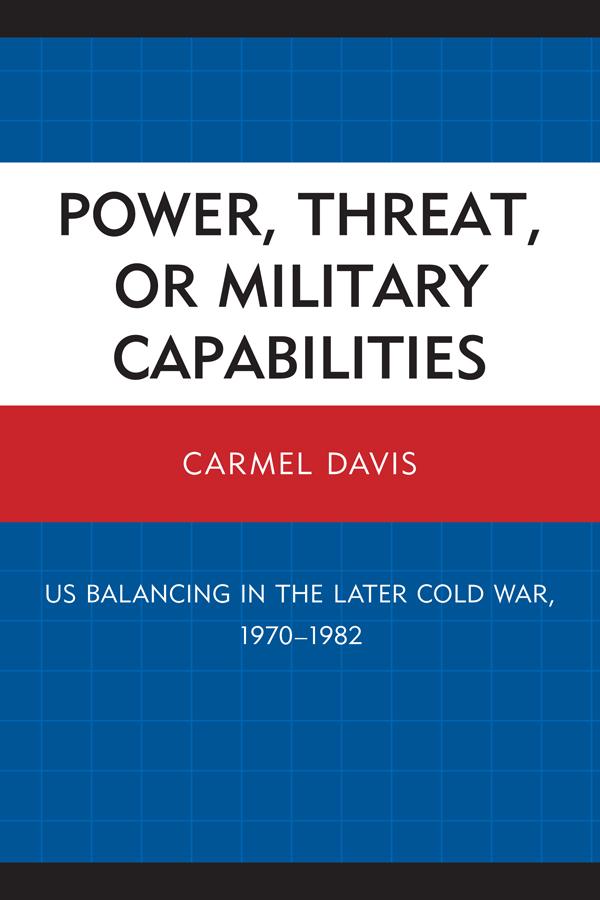
Power, Threat, or Military Capabilities assesses two mainstays of international relations, balance of power and balance of threat, using the case of US balancing against the Soviet Union in the later Cold War. It also proposes balance of military capabilities, which uses offense-defense theory to argue that countries balance against the ability of others to conquer or compel them.
Power, Threat, or Military Capabilities finds that the US was more powerful than the Soviet Union so US behavior is not explained by balance of power. The US did not perceive the Soviet Union as likely to initiate war or to run risks that might lead to war so US behavior is not explained by balance of threat. This book determines that the US was concerned about its ability to defend Europe and the Persian Gulf so US behavior is explained by balance of military capabilities.
Power, Threat, or Military Capabilities finds that the US was more powerful than the Soviet Union so US behavior is not explained by balance of power. The US did not perceive the Soviet Union as likely to initiate war or to run risks that might lead to war so US behavior is not explained by balance of threat. This book determines that the US was concerned about its ability to defend Europe and the Persian Gulf so US behavior is explained by balance of military capabilities.
Pagine: 140
Categoria: Statsvetenskap & Politik
e-ISBN: 9780761855521
Peso di spedizione: 1.2 kg
Spedito in: 1-2 giorni
Paga facilmente con carta, Klarna, Apple Pay o Google Pay. Non sei soddisfatto? Hai sempre 14 giorni per il rimborso. Leggi di più nei nostri termini. Per qualsiasi domanda, scrivici a hello@memmo.org.
Memmo rende lo studio più facile, ovunque tu sia nel mondo. Qui trovi i tuoi libri di testo e strumenti di studio intelligenti, tutto in un unico posto: riassunti, quiz, podcast e flashcard. E poi c'è Ted, il tuo compagno di studio che risponde a ogni tua domanda. Oltre 50.000 studenti studiano già qui: è stato creato per aiutarti a imparare più velocemente e a stressarti meno.