
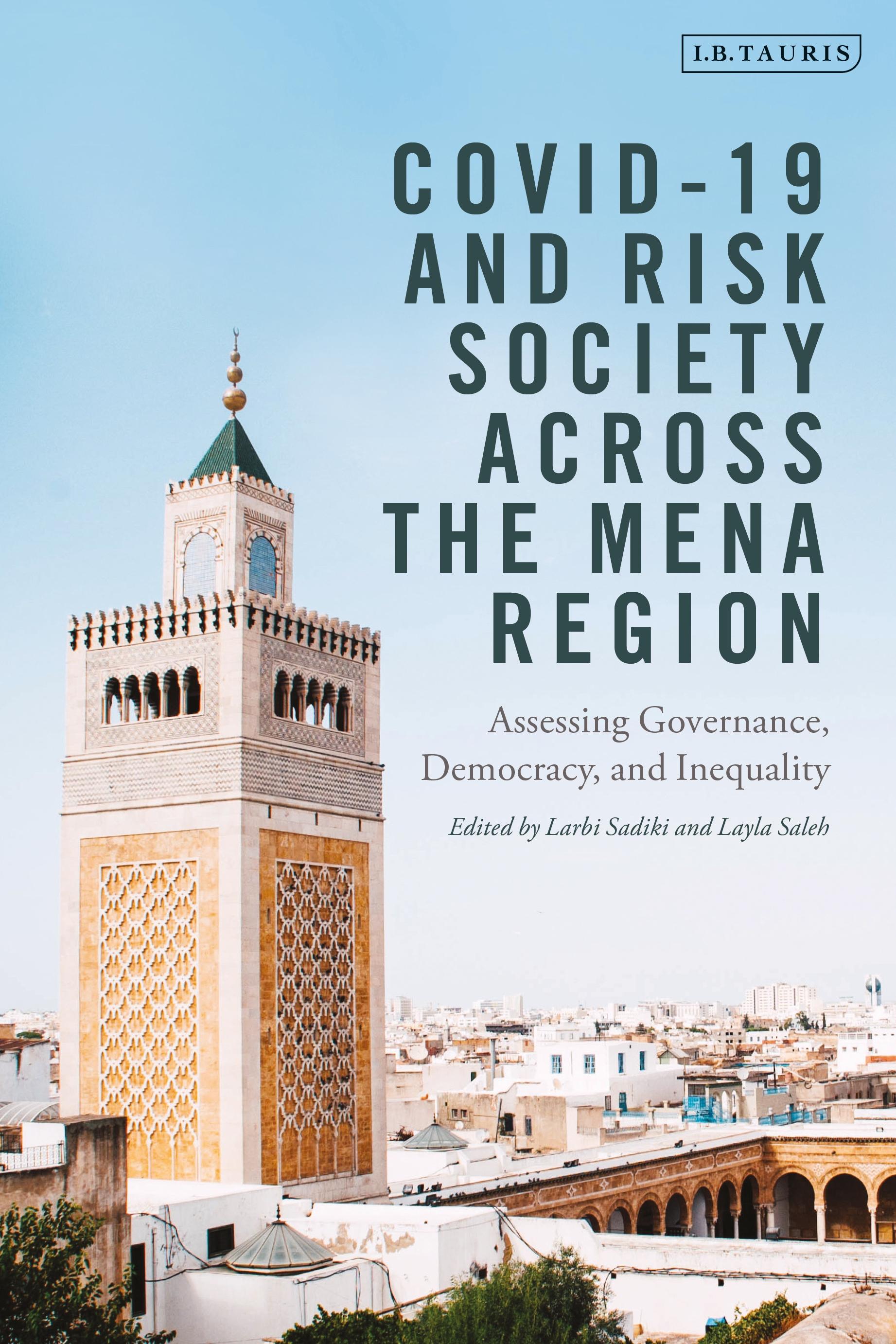
The impact of the COVID-19 pandemic – at the interlocking levels of politics, economy, and society – have been different across regions, states, and societies. In the case of the Middle East and North Africa, which was already in the throes of intense tumult following the onset of the 2011 Arab Spring, COVID's blows have on the one hand followed the trajectory of some global patterns, while at the same time playing out in regionally specific ways.
Based on empirical country-level analysis, this volume brings together an international team of contributors seeking to untangle how COVID-19 unfolds across the MENA. The analyses are framed through a contextual adaptation of Ulrich Beck's famous concept of “risk society” that pinpointed the negative consequences of modernity and its unbridled capitalism. The book traces how this has come home in full force in the COVID-19 pandemic. The editors, Larbi Sadiki and Layla Saleh, use the term "Arab risk society". They highlight short-term and long-term repercussions across the MENA. These include socio-economic inequality, a revitalized state of authoritarianism challenged by relentless democratic struggles.
But the analyses are attuned to problem-solving research. The "ethnographies of the pandemic" included in this book investigate transformations and coping mechanisms within each country case study. They provide an ethically-informed research praxis that can respond to the manifold crises crashing down upon MENA polities and societies
Based on empirical country-level analysis, this volume brings together an international team of contributors seeking to untangle how COVID-19 unfolds across the MENA. The analyses are framed through a contextual adaptation of Ulrich Beck's famous concept of “risk society” that pinpointed the negative consequences of modernity and its unbridled capitalism. The book traces how this has come home in full force in the COVID-19 pandemic. The editors, Larbi Sadiki and Layla Saleh, use the term "Arab risk society". They highlight short-term and long-term repercussions across the MENA. These include socio-economic inequality, a revitalized state of authoritarianism challenged by relentless democratic struggles.
But the analyses are attuned to problem-solving research. The "ethnographies of the pandemic" included in this book investigate transformations and coping mechanisms within each country case study. They provide an ethically-informed research praxis that can respond to the manifold crises crashing down upon MENA polities and societies
Paga facilmente con carta, Klarna, Apple Pay o Google Pay. Non sei soddisfatto? Hai sempre 14 giorni per il rimborso. Leggi di più nei nostri termini. Per qualsiasi domanda, scrivici a hello@memmo.org.
Memmo rende lo studio più facile, ovunque tu sia nel mondo. Qui trovi i tuoi libri di testo e strumenti di studio intelligenti, tutto in un unico posto: riassunti, quiz, podcast e flashcard. E poi c'è Ted, il tuo compagno di studio che risponde a ogni tua domanda. Oltre 50.000 studenti studiano già qui: è stato creato per aiutarti a imparare più velocemente e a stressarti meno.