
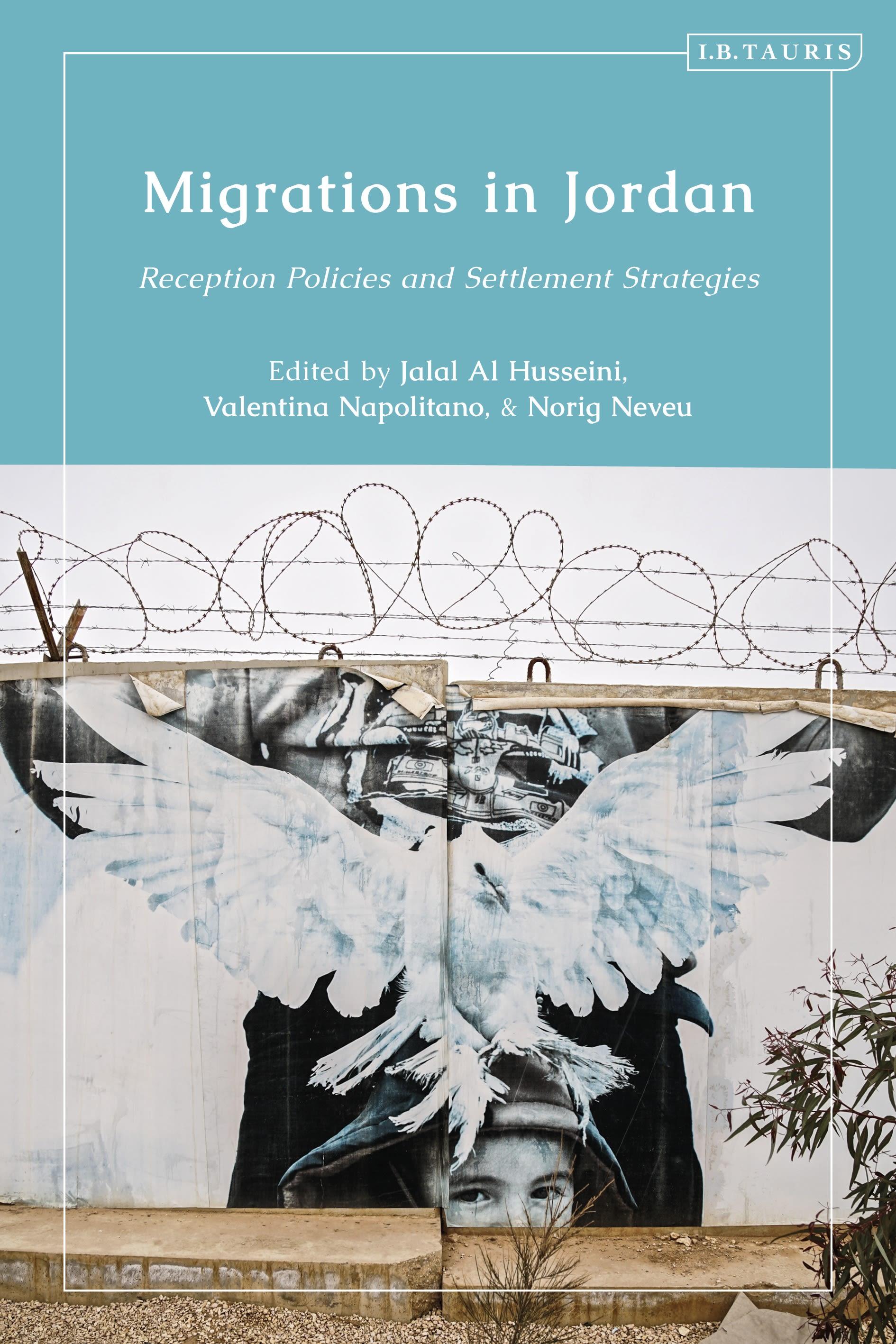
Jordan currently hosts the second largest percentage of registered refugees in the world: three million out of its eleven million inhabitants. Its experience in hosting migrants and refugees precedes its independence in 1946, with the arrival of Circassians, Chechens, and Armenians from the late 19th century. Jordan thus constitutes a unique observatory for reception policies and long-term settlement of different migrant groups.
Based on original empirical and archival material, this volume focuses on migrations caused by conflicts, wars, and crises underscoring their articulation with longstanding human mobility. It sheds light on the cumulative and processual dimensions of Jordan's reception policies and migrants' settlement strategies. It identifies the multiple actors involved in the management of migrants and, conversely, the latter's contribution to the Jordanian social, economic, political, and urban fabric.
The first part of the volume examines the policies adopted by the Jordanian authorities and international organizations to regulate access to basic services and to the labour market, and explores the economic and political factors underlying them. The second part analyzes the effects of Jordan's policies on the territorial distribution and settlement of migrants. How have these policies, combined with the adaptation strategies of migrants contributed to shaping new urban spaces? The third part focuses on capacity of the migrants to activate, establish, (re)build, and intersect different kinds of solidarity networks within the context of protracted displacement.
Based on original empirical and archival material, this volume focuses on migrations caused by conflicts, wars, and crises underscoring their articulation with longstanding human mobility. It sheds light on the cumulative and processual dimensions of Jordan's reception policies and migrants' settlement strategies. It identifies the multiple actors involved in the management of migrants and, conversely, the latter's contribution to the Jordanian social, economic, political, and urban fabric.
The first part of the volume examines the policies adopted by the Jordanian authorities and international organizations to regulate access to basic services and to the labour market, and explores the economic and political factors underlying them. The second part analyzes the effects of Jordan's policies on the territorial distribution and settlement of migrants. How have these policies, combined with the adaptation strategies of migrants contributed to shaping new urban spaces? The third part focuses on capacity of the migrants to activate, establish, (re)build, and intersect different kinds of solidarity networks within the context of protracted displacement.
Pagine: 304
Categoria: Samhällsvetenskap
e-ISBN: 9780755606870
Peso di spedizione: 1.2 kg
Spedito in: 1-2 giorni
Paga facilmente con carta, Klarna, Apple Pay o Google Pay. Non sei soddisfatto? Hai sempre 14 giorni per il rimborso. Leggi di più nei nostri termini. Per qualsiasi domanda, scrivici a hello@memmo.org.
Memmo rende lo studio più facile, ovunque tu sia nel mondo. Qui trovi i tuoi libri di testo e strumenti di studio intelligenti, tutto in un unico posto: riassunti, quiz, podcast e flashcard. E poi c'è Ted, il tuo compagno di studio che risponde a ogni tua domanda. Oltre 50.000 studenti studiano già qui: è stato creato per aiutarti a imparare più velocemente e a stressarti meno.