
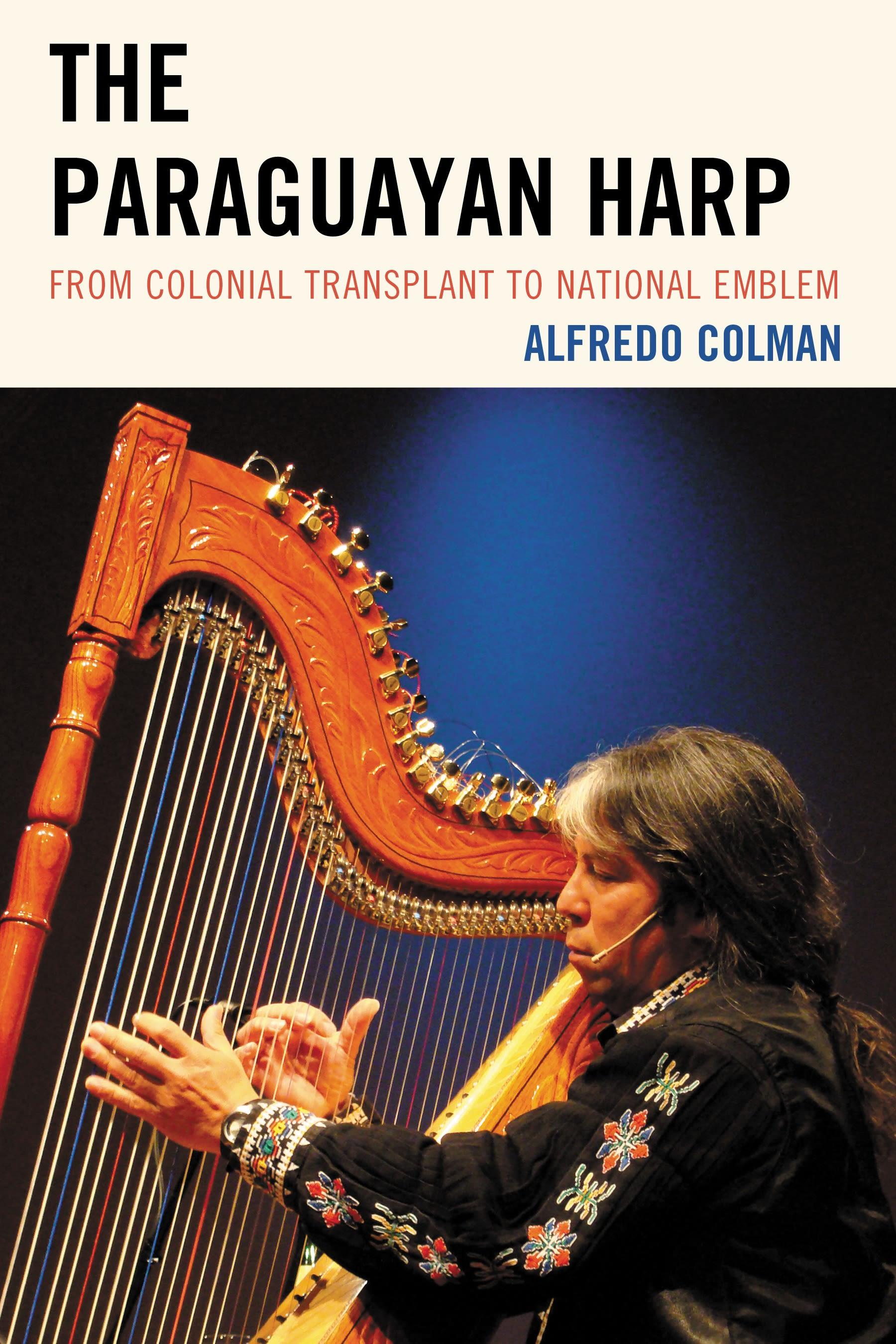
How did a music instrument transplated to South America by colonial Jesuit missionaries earn the official designation as Paraguay's cultural national symbol? This ethnomusicological and organological study of the Paraguayan diatonic harp in the twentieth century tells its story as an emblematic national musical instrument.
First used liturgically by Jesuit missions in colonial times, the transplanted European diatonic harp was transformed and adopted into the folk music vocabulary of Paraguay and the Río de la Plata region. Following the commercial success of Paraguayan harpist Félix Pérez Cardozo in the 1930s in Argentina, the instrument's symbolic value as an icon of social, cultural, and national identity was articulated in local traditions such as popular folk music festivals. It received designation of arpa paraguaya (Paraguayan harp) and, in 2010, official recognition as simbolo de la cultura nacional (cultural national symbol).
The author's fieldwork in Paraguay and continuous contact with composers, educators, festival organizers, harp performers, researchers, and festival organizers have provided unique insights into the development of the Paraguayan harp tradition as a cultural icon of the nation.
First used liturgically by Jesuit missions in colonial times, the transplanted European diatonic harp was transformed and adopted into the folk music vocabulary of Paraguay and the Río de la Plata region. Following the commercial success of Paraguayan harpist Félix Pérez Cardozo in the 1930s in Argentina, the instrument's symbolic value as an icon of social, cultural, and national identity was articulated in local traditions such as popular folk music festivals. It received designation of arpa paraguaya (Paraguayan harp) and, in 2010, official recognition as simbolo de la cultura nacional (cultural national symbol).
The author's fieldwork in Paraguay and continuous contact with composers, educators, festival organizers, harp performers, researchers, and festival organizers have provided unique insights into the development of the Paraguayan harp tradition as a cultural icon of the nation.
Paga facilmente con carta, Klarna, Apple Pay o Google Pay. Non sei soddisfatto? Hai sempre 14 giorni per il rimborso. Leggi di più nei nostri termini. Per qualsiasi domanda, scrivici a hello@memmo.org.
Memmo rende lo studio più facile, ovunque tu sia nel mondo. Qui trovi i tuoi libri di testo e strumenti di studio intelligenti, tutto in un unico posto: riassunti, quiz, podcast e flashcard. E poi c'è Ted, il tuo compagno di studio che risponde a ogni tua domanda. Oltre 50.000 studenti studiano già qui: è stato creato per aiutarti a imparare più velocemente e a stressarti meno.