
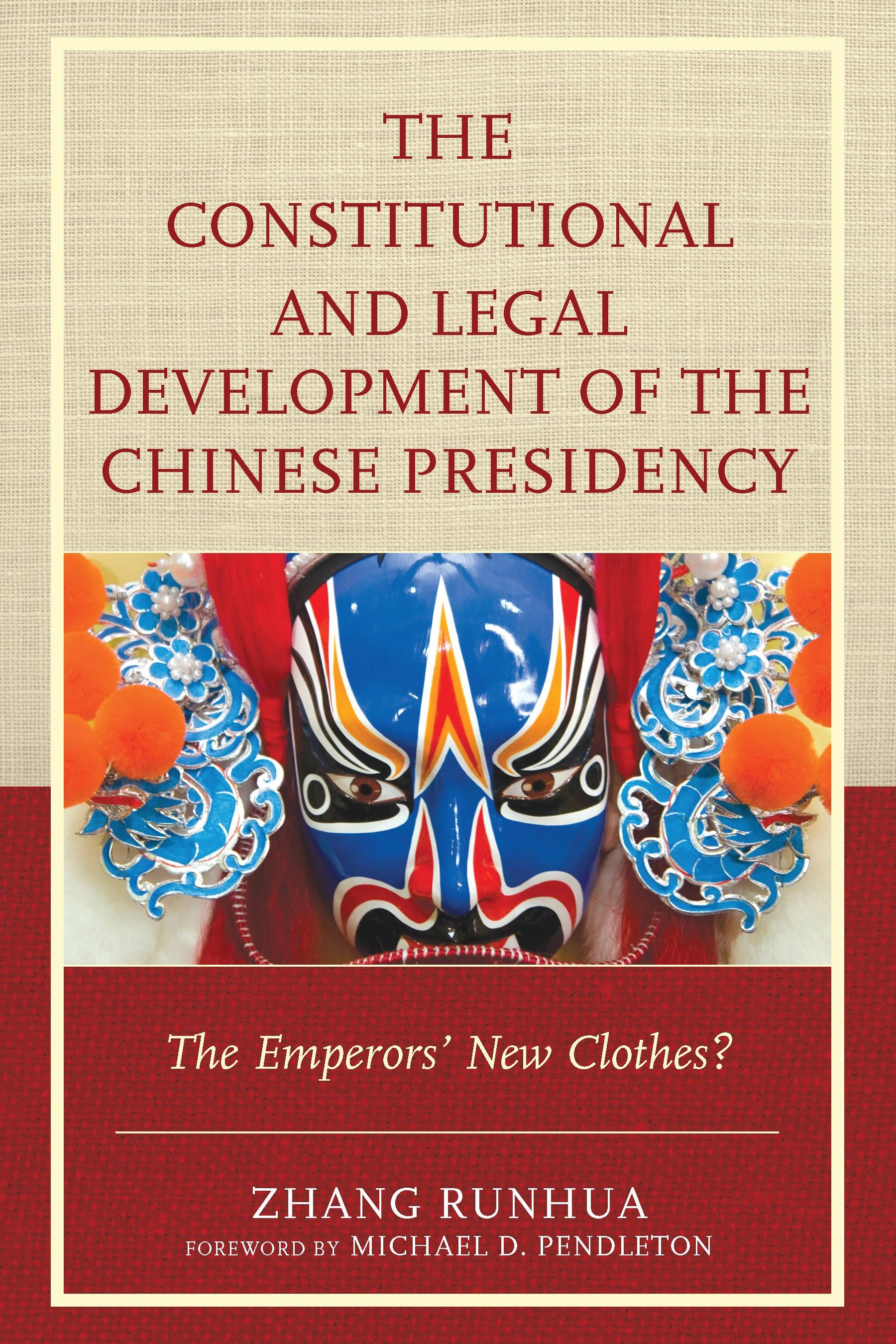
This book investigates the legal and political evolution of Chinese presidency from the period of its forerunner in the 1930s, its establishment in 1954 to its abolition in 1975, and its restoration in 1982, and discovers that the presidency has evolved from a traditional Chinese title into a political position and then a state institution that has the constitutional appearance of a Western style semi-presidency. However, politically it has functioned in a Stalinist party-state with Chinese characteristics, whose candidates have been produced according to the CCP’s step-by-step succession rules designated by the party leaders. Real political decision-making power has not only been limited by these succession rules, but also by the president's role and status within the CCP’s collective supreme body.
The author weaves the themes of Chinese politics and law together and explores not only the political implications of those constitutional provisions and amendments regarding this office, but also the constitutional significance of the CCP’s major political practices, such as Mao Zedong’s “power of last say,” his idea of “two fronts,” his controversial abolition of the chairmanship, Deng Xiaoping’s idea of “the nucleus of leadership,” and “diplomacy of the head of state” by Chinese presidents, thus illuminating how law has been made in those unpredictable political environments and how politics has been defined by law. The author concludes that the office of president is the key to understanding how power in China derives first from the CCP, second from the military, and third from the government loosely prescribed by laws. Even more important, the millennia-old Confucian concept of the charismatic leader is alive and well. While all eyes are on the new incumbent, his predecessors have loomed large and continue to exert significant influence on him. Underlining decades of constitutional evolution and shifting political dynamics have been the changing foreign influences and local demands on China. With so many variables at play, the office of the president will certainly continue to evolve.
The author weaves the themes of Chinese politics and law together and explores not only the political implications of those constitutional provisions and amendments regarding this office, but also the constitutional significance of the CCP’s major political practices, such as Mao Zedong’s “power of last say,” his idea of “two fronts,” his controversial abolition of the chairmanship, Deng Xiaoping’s idea of “the nucleus of leadership,” and “diplomacy of the head of state” by Chinese presidents, thus illuminating how law has been made in those unpredictable political environments and how politics has been defined by law. The author concludes that the office of president is the key to understanding how power in China derives first from the CCP, second from the military, and third from the government loosely prescribed by laws. Even more important, the millennia-old Confucian concept of the charismatic leader is alive and well. While all eyes are on the new incumbent, his predecessors have loomed large and continue to exert significant influence on him. Underlining decades of constitutional evolution and shifting political dynamics have been the changing foreign influences and local demands on China. With so many variables at play, the office of the president will certainly continue to evolve.
Paga facilmente con carta, Klarna, Apple Pay o Google Pay. Non sei soddisfatto? Hai sempre 14 giorni per il rimborso. Leggi di più nei nostri termini. Per qualsiasi domanda, scrivici a hello@memmo.org.
Memmo rende lo studio più facile, ovunque tu sia nel mondo. Qui trovi i tuoi libri di testo e strumenti di studio intelligenti, tutto in un unico posto: riassunti, quiz, podcast e flashcard. E poi c'è Ted, il tuo compagno di studio che risponde a ogni tua domanda. Oltre 50.000 studenti studiano già qui: è stato creato per aiutarti a imparare più velocemente e a stressarti meno.