
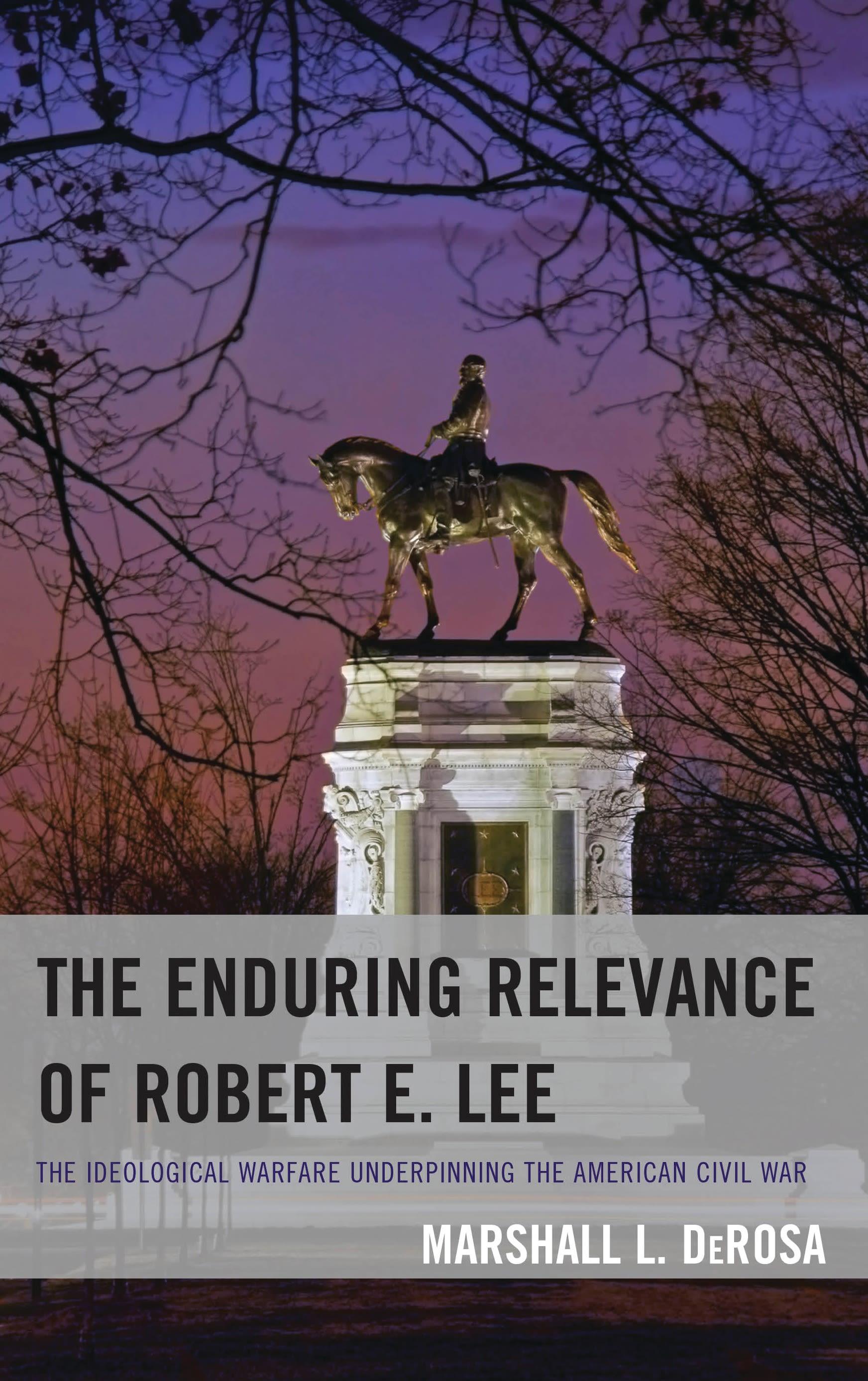
The sesquicentennial of the American Civil War presents a unique opportunity to consider the motivation behind General Robert E. Lee’s efforts to defend the Confederacy against his once beloved United States. What will be learned from this book is that General Lee was following in the footsteps of his idol General George Washington. General Lee was not fighting to perpetuate and expand slavery, self-aggrandizement, or military glory. He was fighting for the 1776 principles of government based upon the consent of the governed, the 1789 principles of the rule of law, and for a Judeo-Christian based civilization.
While Lee’s military genius and commitment to duty are widely acknowledged, his political acumen is, for the most part, underrated. Master of the art of politics as much as war, which is politics by other means, Lee considered both normative arts concerned with the happiness and noble actions of the citizens. In fact, Lee’s successes and failures on the battlefield were due in large measure to his worldview that if the Confederacy were to survive its citizenry must act nobly. According to Lee, it is in noble actions that human happiness is to be achieved. For Lee, the soldier and citizen performing their respective duties were on the paths to individual happiness and, ultimately, a free and independent CSA.
In The Enduring Relevance of Robert E. Lee Marshall L. DeRosa uses the American Civil War and the figure of Robert E. Lee to consider the role of political leadership under extremely difficult circumstances and the proper response to those circumstances. DeRosa examines Lee as a politician rather than just a military leader and finds that many of Lee’s assertions are still relevant today. DeRosa reveals Lee’s insights and his awareness that the victory of the Union over the Confederacy placed America on the path towards the demise of government based upon the consent of the governed, the rule of law, and the Judeo-Christian American civilization.
While Lee’s military genius and commitment to duty are widely acknowledged, his political acumen is, for the most part, underrated. Master of the art of politics as much as war, which is politics by other means, Lee considered both normative arts concerned with the happiness and noble actions of the citizens. In fact, Lee’s successes and failures on the battlefield were due in large measure to his worldview that if the Confederacy were to survive its citizenry must act nobly. According to Lee, it is in noble actions that human happiness is to be achieved. For Lee, the soldier and citizen performing their respective duties were on the paths to individual happiness and, ultimately, a free and independent CSA.
In The Enduring Relevance of Robert E. Lee Marshall L. DeRosa uses the American Civil War and the figure of Robert E. Lee to consider the role of political leadership under extremely difficult circumstances and the proper response to those circumstances. DeRosa examines Lee as a politician rather than just a military leader and finds that many of Lee’s assertions are still relevant today. DeRosa reveals Lee’s insights and his awareness that the victory of the Union over the Confederacy placed America on the path towards the demise of government based upon the consent of the governed, the rule of law, and the Judeo-Christian American civilization.
Paga facilmente con carta, Klarna, Apple Pay o Google Pay. Non sei soddisfatto? Hai sempre 14 giorni per il rimborso. Leggi di più nei nostri termini. Per qualsiasi domanda, scrivici a hello@memmo.org.
Memmo rende lo studio più facile, ovunque tu sia nel mondo. Qui trovi i tuoi libri di testo e strumenti di studio intelligenti, tutto in un unico posto: riassunti, quiz, podcast e flashcard. E poi c'è Ted, il tuo compagno di studio che risponde a ogni tua domanda. Oltre 50.000 studenti studiano già qui: è stato creato per aiutarti a imparare più velocemente e a stressarti meno.