
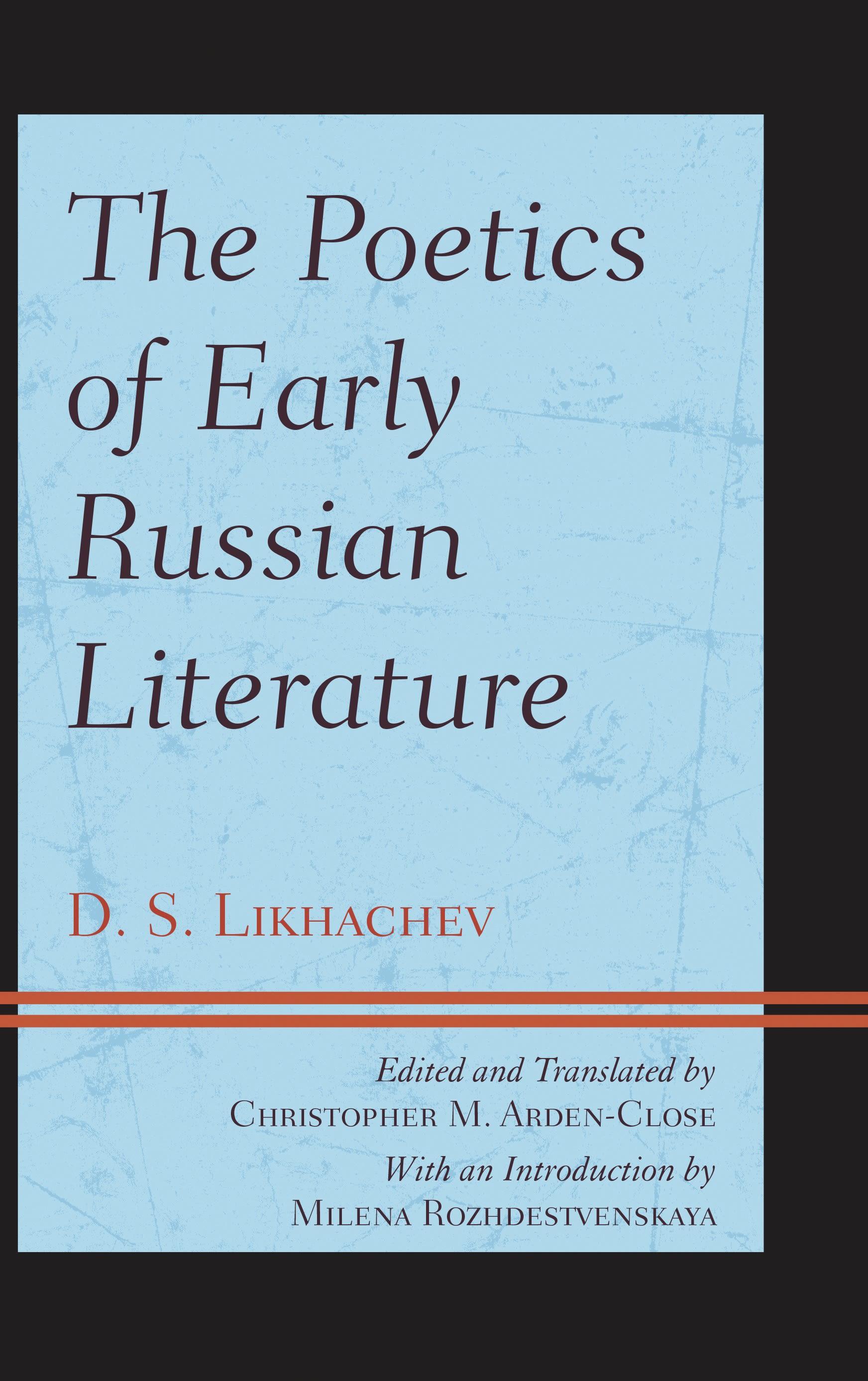
This translation of Likhachev’s Poetika Drevnerusskoy Literatury (The Poetics of Early Russian Literature), provides a description of the basic themes of early (tenth to seventeenth century) Russian literature. Likhachev compares literary narrative with narrative used in the representational arts. Furthermore, Likhachev stresses the genre-based character of medieval Russian literature and shows how choice of style in medieval times depended on a genre with its own specific etiquette and how innovation was discouraged.
The text contrasts medieval abstraction and modern realism, as Likhachev shows how realisticness gradually breaks through in specific situations—such as those of princely crimes. Likhachev draws contrasts in three different areas: the basic stock of symbols and comparisons used in early Russian literature with those used in modern literature, artistic time in folklore and early Russian literature, and artistic space in folklore and early Russian literature. Likhachev traces the gradual development into modern artistic time through a comparison of the chronicle, the first Russian play, the seventeenth century writer Avvakum, and three modern authors, Goncharov, Dostoevsky and Saltykov-Shchedrin. Finally, the text gives a justification for studying early literatures. This book will be invaluable for students of Russian, medieval and comparative literature.
The text contrasts medieval abstraction and modern realism, as Likhachev shows how realisticness gradually breaks through in specific situations—such as those of princely crimes. Likhachev draws contrasts in three different areas: the basic stock of symbols and comparisons used in early Russian literature with those used in modern literature, artistic time in folklore and early Russian literature, and artistic space in folklore and early Russian literature. Likhachev traces the gradual development into modern artistic time through a comparison of the chronicle, the first Russian play, the seventeenth century writer Avvakum, and three modern authors, Goncharov, Dostoevsky and Saltykov-Shchedrin. Finally, the text gives a justification for studying early literatures. This book will be invaluable for students of Russian, medieval and comparative literature.
Paga facilmente con carta, Klarna, Apple Pay o Google Pay. Non sei soddisfatto? Hai sempre 14 giorni per il rimborso. Leggi di più nei nostri termini. Per qualsiasi domanda, scrivici a hello@memmo.org.
Memmo rende lo studio più facile, ovunque tu sia nel mondo. Qui trovi i tuoi libri di testo e strumenti di studio intelligenti, tutto in un unico posto: riassunti, quiz, podcast e flashcard. E poi c'è Ted, il tuo compagno di studio che risponde a ogni tua domanda. Oltre 50.000 studenti studiano già qui: è stato creato per aiutarti a imparare più velocemente e a stressarti meno.