
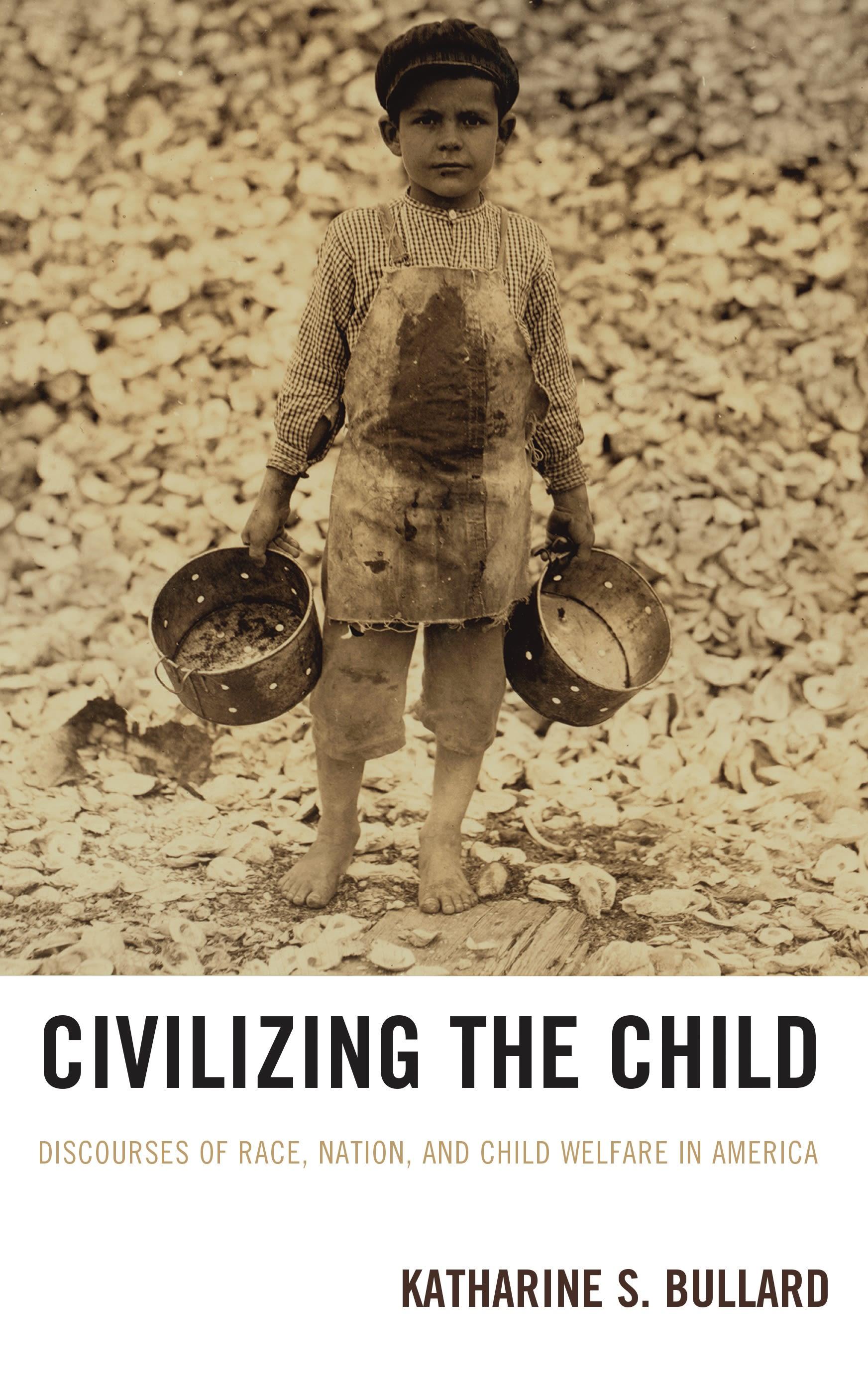
In Civilizing the Child: Discourses of Race, Nation, and Child Welfare in America, Katherine S. Bullard analyzes the discourse of child welfare advocates who argued for the notion of a racialized ideal child. This ideal child, limited to white, often native-born children, was at the center of arguments for material support to children and education for their parents. This book illuminates important limitations in the Progressive approach to social welfare and helps to explain the current dearth of support for poor children.
Civilizing the Child tracks the growing social concern with children in the nineteenth and early-twentieth centuries. The author uses seminal figures and institutions to look at the origins of the welfare state. Chapters focus on Charles Loring Brace, Jacob Riis, residents of the Hull House Settlement, and the staff of U.S. Children’s Bureau, analyzing their work to unpack the assumptions about American identity that made certain children belong and others remain outsiders. Bullard traces the ways in which child welfare advocates used racialized language and emphasized the “civilizing mission” to argue for support of white native-born children. This language focused on the future citizenship of some children as an argument for their support and protection.
Civilizing the Child tracks the growing social concern with children in the nineteenth and early-twentieth centuries. The author uses seminal figures and institutions to look at the origins of the welfare state. Chapters focus on Charles Loring Brace, Jacob Riis, residents of the Hull House Settlement, and the staff of U.S. Children’s Bureau, analyzing their work to unpack the assumptions about American identity that made certain children belong and others remain outsiders. Bullard traces the ways in which child welfare advocates used racialized language and emphasized the “civilizing mission” to argue for support of white native-born children. This language focused on the future citizenship of some children as an argument for their support and protection.
Paga facilmente con carta, Klarna, Apple Pay o Google Pay. Non sei soddisfatto? Hai sempre 14 giorni per il rimborso. Leggi di più nei nostri termini. Per qualsiasi domanda, scrivici a hello@memmo.org.
Memmo rende lo studio più facile, ovunque tu sia nel mondo. Qui trovi i tuoi libri di testo e strumenti di studio intelligenti, tutto in un unico posto: riassunti, quiz, podcast e flashcard. E poi c'è Ted, il tuo compagno di studio che risponde a ogni tua domanda. Oltre 50.000 studenti studiano già qui: è stato creato per aiutarti a imparare più velocemente e a stressarti meno.