
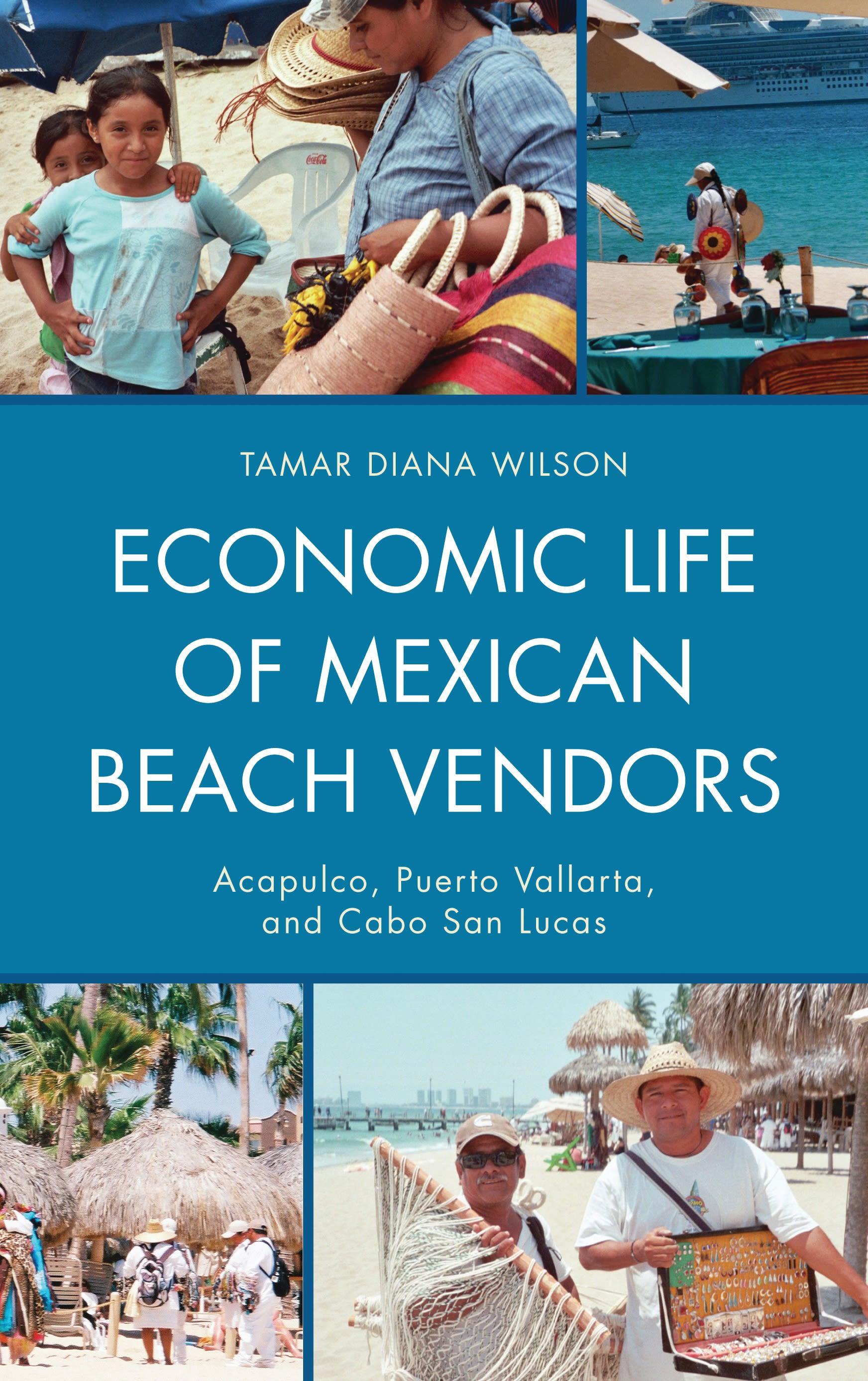
Economic Life of Mexican Beach Vendors: Acapulco, Puerto Vallarta, and Cabo San Lucas is based on interviews with 82 men and 84 women who vend their wares on beaches in three Mexican tourist centers. Assuming that some people may actively choose self-employment in the informal or semi-informal economy, the employment and educational aspirations of the vendors and their levels of satisfaction with their work are explored. Most of the vendors had other family members who were also vendors, and 75 (45.2 percent) had 5 or more family members who vended, most usually on Mexican beaches. The vendors are aware of the forces of globalization (though they do not express these forces in those words), as revealed by their responses to questions as to how the current world economic recession has affected them. The beach vendors live in essentially segregated neighborhoods that can be considered apartheid-like, far from the tourist zones.
Most of the vendors or their parents are rural-to-urban migrants and cross ethnic, linguistic, and economic borders as they migrate to and work in what have been called transnational social spaces. Of the vendors interviewed, 82 (49.4 percent) speak an indigenous language, and of these, 60 (73.2 percent) speak Nahuatl. The majority are from the state of Guerrero, but there were also Zapotec-speakers from Oaxaca. Both indigenous and non-indigenous women take part in beach vending. They are often wives, daughters, or sisters of male beach vendors, and they may be single, married, living in free union, or widowed. Their income is often of central importance to the household economy. This monograph aims to bring their stories to tourists and to scholars and students of tourism development and /or the informal or semi-informal economy in Mexican tourist centers.
Most of the vendors or their parents are rural-to-urban migrants and cross ethnic, linguistic, and economic borders as they migrate to and work in what have been called transnational social spaces. Of the vendors interviewed, 82 (49.4 percent) speak an indigenous language, and of these, 60 (73.2 percent) speak Nahuatl. The majority are from the state of Guerrero, but there were also Zapotec-speakers from Oaxaca. Both indigenous and non-indigenous women take part in beach vending. They are often wives, daughters, or sisters of male beach vendors, and they may be single, married, living in free union, or widowed. Their income is often of central importance to the household economy. This monograph aims to bring their stories to tourists and to scholars and students of tourism development and /or the informal or semi-informal economy in Mexican tourist centers.
Pagine: 200
Categoria: Ekonomi & Utveckling
e-ISBN: 9780739177655
Peso di spedizione: 1.2 kg
Spedito in: 1-2 giorni
Paga facilmente con carta, Klarna, Apple Pay o Google Pay. Non sei soddisfatto? Hai sempre 14 giorni per il rimborso. Leggi di più nei nostri termini. Per qualsiasi domanda, scrivici a hello@memmo.org.
Memmo rende lo studio più facile, ovunque tu sia nel mondo. Qui trovi i tuoi libri di testo e strumenti di studio intelligenti, tutto in un unico posto: riassunti, quiz, podcast e flashcard. E poi c'è Ted, il tuo compagno di studio che risponde a ogni tua domanda. Oltre 50.000 studenti studiano già qui: è stato creato per aiutarti a imparare più velocemente e a stressarti meno.