
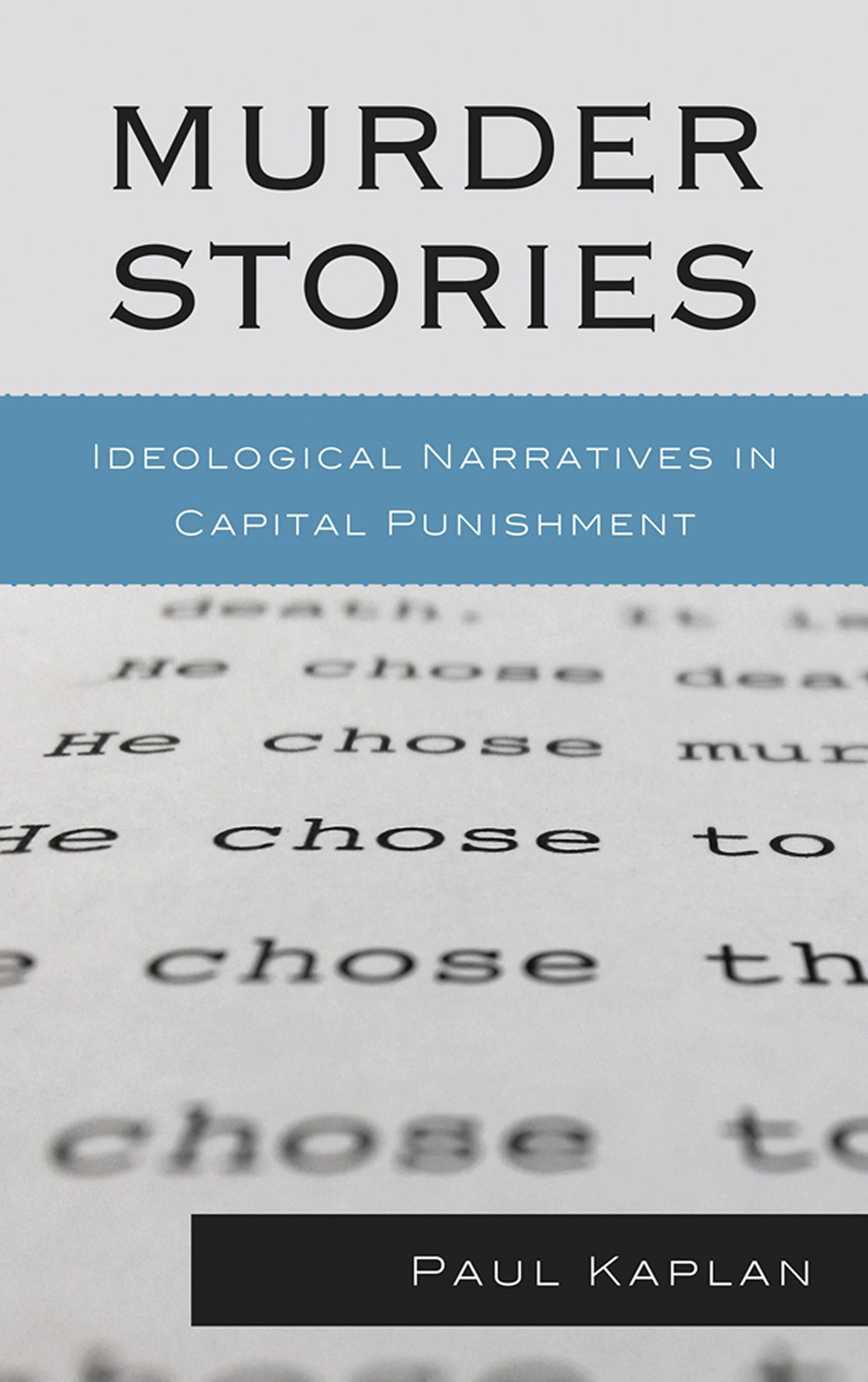
Murder Stories engages with the current theoretical debate in death penalty research on the role of cultural commitments to ‘American’ ideologies in the retention of capital punishment. The central aim of the study is to illuminate the elusive yet powerful role of ideology in legal discourses. Through analyzing the content and processes of death penalty narratives, this research illuminates the covert life of ‘the American Creed,’ (a nexus of ideologies—liberty, egalitarianism, individualism, populism, and laissez faire—said to be unique to the United States) in the law.
Murder Stories draws on the entire record of California death sentence resulting trials from three large and diverse California counties for the years 1996 – 2004, as well as interviews with 26 capital caseworkers (attorneys, judges, and investigators) from the same counties. Employing the theoretical framework proposed by Ewick and Silbey (1995) to study hegemonic and subversive narratives, and also the ethnographic approach advocated by Amsterdam and Hertz (1992) to study the producers and processes of constructing legal narratives, this book traces the ideological content carried within the stories told by everyday practitioners of capital punishment by investigating the content, process, and ideological implications of these narratives.
The central theoretical finding is that the narratives constructed by both prosecutors and defenders tend to instantiate rather than subvert the ideological tenets of the American Creed.
Murder Stories draws on the entire record of California death sentence resulting trials from three large and diverse California counties for the years 1996 – 2004, as well as interviews with 26 capital caseworkers (attorneys, judges, and investigators) from the same counties. Employing the theoretical framework proposed by Ewick and Silbey (1995) to study hegemonic and subversive narratives, and also the ethnographic approach advocated by Amsterdam and Hertz (1992) to study the producers and processes of constructing legal narratives, this book traces the ideological content carried within the stories told by everyday practitioners of capital punishment by investigating the content, process, and ideological implications of these narratives.
The central theoretical finding is that the narratives constructed by both prosecutors and defenders tend to instantiate rather than subvert the ideological tenets of the American Creed.
Pagine: 218
Categoria: Kriminologi
e-ISBN: 9780739171714
Peso di spedizione: 1.2 kg
Spedito in: 1-2 giorni
Paga facilmente con carta, Klarna, Apple Pay o Google Pay. Non sei soddisfatto? Hai sempre 14 giorni per il rimborso. Leggi di più nei nostri termini. Per qualsiasi domanda, scrivici a hello@memmo.org.
Memmo rende lo studio più facile, ovunque tu sia nel mondo. Qui trovi i tuoi libri di testo e strumenti di studio intelligenti, tutto in un unico posto: riassunti, quiz, podcast e flashcard. E poi c'è Ted, il tuo compagno di studio che risponde a ogni tua domanda. Oltre 50.000 studenti studiano già qui: è stato creato per aiutarti a imparare più velocemente e a stressarti meno.