
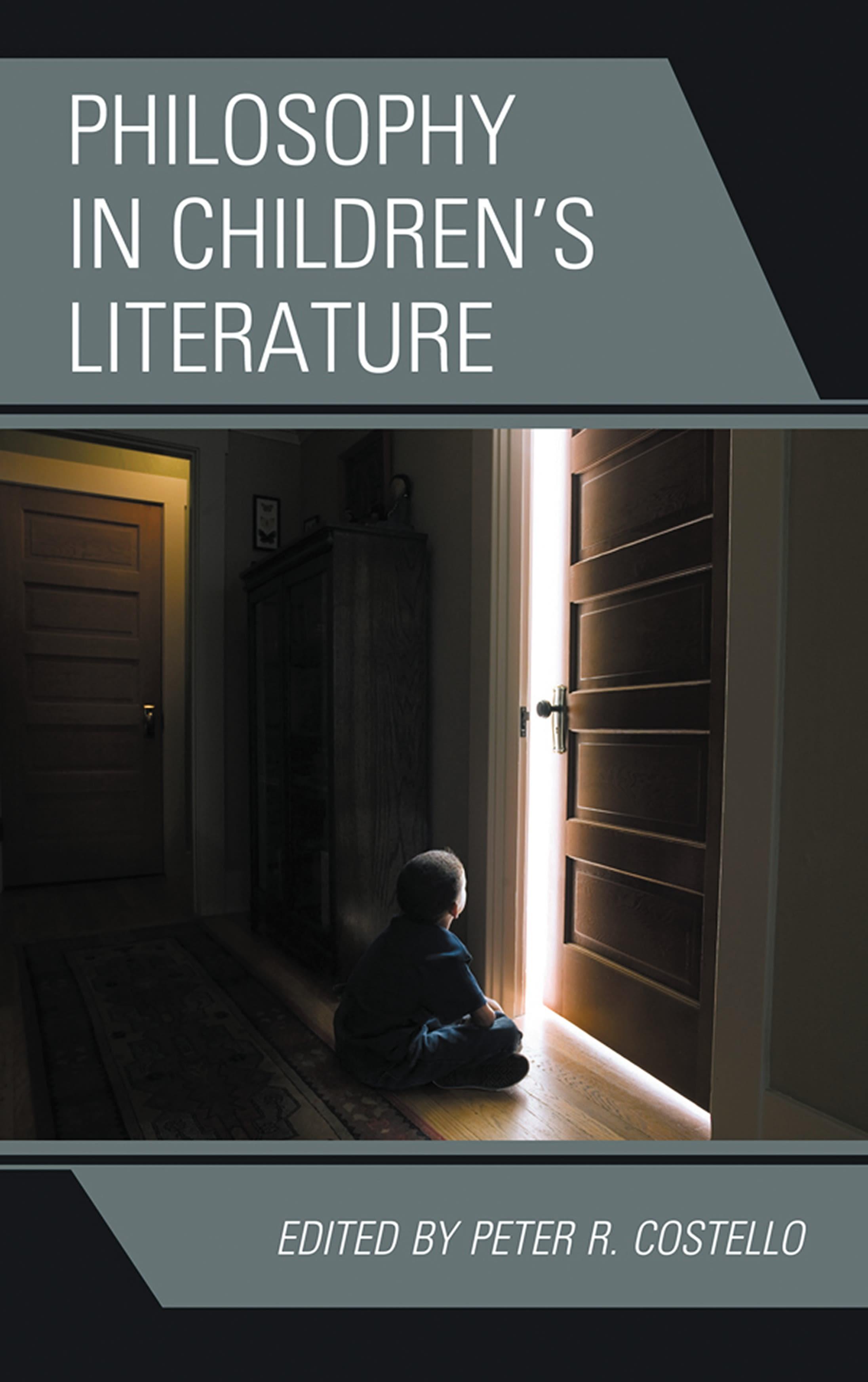
This book allows philosophers, literary theorists, and education specialists to come together to offer a series of readings on works of children’s literature. Each of their readings is focused on pairing a particular, popular picture book or a chapter book with philosophical texts or themes.
The book has three sections—the first, on picturebooks; the second, on chapter books; and the third, on two sets of paired readings of two very popular picturebooks. By means of its three sections, the book sets forth as its goal to show how philosophy can be helpful in reappraising books aimed at children from early childhood on. Particularly in the third section, the book emphasizes how philosophy can help to multiply the type of interpretative stances that are possible when readers listen again to what they thought they knew so well.
The kinds of questions this book raises are the following: How are children’s books already anticipating or articulating philosophical problems and discussions? How does children’s literature work by means of philosophical puzzles or language games? What do children’s books reveal about the existential situation the child reader faces?
In posing and answering these kinds of questions, the readings within the book thus intersect with recent, developing scholarship in children’s literature studies as well as in the psychology and philosophy of childhood.
The book has three sections—the first, on picturebooks; the second, on chapter books; and the third, on two sets of paired readings of two very popular picturebooks. By means of its three sections, the book sets forth as its goal to show how philosophy can be helpful in reappraising books aimed at children from early childhood on. Particularly in the third section, the book emphasizes how philosophy can help to multiply the type of interpretative stances that are possible when readers listen again to what they thought they knew so well.
The kinds of questions this book raises are the following: How are children’s books already anticipating or articulating philosophical problems and discussions? How does children’s literature work by means of philosophical puzzles or language games? What do children’s books reveal about the existential situation the child reader faces?
In posing and answering these kinds of questions, the readings within the book thus intersect with recent, developing scholarship in children’s literature studies as well as in the psychology and philosophy of childhood.
Pagine: 354
Categoria: Litteraturvetenskap & Teori
e-ISBN: 9780739168240
Peso di spedizione: 1.2 kg
Spedito in: 1-2 giorni
Paga facilmente con carta, Klarna, Apple Pay o Google Pay. Non sei soddisfatto? Hai sempre 14 giorni per il rimborso. Leggi di più nei nostri termini. Per qualsiasi domanda, scrivici a hello@memmo.org.
Memmo rende lo studio più facile, ovunque tu sia nel mondo. Qui trovi i tuoi libri di testo e strumenti di studio intelligenti, tutto in un unico posto: riassunti, quiz, podcast e flashcard. E poi c'è Ted, il tuo compagno di studio che risponde a ogni tua domanda. Oltre 50.000 studenti studiano già qui: è stato creato per aiutarti a imparare più velocemente e a stressarti meno.