
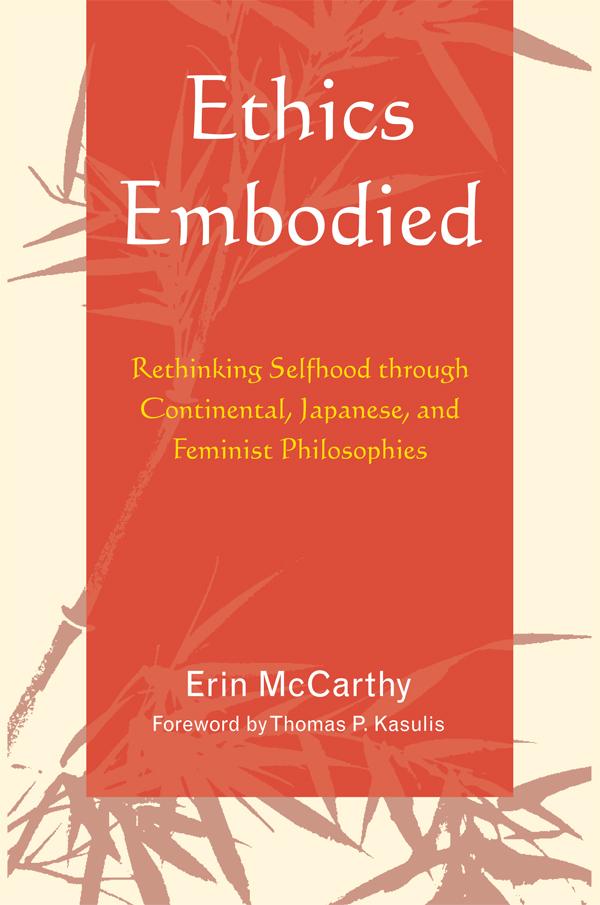
While the body has been largely neglected in much of traditional Western philosophy, there is a rich tradition of Japanese philosophy in which this is not the case. Ethics Embodied explains how Japanese philosophy includes the body as an integral part of selfhood and ethics and shows how it provides an alternative and challenge to the traditional Western philosophical view of self and ethics. Through a comparative feminist approach, the book articulates the striking similarities that exist between certain strands of Japanese philosophy and feminist philosophy concerning selfhood, ethics and the body. Despite the similarities, McCarthy argues that there are significant differences between these philosophies and that each reveals important limitations of the other. Thus, the book urges a view of ethical embodied selfhood that goes beyond where each of these views leaves us when considered in isolation.
With keen analysis and constructive comparison, this book will be accessible for students and scholars familiar with the Western philosophical tradition, while still adding a more global perspective.
With keen analysis and constructive comparison, this book will be accessible for students and scholars familiar with the Western philosophical tradition, while still adding a more global perspective.
Paga facilmente con carta, Klarna, Apple Pay o Google Pay. Non sei soddisfatto? Hai sempre 14 giorni per il rimborso. Leggi di più nei nostri termini. Per qualsiasi domanda, scrivici a hello@memmo.org.
Memmo rende lo studio più facile, ovunque tu sia nel mondo. Qui trovi i tuoi libri di testo e strumenti di studio intelligenti, tutto in un unico posto: riassunti, quiz, podcast e flashcard. E poi c'è Ted, il tuo compagno di studio che risponde a ogni tua domanda. Oltre 50.000 studenti studiano già qui: è stato creato per aiutarti a imparare più velocemente e a stressarti meno.