
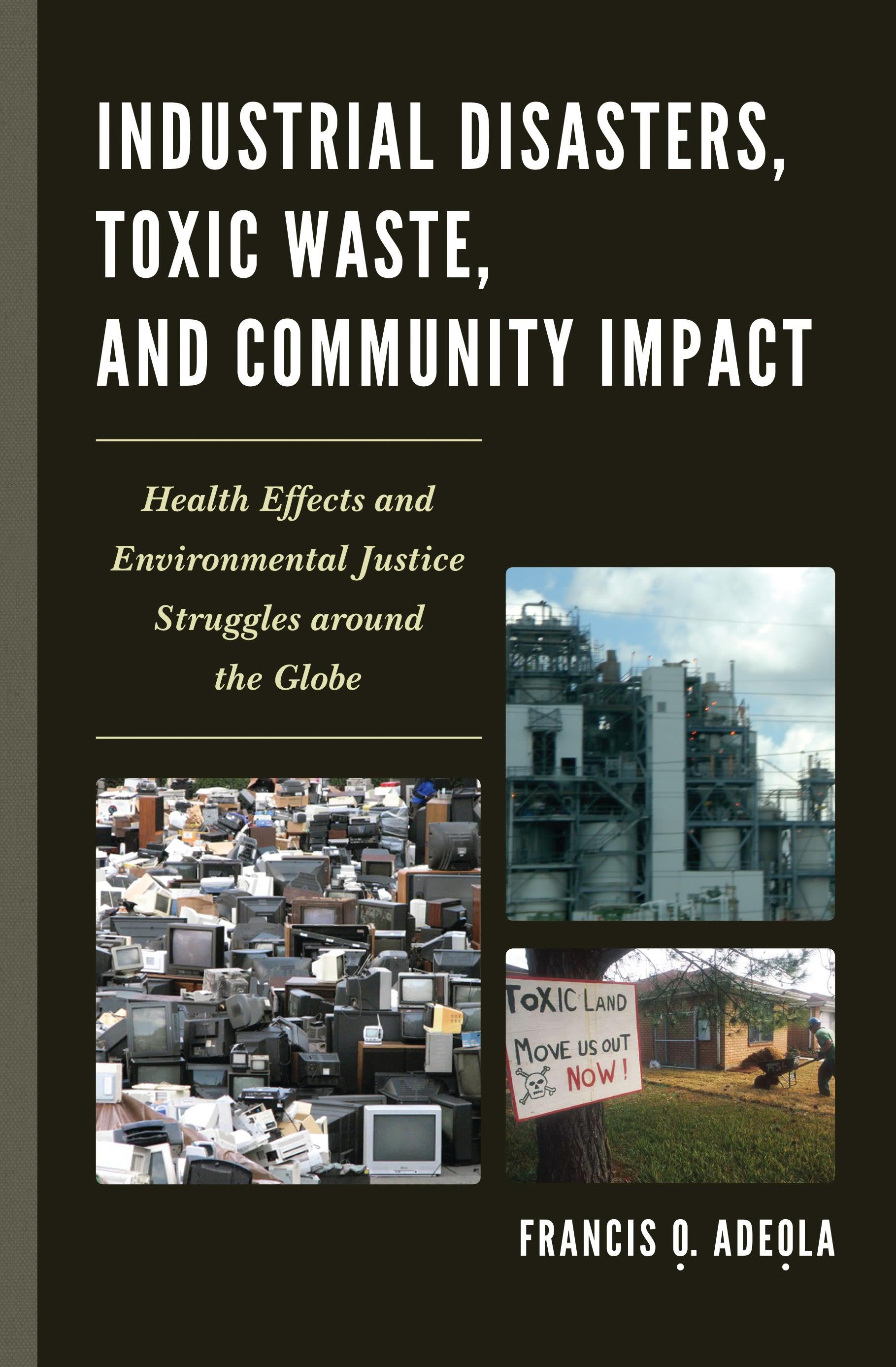
Industrial Disasters, Toxic Waste, and Community Impact focuses on hazardous and toxic wastes releases, industrial disasters, the consequent contamination of communities and the environment, and the subsequent social impacts, including adverse health effects, deaths and property destruction, psychosocial problems, and community disruption. This book explains the emergence of a sociological study of risk and of natural, technological, and hybrid disasters, along with a review of the accumulated body of knowledge in the field. It is unique in its integration of sociological perspectives with perspectives from other disciplines when discussing the problems posed by technological hazards both in advanced industrialized societies and in the underdeveloped world.
Francis O. Adeola extends the field through an innovative presentation of topics which up to now have had sparse treatment in sociology texts. This book starts by presenting the sociology of hazardous waste, risk, and disasters as a relatively new development, engendering both a growing passion and an increasing volume of empirical research among scholars. Next, it describes how hazardous and toxic wastes disposal, exposure, remediation, and proximate adverse health consequences have risen to the level of endemic social problem both in the United States and around the world. After discussing these cases in relation to contemporary theories of industrial and organizational disasters, Adeola delves into classifying of hazardous wastes, indicating the characteristics of each type of waste, and identifying what makes them especially dangerous to people and the environment.
Other major topics addressed in the rest of the book include electronic waste (e-waste) as a new species of trouble in terms of the volume and toxicity of global e-waste generation and management, the environmental and health risks of Persistent Organic Pollutants (POPs), case studies of contaminated communities within the United States and across the globe, the international flows of toxic waste, analysis of risk and environmental contamination by race and ethnicity in the United States, and the juxtaposition of the issues of environmental justice and human rights. With its many contributions to environmental sociology, Industrial Disasters, Toxic Waste, and Community Impact will be a valuable addition to the libraries of students, scholars, and practitioners interested in the intersection of toxic waste releases, human exposure to contaminants, and public health.
Francis O. Adeola extends the field through an innovative presentation of topics which up to now have had sparse treatment in sociology texts. This book starts by presenting the sociology of hazardous waste, risk, and disasters as a relatively new development, engendering both a growing passion and an increasing volume of empirical research among scholars. Next, it describes how hazardous and toxic wastes disposal, exposure, remediation, and proximate adverse health consequences have risen to the level of endemic social problem both in the United States and around the world. After discussing these cases in relation to contemporary theories of industrial and organizational disasters, Adeola delves into classifying of hazardous wastes, indicating the characteristics of each type of waste, and identifying what makes them especially dangerous to people and the environment.
Other major topics addressed in the rest of the book include electronic waste (e-waste) as a new species of trouble in terms of the volume and toxicity of global e-waste generation and management, the environmental and health risks of Persistent Organic Pollutants (POPs), case studies of contaminated communities within the United States and across the globe, the international flows of toxic waste, analysis of risk and environmental contamination by race and ethnicity in the United States, and the juxtaposition of the issues of environmental justice and human rights. With its many contributions to environmental sociology, Industrial Disasters, Toxic Waste, and Community Impact will be a valuable addition to the libraries of students, scholars, and practitioners interested in the intersection of toxic waste releases, human exposure to contaminants, and public health.
Paga facilmente con carta, Klarna, Apple Pay o Google Pay. Non sei soddisfatto? Hai sempre 14 giorni per il rimborso. Leggi di più nei nostri termini. Per qualsiasi domanda, scrivici a hello@memmo.org.
Memmo rende lo studio più facile, ovunque tu sia nel mondo. Qui trovi i tuoi libri di testo e strumenti di studio intelligenti, tutto in un unico posto: riassunti, quiz, podcast e flashcard. E poi c'è Ted, il tuo compagno di studio che risponde a ogni tua domanda. Oltre 50.000 studenti studiano già qui: è stato creato per aiutarti a imparare più velocemente e a stressarti meno.