
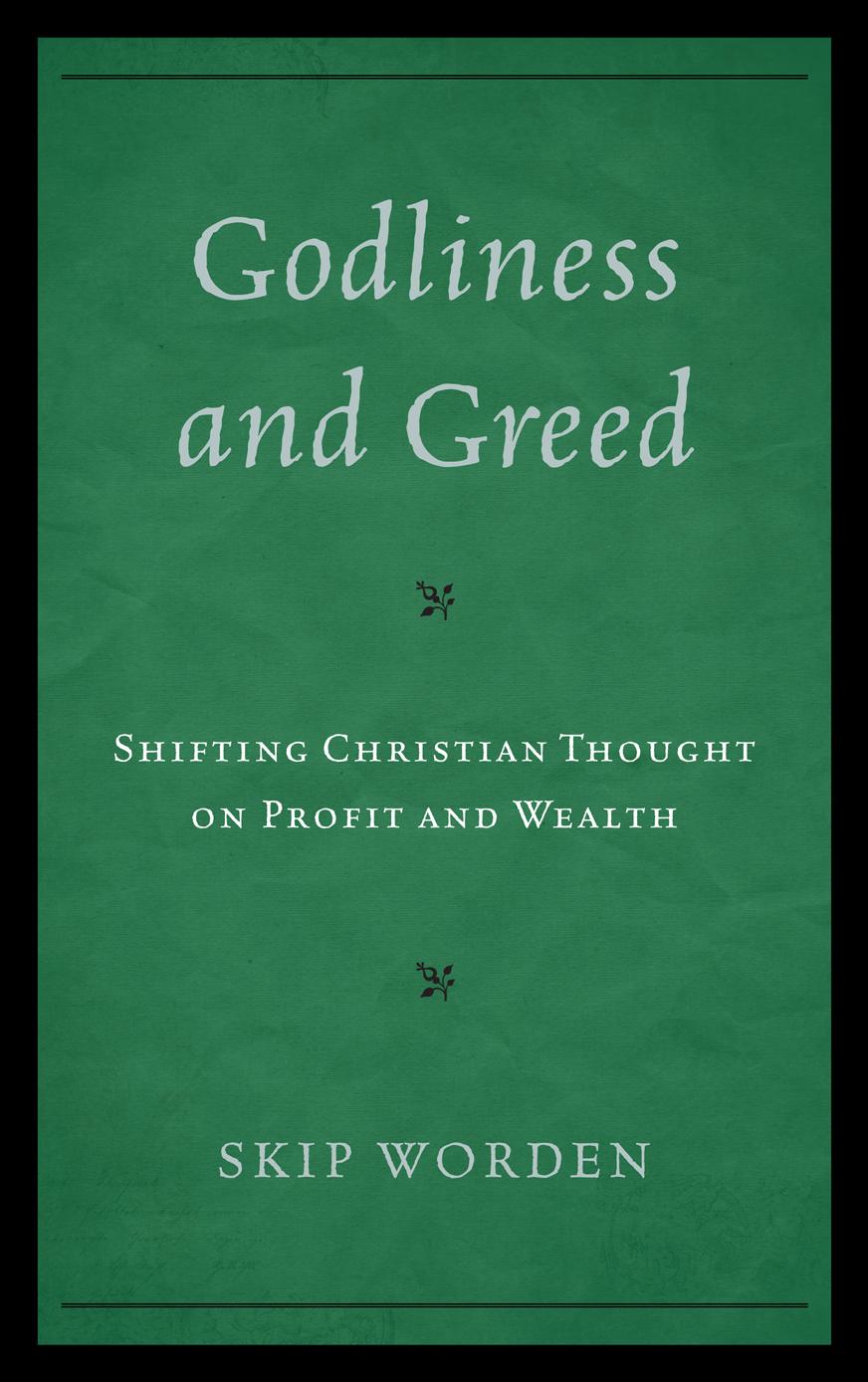
Traditional scholarship often points to the Calvinists and Max Weber's writing on the Protestant ethic as the catalysts to changing Christian attitudes concerning profit-seeking and wealth. Author Skip Worden argues that the seeds of this change occurred centuries earlier. From the beginning of the Commercial Revolution to the fifteenth-century Renaissance, he shows that the predominant Christian thought on economics went through a fundamental shift, becoming favorable toward profit-seeking and wealth-holding. Worden discusses this dramatic change and explains how the general antagonism toward the pursuit of wealth before the Commercial Revolution transformed into Protestant theologians' fighting against the prevailing view of a pro-wealth paradigm during the fifteenth century.
Worden contends that the shift away from the Patristic view of wealth occurred well before the addition of the Calvinist spirit of capitalism and the Puritan work ethic into Christian economic vernacular. Drawing on Plato, Cicero, and Augustine, early Protestant theologians unsuccessfully sought to check the rising dominance of the pro-wealth Christian paradigm, which they believed had been pushed too far. These theologians of the sixteenth and seventeenth century felt it was too close to advocating love of gain itself, something too close to the sin of greed. How well the Reformation succeeded can be assessed by Worden's insightful concluding study of John D. Rockefeller, the ascetic steward of God's Gold in the form of monopoly.
Worden contends that the shift away from the Patristic view of wealth occurred well before the addition of the Calvinist spirit of capitalism and the Puritan work ethic into Christian economic vernacular. Drawing on Plato, Cicero, and Augustine, early Protestant theologians unsuccessfully sought to check the rising dominance of the pro-wealth Christian paradigm, which they believed had been pushed too far. These theologians of the sixteenth and seventeenth century felt it was too close to advocating love of gain itself, something too close to the sin of greed. How well the Reformation succeeded can be assessed by Worden's insightful concluding study of John D. Rockefeller, the ascetic steward of God's Gold in the form of monopoly.
Pagine: 328
Categoria: Religion & Teologi
e-ISBN: 9780739139851
Peso di spedizione: 1.2 kg
Spedito in: 1-2 giorni
Paga facilmente con carta, Klarna, Apple Pay o Google Pay. Non sei soddisfatto? Hai sempre 14 giorni per il rimborso. Leggi di più nei nostri termini. Per qualsiasi domanda, scrivici a hello@memmo.org.
Memmo rende lo studio più facile, ovunque tu sia nel mondo. Qui trovi i tuoi libri di testo e strumenti di studio intelligenti, tutto in un unico posto: riassunti, quiz, podcast e flashcard. E poi c'è Ted, il tuo compagno di studio che risponde a ogni tua domanda. Oltre 50.000 studenti studiano già qui: è stato creato per aiutarti a imparare più velocemente e a stressarti meno.