
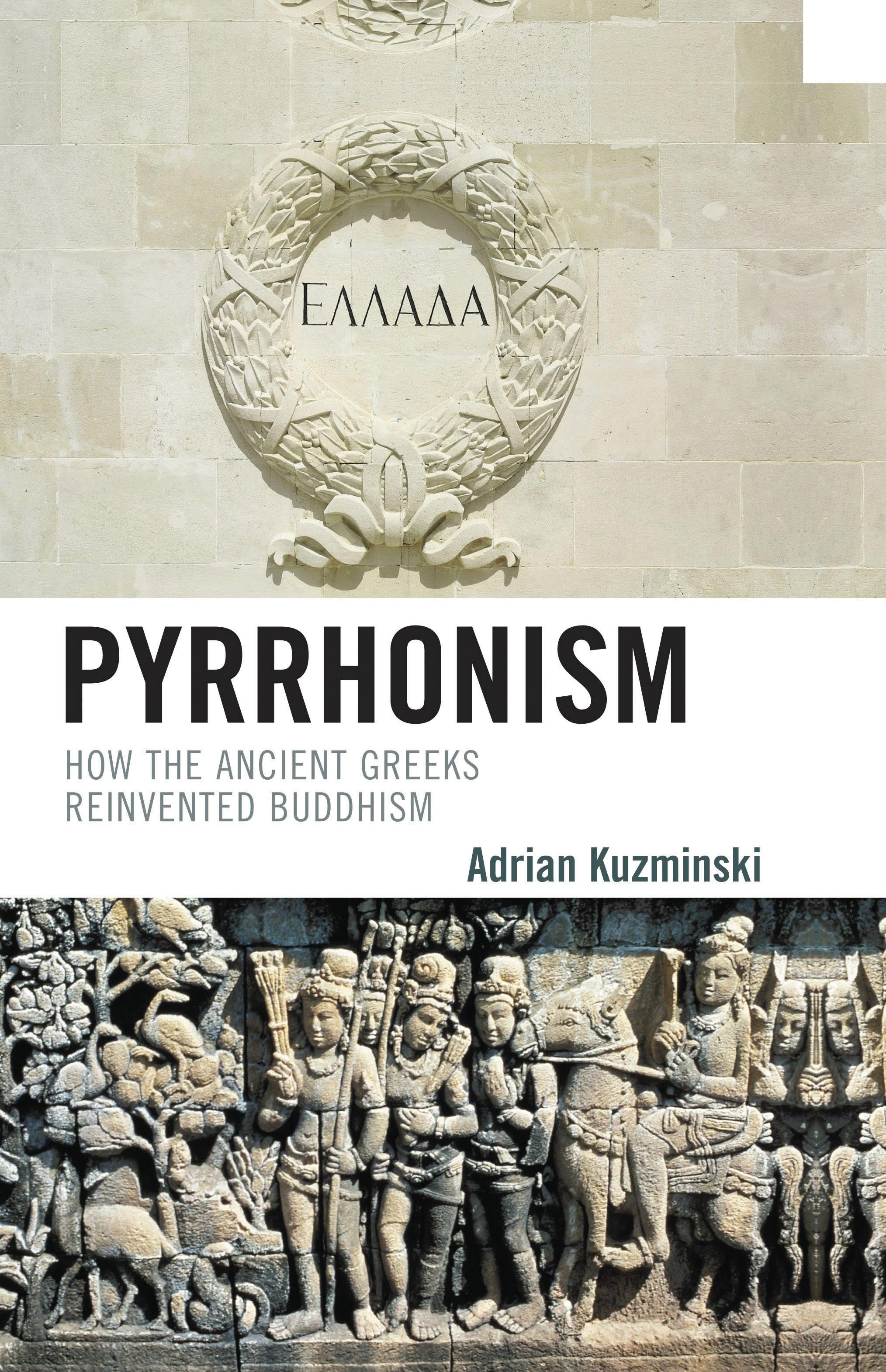
Pyrrhonism is commonly confused with scepticism in Western philosophy. Unlike sceptics, who believe there are no true beliefs, Pyrrhonists suspend judgment about all beliefs, including the belief that there are no true beliefs. Pyrrhonism was developed by a line of ancient Greek philosophers, from its founder Pyrrho of Elis in the fourth century BCE through Sextus Empiricus in the second century CE. Pyrrhonists offer no view, theory, or knowledge about the world, but recommend instead a practice, a distinct way of life, designed to suspend beliefs and ease suffering. Adrian Kuzminski examines Pyrrhonism in terms of its striking similarity to some Eastern non-dogmatic soteriological traditions-particularly Madhyamaka Buddhism. He argues that its origin can plausibly be traced to the contacts between Pyrrho and the sages he encountered in India, where he traveled with Alexander the Great. Although Pyrrhonism has not been practiced in the West since ancient times, its insights have occasionally been independently recovered, most recently in the work of Ludwig Wittgenstein. Kuzminski shows that Pyrrhonism remains relevant perhaps more than ever as an antidote to today's cultures of belief.
Paga facilmente con carta, Klarna, Apple Pay o Google Pay. Non sei soddisfatto? Hai sempre 14 giorni per il rimborso. Leggi di più nei nostri termini. Per qualsiasi domanda, scrivici a hello@memmo.org.
Memmo rende lo studio più facile, ovunque tu sia nel mondo. Qui trovi i tuoi libri di testo e strumenti di studio intelligenti, tutto in un unico posto: riassunti, quiz, podcast e flashcard. E poi c'è Ted, il tuo compagno di studio che risponde a ogni tua domanda. Oltre 50.000 studenti studiano già qui: è stato creato per aiutarti a imparare più velocemente e a stressarti meno.