
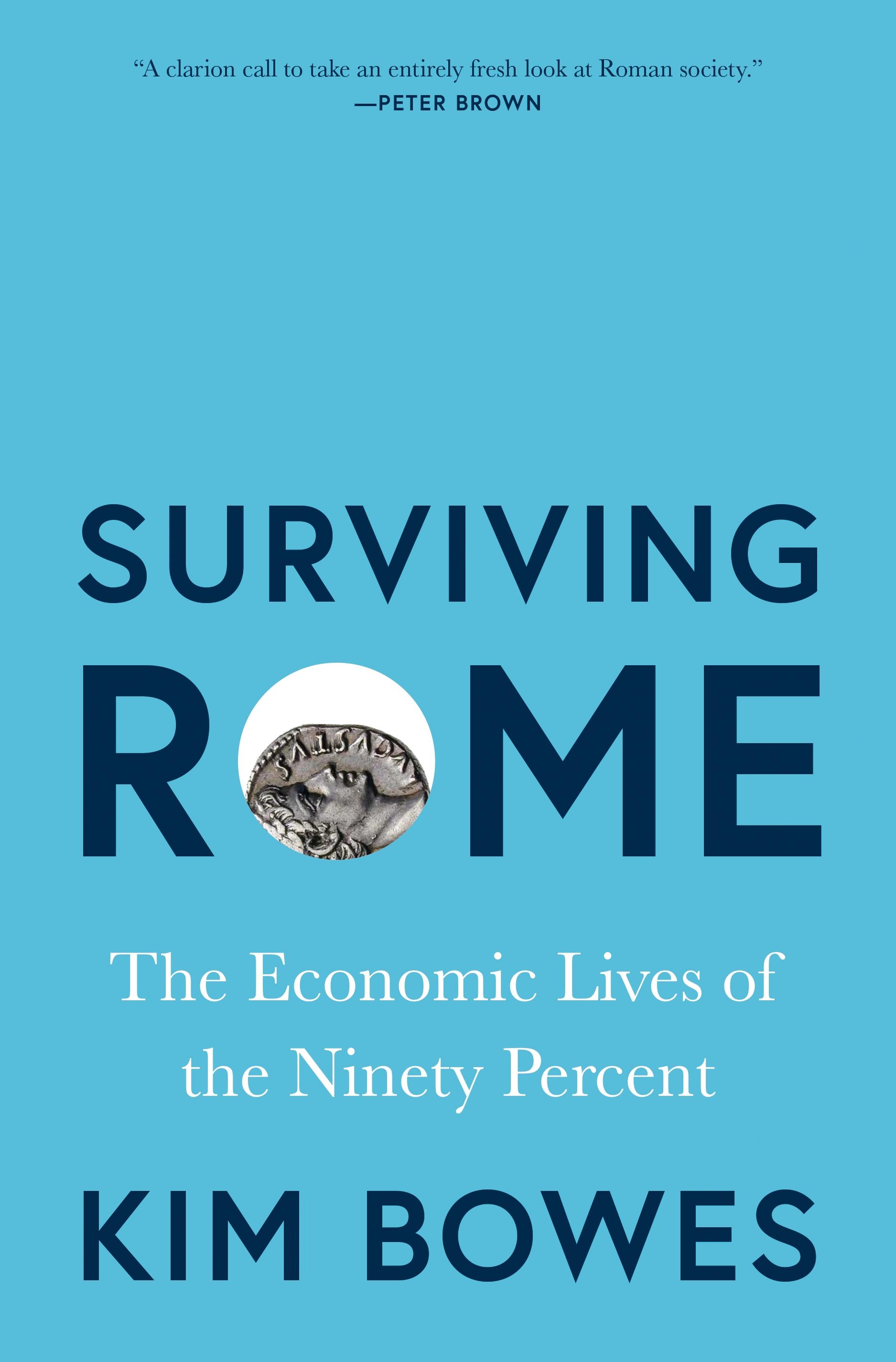
A radical revision—and worker’s-eye view—of everything we thought we knew about the ancient Roman economy
The story of ancient Rome is predominantly one of great men with great fortunes. Surviving Rome unearths another history, one of ordinary Romans, who worked with their hands and survived through a combination of grit and grinding labor.
Focusing on the working majority, Kim Bowes tells the stories of people like the tenant farmer Epimachus, Faustilla the moneylender, and the pimp Philokles. She reveals how the economic changes of the period created a set of bitter challenges and opportunistic hustles for everyone from farmers and craftspeople to day laborers and slaves. She finds working people producing a consumer revolution, making and buying all manner of goods from fine pottery to children’s toys. Many of the poorest working people probably pieced together a living from multiple sources of income, including wages. And she suggests that Romans’ most daunting challenge was the struggle to save. Like many modern people, saving enough to buy land or start a business was a slow, precarious slog. Bowes shows how these economies of survival were shared by a wide swath of the populace, blurring the lines between genders, ages, and legal status.
Drawing on new archaeological and textual evidence, Surviving Rome presents a radical new perspective on the economy of ancient Rome while speaking to the challenges of today’s laborers and gig workers surviving in an unforgiving global world.
Paga facilmente con carta, Klarna, Apple Pay o Google Pay. Non sei soddisfatto? Hai sempre 14 giorni per il rimborso. Leggi di più nei nostri termini. Per qualsiasi domanda, scrivici a hello@memmo.org.
Memmo rende lo studio più facile, ovunque tu sia nel mondo. Qui trovi i tuoi libri di testo e strumenti di studio intelligenti, tutto in un unico posto: riassunti, quiz, podcast e flashcard. E poi c'è Ted, il tuo compagno di studio che risponde a ogni tua domanda. Oltre 50.000 studenti studiano già qui: è stato creato per aiutarti a imparare più velocemente e a stressarti meno.