
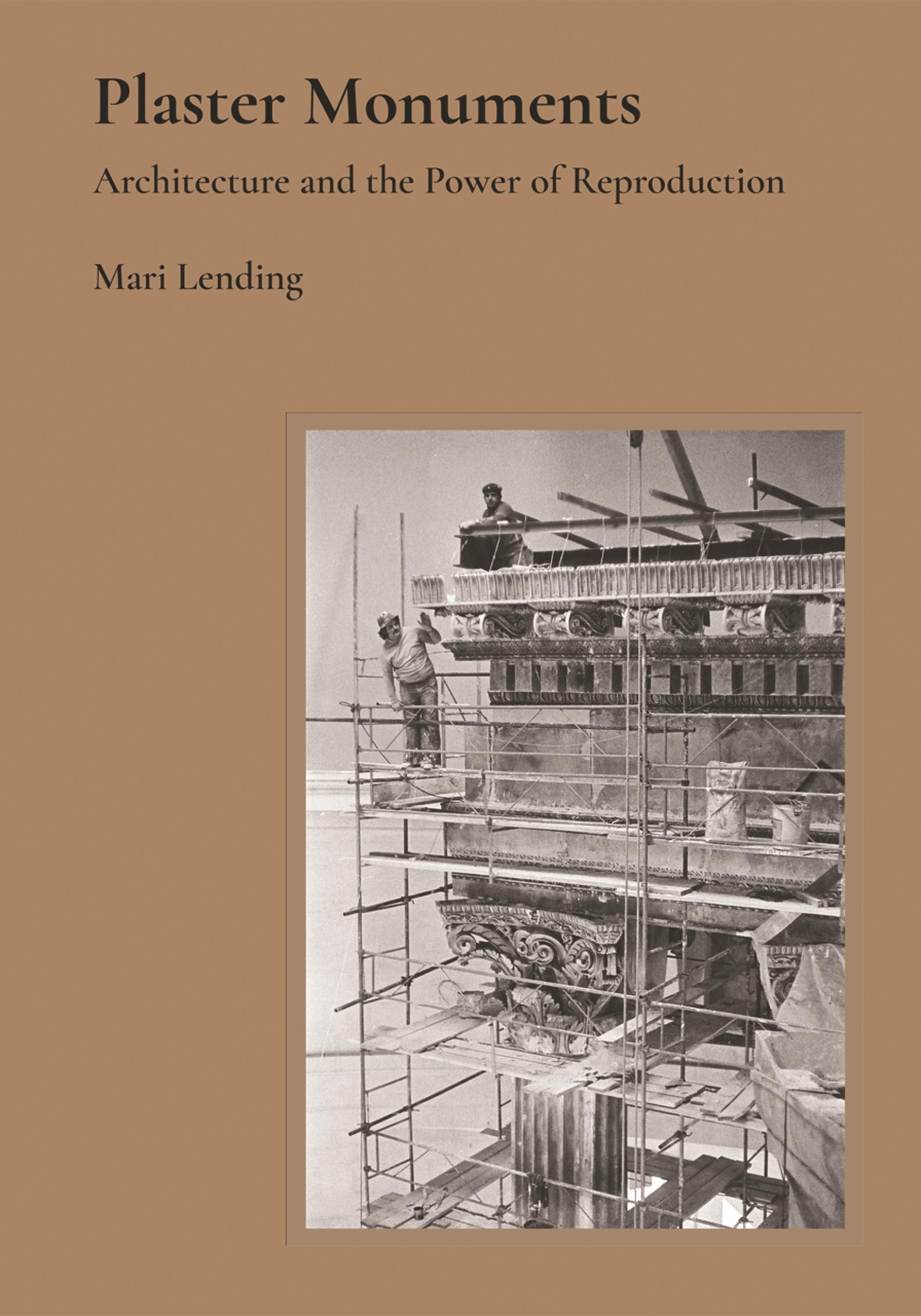
We are taught to believe in originals. In art and architecture in particular, original objects vouch for authenticity, value, and truth, and require our protection and preservation. The nineteenth century, however, saw this issue differently. In a culture of reproduction, plaster casts of building fragments and architectural features were sold throughout Europe and America and proudly displayed in leading museums. The first comprehensive history of these full-scale replicas, Plaster Monuments examines how they were produced, marketed, sold, and displayed, and how their significance can be understood today.
Plaster Monuments unsettles conventional thinking about copies and originals. As Mari Lending shows, the casts were used to restore wholeness to buildings that in reality lay in ruin, or to isolate specific features of monuments to illustrate what was typical of a particular building, style, or era. Arranged in galleries and published in exhibition catalogues, these often enormous objects were staged to suggest the sweep of history, synthesizing structures from vastly different regions and time periods into coherent narratives. While architectural plaster casts fell out of fashion after World War I, Lending brings the story into the twentieth century, showing how Paul Rudolph incorporated historical casts into the design for the Yale Art and Architecture building, completed in 1963.
Drawing from a broad archive of models, exhibitions, catalogues, and writings from architects, explorers, archaeologists, curators, novelists, and artists, Plaster Monuments tells the fascinating story of a premodernist aesthetic and presents a new way of thinking about history’s artifacts.
Paga facilmente con carta, Klarna, Apple Pay o Google Pay. Non sei soddisfatto? Hai sempre 14 giorni per il rimborso. Leggi di più nei nostri termini. Per qualsiasi domanda, scrivici a hello@memmo.org.
Memmo rende lo studio più facile, ovunque tu sia nel mondo. Qui trovi i tuoi libri di testo e strumenti di studio intelligenti, tutto in un unico posto: riassunti, quiz, podcast e flashcard. E poi c'è Ted, il tuo compagno di studio che risponde a ogni tua domanda. Oltre 50.000 studenti studiano già qui: è stato creato per aiutarti a imparare più velocemente e a stressarti meno.