
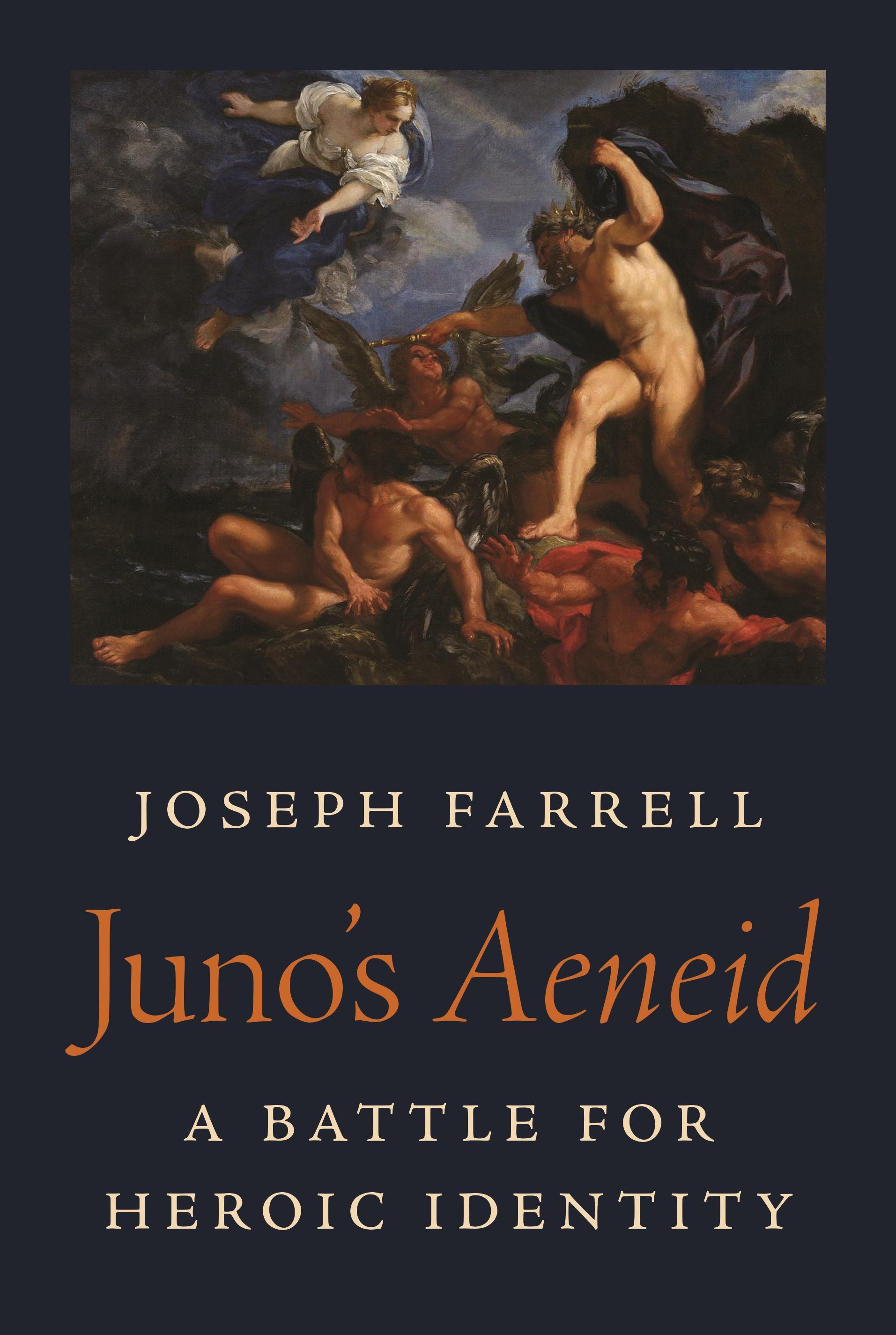
A major new interpretation of Vergil's epic poem as a struggle between two incompatible versions of the Homeric hero
This compelling book offers an entirely new way of understanding the Aeneid. Many scholars regard Vergil's poem as an attempt to combine Homer’s Iliad and Odyssey into a single epic. Joseph Farrell challenges this view, revealing how the Aeneid stages an epic contest to determine which kind of story it will tell—and what kind of hero Aeneas will be.
Farrell shows how this contest is provoked by the transgressive goddess Juno, who challenges Vergil for the soul of his hero and poem. Her goal is to transform the poem into an Iliad of continuous Trojan persecution instead of an Odyssey of successful homecoming. Farrell discusses how ancient critics considered the flexible Odysseus the model of a good leader but censured the hero of the Iliad, the intransigent Achilles, as a bad one. He describes how the battle over which kind of leader Aeneas will prove to be continues throughout the poem, and explores how this struggle reflects in very different ways on the ethical legitimacy of Rome’s emperor, Caesar Augustus.
By reframing the Aeneid in this way, Farrell demonstrates how the purpose of the poem is to confront the reader with an urgent decision between incompatible possibilities and provoke uncertainty about whether the poem is a celebration of Augustus or a melancholy reflection on the discontents of a troubled age.
Paga facilmente con carta, Klarna, Apple Pay o Google Pay. Non sei soddisfatto? Hai sempre 14 giorni per il rimborso. Leggi di più nei nostri termini. Per qualsiasi domanda, scrivici a hello@memmo.org.
Memmo rende lo studio più facile, ovunque tu sia nel mondo. Qui trovi i tuoi libri di testo e strumenti di studio intelligenti, tutto in un unico posto: riassunti, quiz, podcast e flashcard. E poi c'è Ted, il tuo compagno di studio che risponde a ogni tua domanda. Oltre 50.000 studenti studiano già qui: è stato creato per aiutarti a imparare più velocemente e a stressarti meno.