
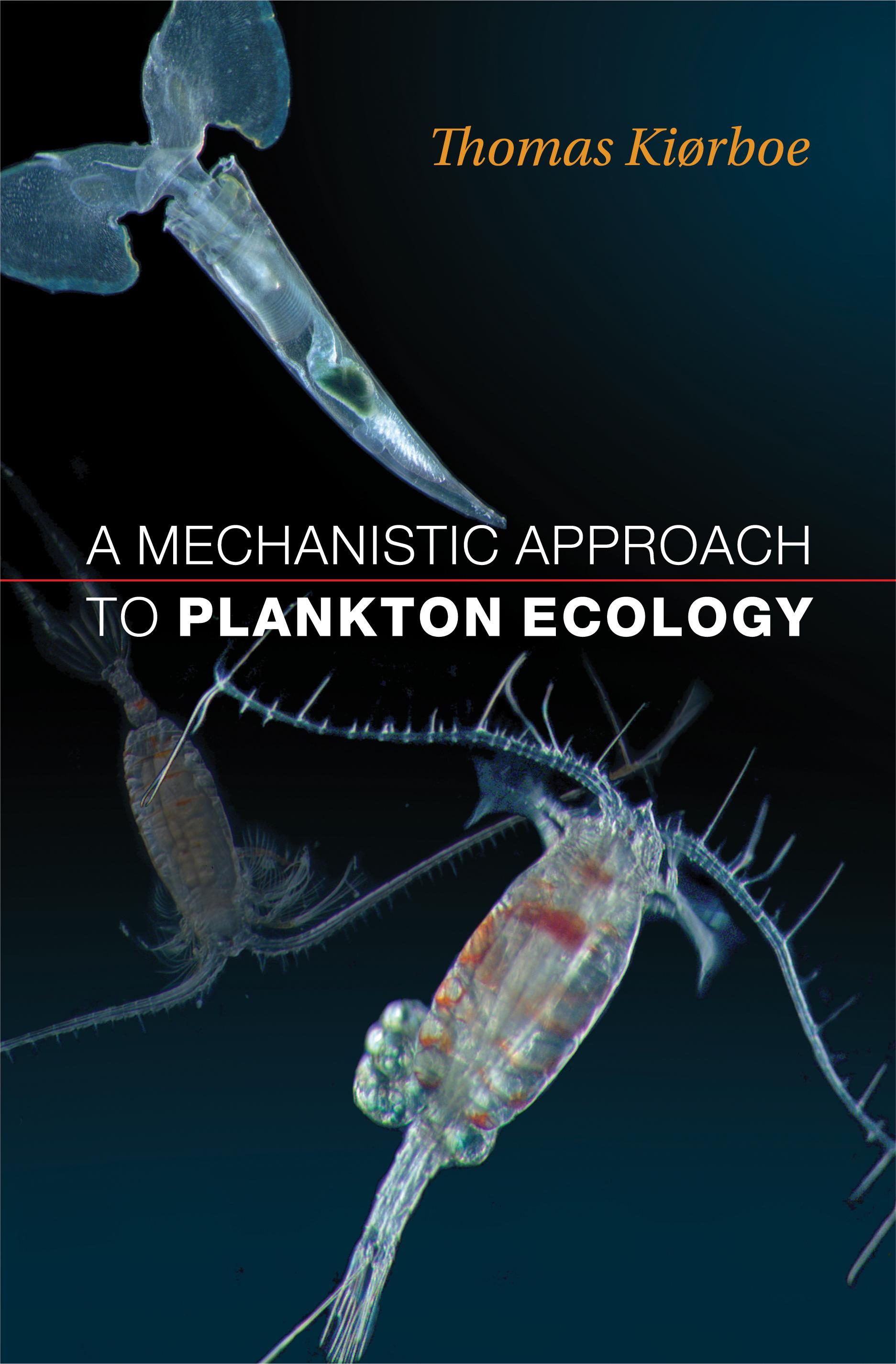
The three main missions of any organism--growing, reproducing, and surviving--depend on encounters with food and mates, and on avoiding encounters with predators. Through natural selection, the behavior and ecology of plankton organisms have evolved to optimize these tasks. This book offers a mechanistic approach to the study of ocean ecology by exploring biological interactions in plankton at the individual level. The book focuses on encounter mechanisms, since the pace of life in the ocean intimately relates to the rate at which encounters happen.
Thomas Kiørboe examines the life and interactions of plankton organisms with the larger aim of understanding marine pelagic food webs. He looks at plankton ecology and behavior in the context of the organisms' immediate physical and chemical habitats. He shows that the nutrient uptake, feeding rates, motility patterns, signal transmissions, and perception of plankton are all constrained by nonintuitive interactions between organism biology and small-scale physical and chemical characteristics of the three-dimensional fluid environment.
Most of the book's chapters consist of a theoretical introduction followed by examples of how the theory might be applied to real-world problems. In the final chapters, mechanistic insights of individual-level processes help to describe broader population dynamics and pelagic food web structure and function.
Paga facilmente con carta, Klarna, Apple Pay o Google Pay. Non sei soddisfatto? Hai sempre 14 giorni per il rimborso. Leggi di più nei nostri termini. Per qualsiasi domanda, scrivici a hello@memmo.org.
Memmo rende lo studio più facile, ovunque tu sia nel mondo. Qui trovi i tuoi libri di testo e strumenti di studio intelligenti, tutto in un unico posto: riassunti, quiz, podcast e flashcard. E poi c'è Ted, il tuo compagno di studio che risponde a ogni tua domanda. Oltre 50.000 studenti studiano già qui: è stato creato per aiutarti a imparare più velocemente e a stressarti meno.